
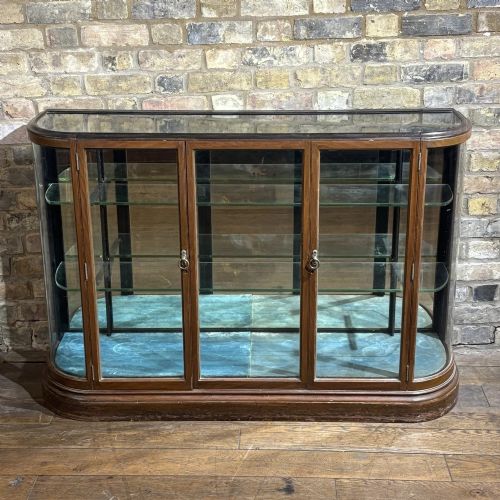


Retail Glass Counter
A retail glass counter organises trade and frames goods through clear panes of glass set into sturdy wood or metal.
Retail Glass Counter
A retail glass counter serves as both a functional barrier in a shop and an inviting showcase for merchandise. When searching for a retail glass counter, buyers encounter items spanning from the late nineteenth century through the Art Deco era of the 1930s.
The selections on this page draw from Victorian, Edwardian, and early twentieth-century commercial periods. Common forms include large freestanding shop counters, countertop display cabinets, and specialised haberdashery units designed for specific trades.
Materials and Construction
These fixtures rely on robust timber frameworks constructed predominantly from mahogany and oak to support extensive glazing. Cabinet makers utilised brass, chrome, and aluminium for structural framing, hinges, and corner brackets in later 1920s and 1930s pieces.
Interiors frequently incorporate mirrored glass to reflect light through the display space, while velvet linings provide a contrasting background for goods. Countertop and freestanding models combine leaded or sheet glass panes with mortise and tenon joinery to endure heavy daily commercial use.
Listings feature oak, mahogany, and hardwood frames paired with brass, chrome, and aluminium elements across Victorian and 1930s eras.
Evaluating Quality and Craftsmanship
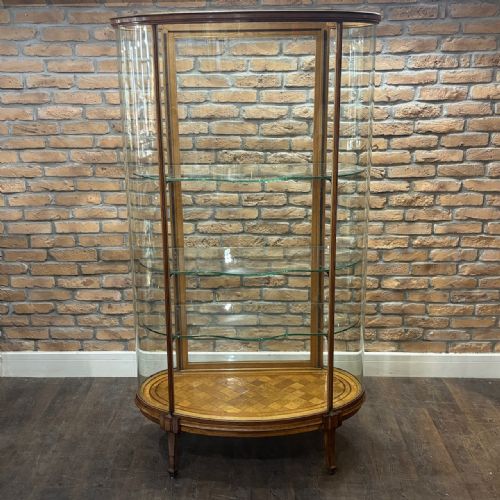
Quality in a commercial display case rests on the integrity of the timber framing and the clarity of the original glazing. Finer examples exhibit sophisticated timber bending, such as bow ends, alongside specialist maker branding stamped into the structure or painted on original glass fascias.
The sophistication of the hardware, including sliding rear doors, brass runners, and fitted shelving supports, distinguishes high workshop production from utilitarian trade storage. Cabinets retaining original mirrors and unaltered interior fabric command greater interest from collectors.
F. Sage & Co·Dudley & Co·John Stow Ltd·Saml. Elliott & Sons·Pollards
The Retail Glass Counter Glossary
- Bow End
- A curved glass end panel that softens the rectangular profile of a display counter. This feature requires expert glass bending and precise framing.
- Haberdashery Counter
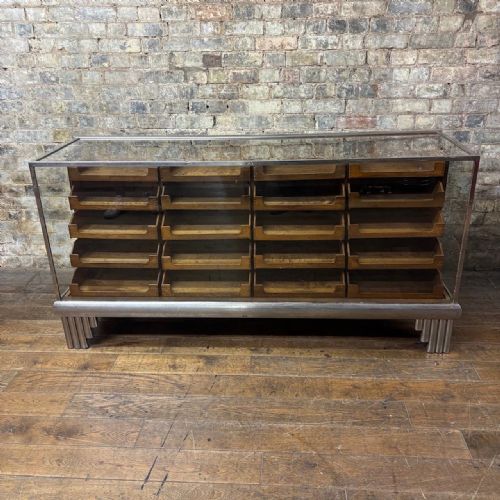
- A long display unit traditionally fitted with numerous shallow drawers and glass top viewing areas. Merchants utilised them to display small textiles and sewing goods.
- Countertop Display Cabinet
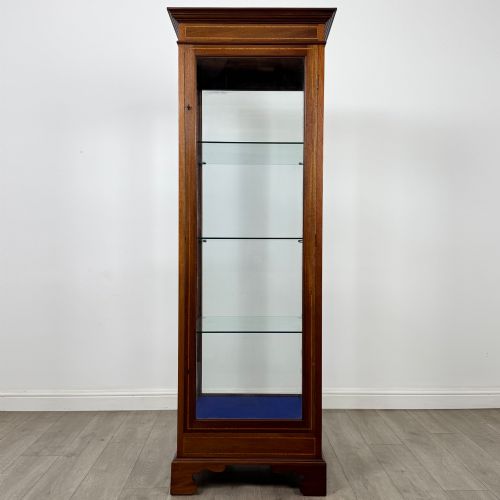
- A smaller enclosed glass case designed to sit upon a main shop counter for eye-level customer inspection. These often housed confectionery, tobacco, or apothecary items.
- Ebonised
- Wood finished with a dark coating to imitate ebony. This treatment appears frequently on display fixtures from the late nineteenth and early twentieth centuries.
Retail Glass Counter: Frequently Asked Questions
How were retail glass counters used in shops?
Merchants placed these counters between the customer and the shop assistant to protect delicate merchandise while keeping it clearly visible. They served to display high-value items such as chocolates, tobacco, and apothecary goods.
Assisting staff could reach into the cabinet through sliding or hinged wooden doors at the rear. This setup allowed goods to remain secure during trading hours while inviting browsing.
How do I date a glass display counter?
Dating relies on observing the timber species, framing materials, and overall architectural style of the base. Victorian and Edwardian pieces frequently feature solid mahogany or oak with brass hardware, whereas 1930s examples often introduce chrome, aluminium, and Art Deco geometry.
Maker plaques and original sign-written advertising on the glass provide further chronological markers. Structural changes over time, such as replacement glass panes, also indicate the manufacturing era.
Can I use an antique display counter at home?
These fixtures integrate well into domestic interiors for displaying collections, ceramics, or books behind protective glass. Their generous proportions and glazed panels bring period character and practical storage to modern rooms.
Placing them away from direct sunlight preserves the original wood finishes and interior fabrics. Freestanding models require stable placement on level flooring to ensure doors align properly.
What is an advertising display cabinet?
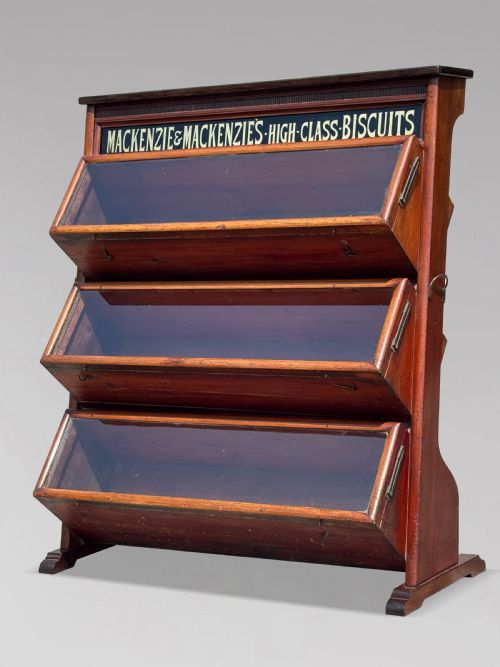
An advertising display cabinet is a specialised retail counter featuring painted or etched branding for specific nineteenth and twentieth-century brands such as Fry's, Rowntree's, or Cadbury's. Manufacturers produced these units for specific confectioners and chemists to promote their goods directly on the shop floor.
Surviving examples often retain original sign-written glass panels or mirrored backs bearing company names. These branded pieces represent a direct intersection of commercial history and antique furniture design.