


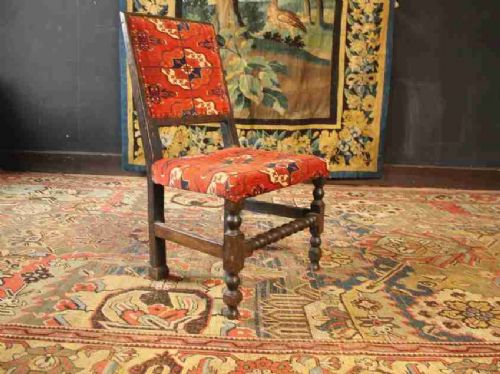


Restoration Oak Chair
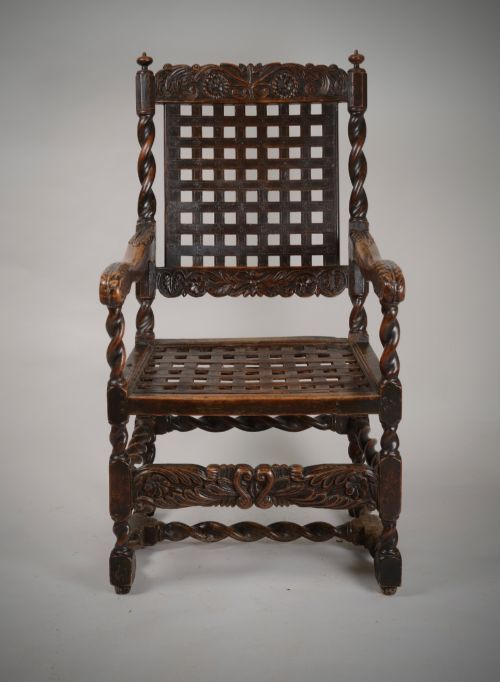
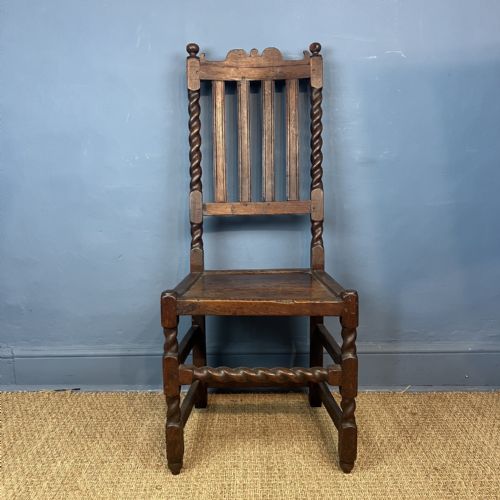
These restoration oak chair examples bring heavy seventeenth-century presence and rich carved detail into a room.
Restoration Oak Chair
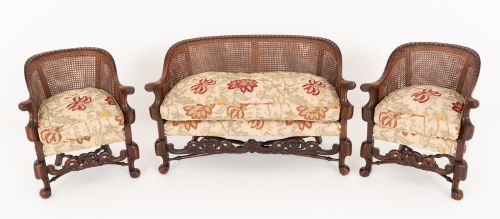
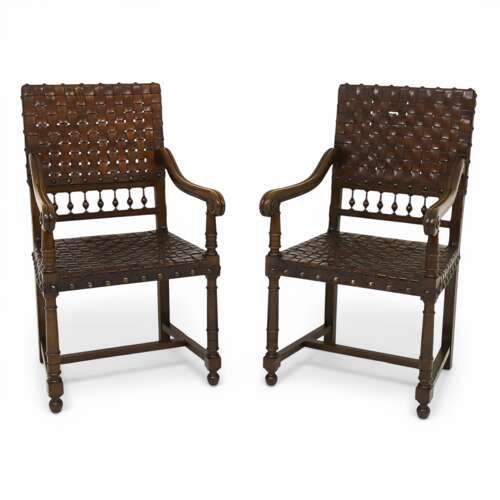
The forms range from single side chairs and armchairs to sets of dining chairs, hall chairs, and even chair-back settees. Many pieces exhibit regional characteristics associated with Derbyshire or Yorkshire, alongside later Carolean and Jacobean revival designs.
Materials and Construction
Makers utilised solid oak as the primary structural timber, frequently combining it with secondary woods like walnut or incorporating woven cane, leather, and velvet for seats and backs. Brass studs and decorative upholstery fabrics frequently appear on revival and period examples alike.
Joinery relied on traditional mortise and tenon frames, while ornament was achieved through deep hand-carving on crest rails and stiles. Woven cane and patterned textiles added texture and comfort to high-backed seating forms.
Listings feature oak, cane, walnut, brass, velvet, and leather across nineteenth-century revival and seventeenth-century periods.
Distinctions in Quality
Quality rests upon the crispness of the carved detail and the integrity of the timber frame. Superior examples demonstrate deep, well-defined relief work on the crest rails and robust structural joinery without excessive replacement components.
The harmony between the original frame and any subsequent upholstery or cane work also dictates overall merit. Finer pieces retain a unified proportion and balanced patination across all wooden surfaces.
The Restoration Oak Chair Glossary
- Carolean
- Pertaining to the reign of King Charles II, characterised by lavish carving, scrolling foliage, and open crown motifs. This style heavily influences later revival seating.
- Wainscot
- An early heavy wooden armchair type constructed predominantly from oak with panelled backs and solid seats. These represent the earlier seventeenth-century vernacular.
- Cane
- Split rattan woven into intricate mesh patterns to form lightweight, flexible seat and back panels. It appears on both period chairs and later revival suites.
- Crest rail
- The horizontal top member of a chair back, frequently shaped, pierced, and elaborately carved with scrolls or royal crowns. It serves as a primary decorative focal point.
- Revival
- A nineteenth-century design movement where makers recreated historical seventeenth-century aesthetics using contemporary Victorian techniques and machinery.
Restoration Oak Chair: Frequently Asked Questions
Are these chairs comfortable for daily seating?
Most period and revival examples feature upright wooden backs and firm seats intended for formal posture rather than lounging. Adding a loose cushion can improve comfort for modern living.
Upholstered variants and larger armchairs offer a softer sit, though the upright proportions remain characteristic of the seventeenth-century style.
How do I distinguish original seventeenth-century chairs from Victorian revivals?
Original pieces display authentic age-related timber shrinkage, hand-cut joinery marks, and deep patination accumulated over centuries of use. Tool marks and construction methods differ noticeably from nineteenth-century workshop practices.
Revival pieces often feature mechanical saw marks and standardised components while faithfully copying earlier Carolean or Jacobean motifs.
What rooms suit a tall high-back chair best?
High-back side chairs and throne chairs work exceptionally well as focal points in hallways, studies, or dining rooms. Their vertical presence anchors larger wall spaces effectively.
Pairing a set around a refectory table creates a distinct historic dining arrangement without overwhelming the floor plan.