



Restoration Era Commode
A restoration era commode is a robust timber chest built for storage during the late seventeenth century, prized for its tactile grain and historical character.
Restoration Era Commode
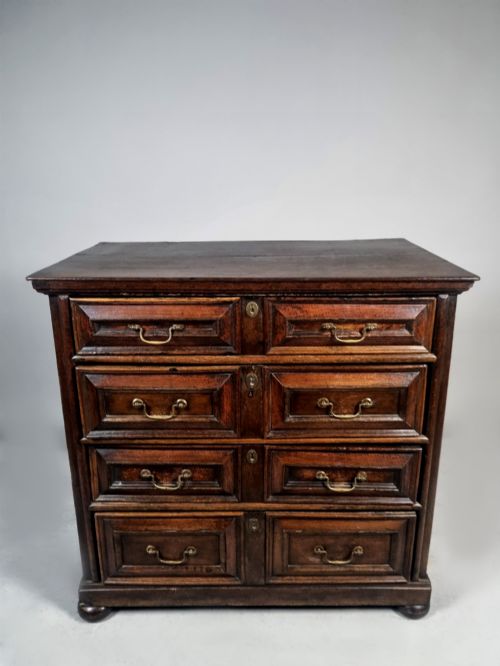
A restoration era commode typically takes the form of a robust chest of drawers originating from the seventeenth century under Charles II or the subsequent William and Mary period. Buyers seeking these pieces encounter sturdy two-part forms constructed predominantly from native timbers like oak, walnut, and fruitwood.
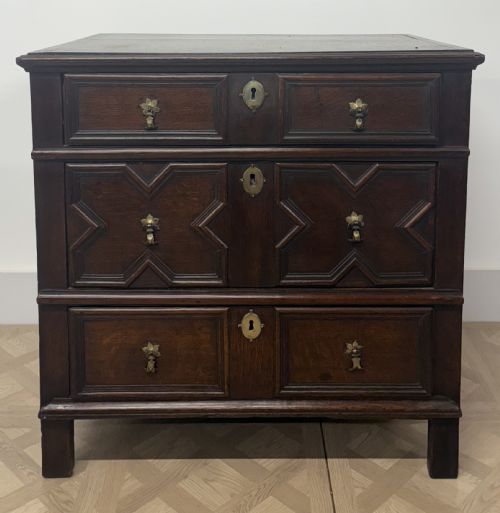
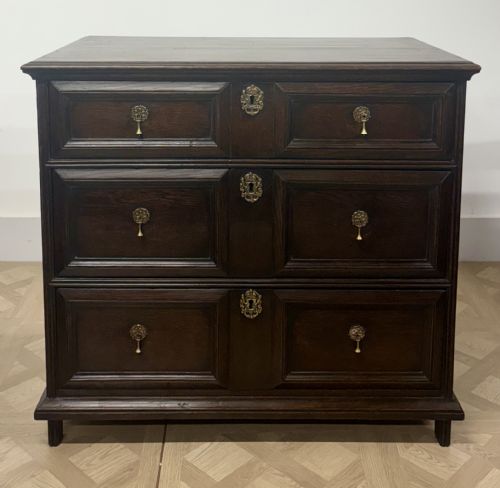
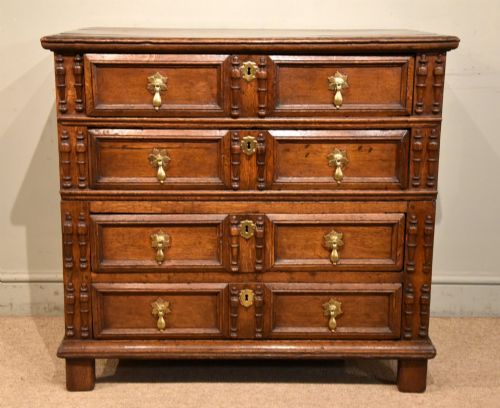
The aesthetic of a restoration era commode is defined by geometric mouldings, applied panels, and meticulous surface patterns rather than smooth, plain planes. Pieces frequently utilise a combination of solid timber framing and decorative veneering across the drawer fronts and top surfaces.
While most examples manifest as traditional drawer chests, variations include credenza forms and pieces retaining earlier seventeenth-century structural traditions. The overarching visual language remains deeply tied to Carolean and late seventeenth-century British and continental craftsmanship.
Materials and Construction Techniques
Makers of a restoration era commode built the core carcass using solid native woods such as sturdy oak for structural integrity and framing. Drawer linings and secondary elements often incorporate softer fruitwoods alongside the primary structural timber.
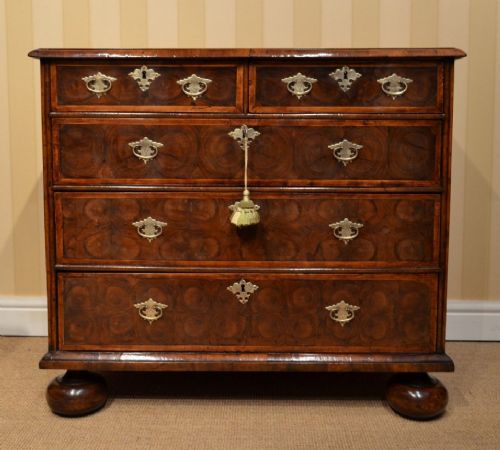
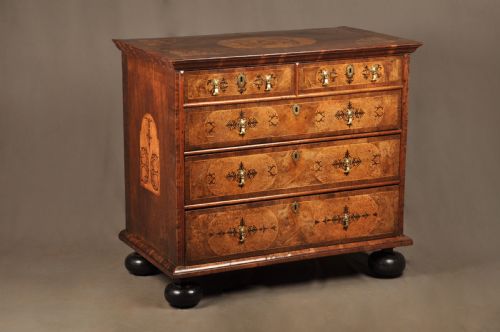
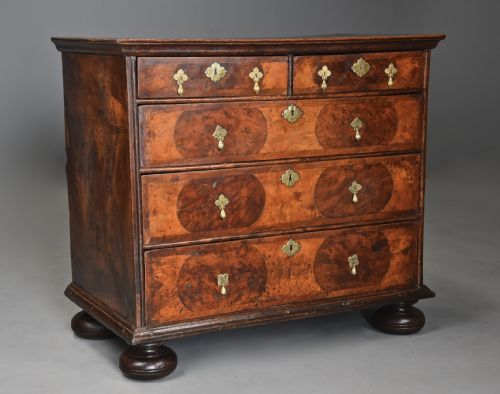
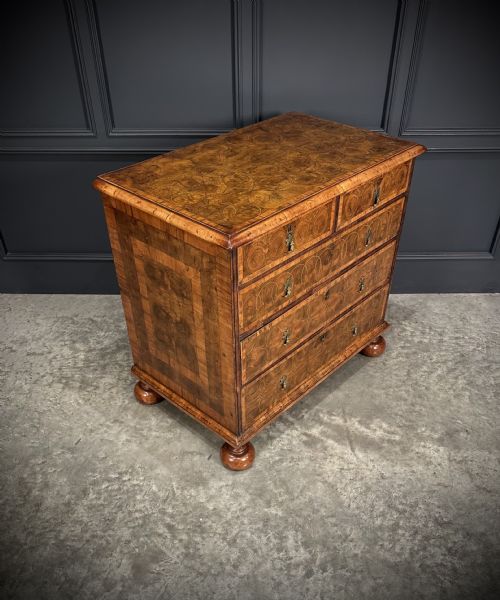
Surface decoration relies heavily on contrasting veneers, notably walnut cut across branches to form circular oyster patterns, and intricate marquetry inlay. Geometric mouldings applied to drawer fronts create deep shadow lines that accentuate the natural grain of the timber.
Brass is utilised for period-appropriate drop handles and escutcheons, securing the functional aspects of the drawers while complementing the dark tones of ebonised wood and aged walnut.
Branch wood sliced thin like oysters turns humble tree growth rings into swirling wooden whirlpools across a drawer front.
Evaluating Quality and Execution
The standard of a restoration era commode depends largely on the precision of its veneering and the intricacy of its surface inlay. Mastery in cutting oyster veneer and aligning arabesque marquetry separates standard joinery from exceptional cabinet work.
The integrity of the structural timber and the retention of original geometric mouldings heavily influence the standing of any given piece. Depth of patina developed across centuries on walnut, oak, and yew wood surfaces dictates the visual success of the piece.
The Restoration Era Commode Glossary
- Oyster Veneer
- Thin slices of branch wood cut transversely to reveal circular grain patterns resembling oyster shells. This technique is typical of late seventeenth-century cabinet making.
- Marquetry Inlay
- Decorative patterns formed by fitting contrasting veneers into prepared recesses on the furniture surface. It creates elaborate floral or arabesque designs across drawer fronts.
- Geometric Mouldings
- Raised wooden mouldings applied in rectilinear or polygonal patterns to drawer fronts and door panels. They create strong chiaroscuro effects characteristic of the period.
- Two-Part Chest
- A chest of drawers constructed in upper and lower sections for ease of transport. This format is frequently encountered in late seventeenth-century English joinery.
- Carolean
- The period of British art and furniture design spanning the reign of Charles II. It bridges the restoration of the monarchy and the late seventeenth century.
Restoration Era Commode: Frequently Asked Questions
What is a restoration era commode?
A restoration era commode is a seventeenth-century timber chest of drawers dating from the reign of Charles II or the William and Mary period. These pieces serve as practical storage furniture constructed from woods like oak and walnut.
They reflect the joinery and decorative styles of late seventeenth-century craftsmanship, featuring geometric mouldings and veneered surfaces.
How do I care for oyster veneer?
Oyster veneer requires stable environmental conditions away from direct sunlight and extreme humidity changes. Applying a conservative coat of appropriate wax helps preserve the timber.
Avoid excessive moisture and handle the historic surfaces with gentle care to maintain the aged patina of the wood.
How were these chests used?
These chests were utilised primarily for storing garments, textiles, and household valuables in domestic interiors. The compartmentalised drawers allowed owners to organise their personal belongings securely.
Over time, their functional role evolved into prominent display pieces that showcased the wealth and taste of the household through fine cabinet work.
How do I distinguish Charles II from William and Mary styles?
Charles II pieces often lean heavily on robust oak construction, stark geometric mouldings, and two-part carcass formats. They represent the earlier decades of the restoration era.
William and Mary examples frequently introduce more elaborate walnut oyster veneering, marquetry inlay, and refined yew wood elements as cabinet techniques advanced towards 1700.