
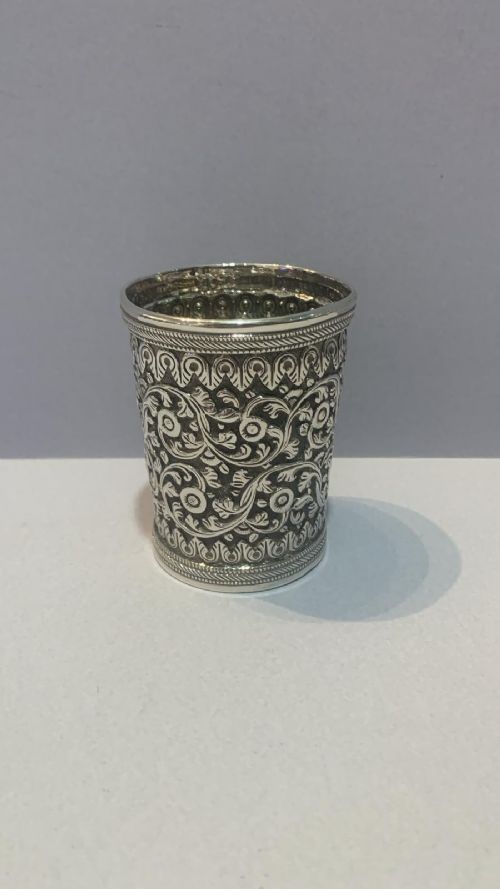
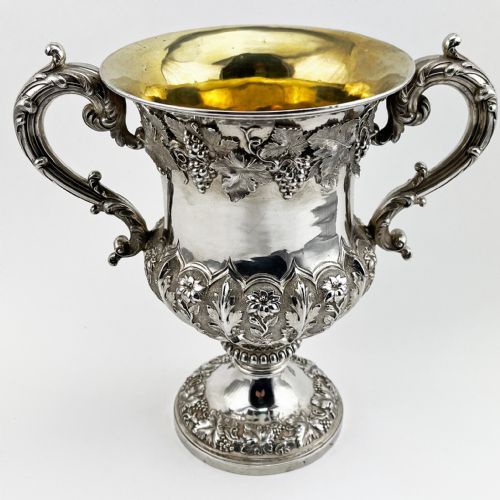


Repousse Silver Goblet
A repousse silver goblet is a striking vessel driven from behind to raise ornament into high relief, combining utility with masterly metalwork.
Repousse Silver Goblet
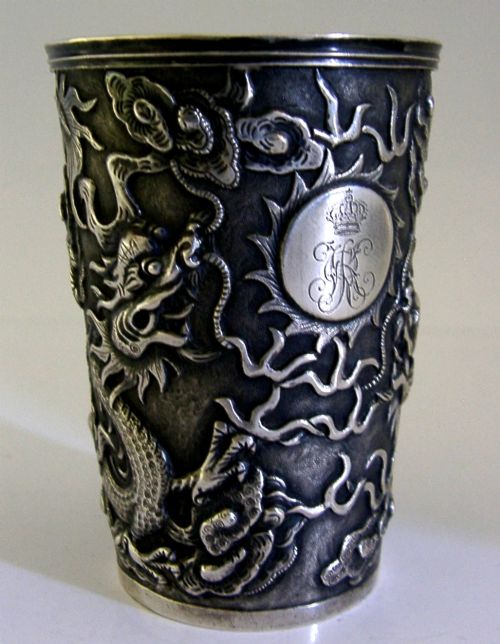
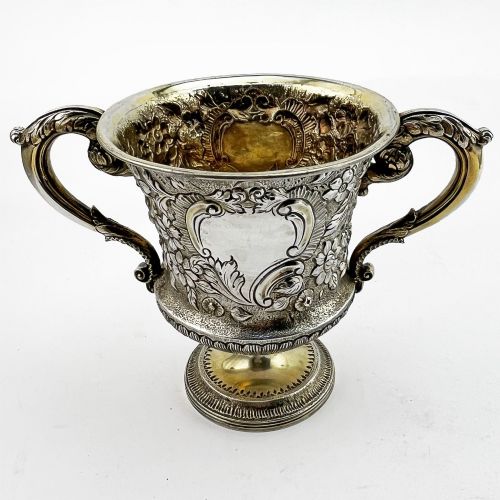
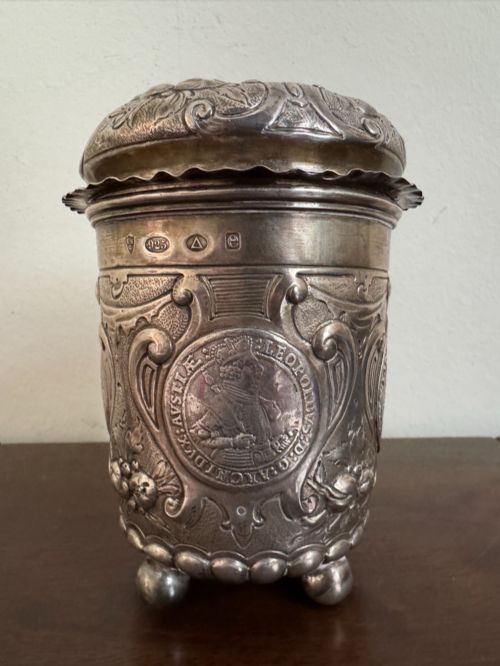
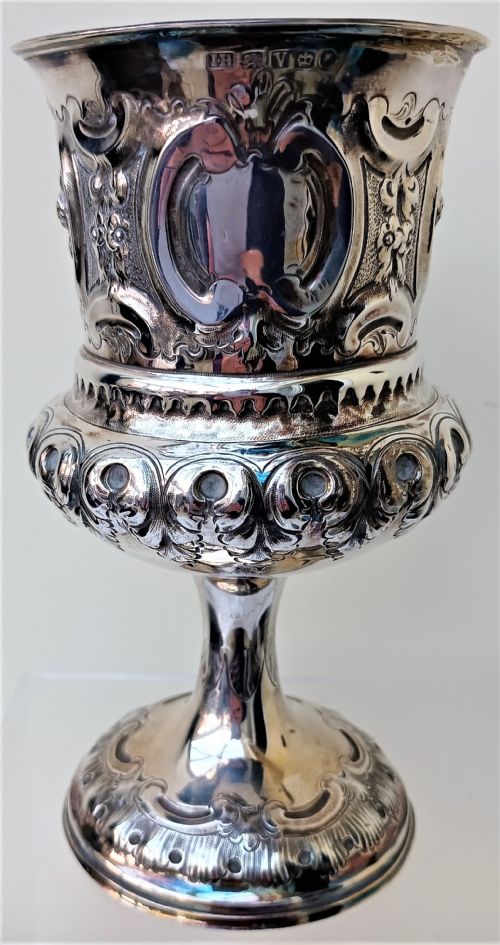
A repousse silver goblet is a drinking vessel or presentation piece defined by hammered surface relief, appearing here in forms such as beakers, chalices, and trophy cups. The listings show examples spanning the eighteenth and nineteenth centuries, alongside pieces from the early twentieth century.
The styles recorded across these objects encompass Victorian, George III, and William IV English pieces, alongside Chinese Export, Anglo-Indian Kutch work, German coin beakers, and Traditional Judaica. Buyers encountering this selection will find domestic mugs sitting alongside ceremonial cups and lidded beakers.
Origins vary widely, reflecting international workshops that utilised traditional hammering techniques on sterling silver, coin silver, and silver gilt. Each regional school brings distinct decorative motifs, from dragons to royal ciphers.
Materials and methods of construction
Makers formed these vessels primarily from sterling silver, coin silver, or silver gilt, occasionally incorporating vermeil, gemstones, or silver plate. The metal starts as a flat sheet or coin before being shaped into a cup or beaker.
The defining technique involves hammering the metal from the reverse side to push the design outward, known as repousse, frequently combined with chasing to refine details from the front. This process creates tactile, three-dimensional surfaces on items such as trophy cups and chalices.
One piece recorded is a wager cup, designed for drinking games where guests competed without spilling a drop.
Distinctions in craftsmanship and design
Quality rests on the depth and crispness of the hammered relief, where skilled hands produce high-relief ornament with sharp definition rather than soft, indistinct contours. The weight of the metal and the balance of the vessel also dictate the merit of the piece.
Provenance and regional execution further differentiate the objects, particularly where workshops like Wang Hing or makers such as D&J Wellby apply rigorous standards to form and ornamentation. Engraved ciphers, crests, and cast handles add complexity that elevates the standing of the silver.
Wang Hing & Co Hong Kong·D&J Wellby london
The Repousse Silver Goblet Glossary
- Repousse
- A metalworking technique where the artisan hammers the reverse of a piece to form a raised design in relief on the front. This method gives the metal a tactile quality.
- Sterling silver
- An alloy consisting of silver and other metals, usually copper, maintaining a standard purity of a specific proportion. It provides durability for functional vessels.
- Chalice
- A large cup or goblet, often used for ceremonial or sacramental purposes. These vessels typically feature a stem and a wide base.
- Vermeil
- Sterling silver coated with a thin layer of gold. This finish offers the dual appearance of gold and silver.
- Coinage
- Silver derived from melted coins, frequently utilised in continental European beakers. It often carries the distinct fineness of circulating currency.
Repousse Silver Goblet: Frequently Asked Questions
What is a repousse silver goblet used for?
These vessels served as presentation pieces, domestic drinking cups, and ceremonial objects. Many functioned as trophies or display items rather than daily tableware.
Heavier examples with covers, such as lidded beakers and presentation cups, were often kept to mark significant occasions or display wealth.
How do I care for silver repousse work?
Maintenance requires gentle cleaning to avoid flattening the raised relief created by the hammering process. Soft cloths and non-abrasive cleaners preserve the intricate surface details.
Aggressive polishing wears away the crisp edges of the ornament over time, particularly on older sterling and silver gilt surfaces.
How can I tell the period of a goblet?
Dating relies on assay marks, stylistic cues, and maker stamps recorded on the metal. George III pieces carry distinct neoclassical or rococo traits, while Victorian items show heavier historicism.
Regional styles like Kutch Indian silver or Chinese Export provide additional clues through specific motifs and manufacturing signatures.
What styles are common in these listings?
The selection includes Victorian, George III, William IV, and Baroque Revival designs alongside regional traditions. Chinese Export and Anglo-Indian Kutch work introduce distinct ornamental vocabularies.
German coin beakers and Judaica pieces expand the variety, showing how different cultures applied hammered relief to silver.