
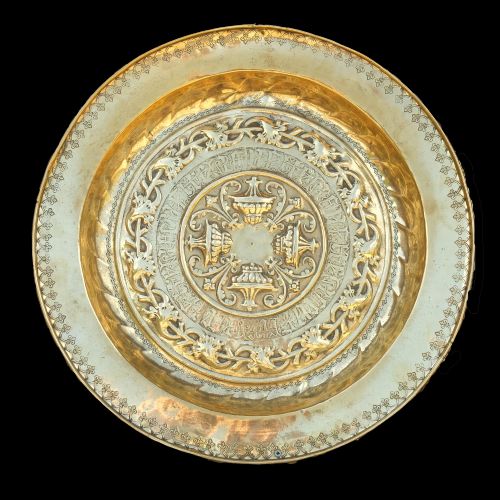


Repousse Brass Platter
These repousse brass platter examples span centuries of metalwork, offering striking wall displays and heavy serving pieces for the home.
Repousse Brass Platter
A repousse brass platter functions primarily as decorative wall art, a display dish, or a heavy tray, taking forms such as circular chargers, oval dishes, and deep alms bowls. These items emerge from various eras, with nineteenth-century examples and Edwardian pieces appearing alongside earlier sixteenth-century churchware and eighteenth-century embossed designs.
Makers across different regions utilised this format for narrative and heraldic art, depicting mythological figures like Diana and Neptune, coats of arms, animals, and classical scenes. Buyers most frequently encounter nineteenth-century circular trays, Arts and Crafts wall plaques, and Indian Raj period chargers combining brass and copper.
How they were made
Craftsmen shaped these items from sheet metals including brass, copper, and latten, often employing hand-hammered and repousse techniques to raise designs from the reverse side. Artisans also worked details from the front using punches and chisels to sharpen outlines and textures.
Certain pieces incorporate pierced openwork and mixed metals, combining brass with copper to create contrast within the decorative motifs.
Object forms on this page include wall plaques, alms dishes, and circular chargers decorated with animals, coats of arms, and classical figures.
What varies in quality
The distinction between standard decorative items and finer works lies in the crispness of the hammered relief and the complexity of the chased detail. Pieces featuring intricate mythological scenes, heraldry, or hand-pierced work demonstrate superior technical skill compared to simpler embossed patterns.
The depth of the metalwork and the integration of mixed metals, such as copper highlights on brass plates, elevate the visual impact of the piece.
The Repousse Brass Platter Glossary
- Repousse
- A metalworking technique where the artisan hammers metal from the reverse side to create a raised design in relief on the front. This method allows for organic, rounded contours and detailed pictorial scenes.
- Alms dish
- A shallow basin traditionally used in churches to collect offerings of money or goods. These early metal dishes frequently featured embossed religious or heraldic iconography.
- Charger
- A large ornamental plate or platter designed primarily for display on a sideboard or wall rather than for dining use. They provide a broad surface for elaborate repousse decoration.
- Latten
- A durable yellow metal alloy resembling brass, historically used for church brasses and domestic vessels before modern brass production standards were established.
- Arts and Crafts
- A design movement valuing hand craftsmanship and traditional metalworking techniques over industrial mass production. Objects from this style often display visible hammer marks and nature-inspired motifs.
Repousse Brass Platter: Frequently Asked Questions
How do I hang a heavy brass platter?
Large chargers and heavy plaques require secure wall fixings capable of supporting the weight of the metal. Adjustable brass wall hangers with protective grips distribute the load evenly across the rim without damaging the edge.
Ensure the fixing anchors directly into solid wall studs or uses appropriate wall plugs for plaster. Avoid utilising wire or cord looped through single rear loops unless the piece possesses an integrated, sturdy hanging ring.
Were these platters used for food?
Most surviving decorative dishes and display chargers served ceremonial, ornamental, or washing purposes rather than everyday dining. Pieces with deep relief work, complex pierced borders, or religious inscriptions were intended for visual appreciation on walls or tables.
Earlier examples like alms dishes held offerings, while large nineteenth-century trays functioned as decorative centrepieces or calling card receptacles.
How do I clean antique brass?
Antique metalwork benefits from gentle dusting with a soft, dry cloth to remove surface particles without disturbing the aged patina. Aggressive commercial metal polishes strip away historical oxidation and dark recesses that define the repousse relief.
Consult a specialist conservator if the surface requires intervention to address active corrosion or heavy grime. Preserving the natural darkening in the recessed areas maintains the visual depth of the hammered design.
How do I date an antique brass platter?
Dating relies on examining the manufacturing marks, metal composition, tool marks, and stylistic motifs present on the piece. Sixteenth-century alms dishes display distinct Gothic or Renaissance lettering and wear patterns, while Arts and Crafts examples show specific hand-hammered textures typical of the period.
Comparing the edge construction, fixing methods on the reverse, and the style of figures depicted helps differentiate early church metalwork from nineteenth-century revivals.