
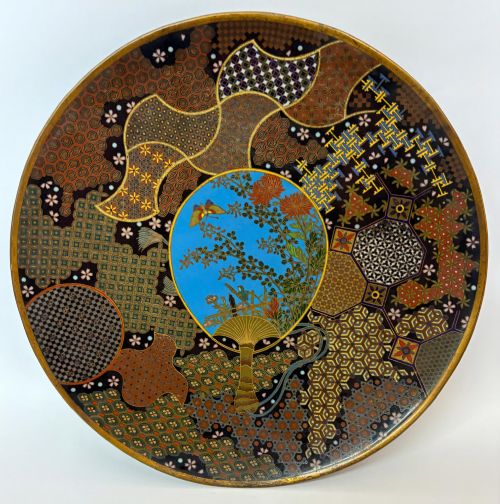


Gold Brass Charger
These gold brass charger pieces are heavy metal display plates and circular trays that bring rich, gleaming warmth to a room.
Gold Brass Charger
When you search for a gold brass charger, you are looking at large metal plates, trays, and shields made for display rather than dining. The examples on this page span the Victorian era, the Edwardian period, and the late nineteenth century, taking forms such as circular trays, decorative platters, and engraved shields.
You will most frequently meet circular brass and mixed-metal trays featuring detailed surface work, alongside Japanese cloisonne pieces and Indo-Persian dhal shields. These objects often incorporate motifs like chrysanthemums, fish, and figurative scenes, reflecting global manufacturing influences from the nineteenth and early twentieth centuries.
The objects serve primarily as wall-hanging focal points or centrepieces for furniture surfaces, offering a distinct alternative to standard ceramic plates. Their generous proportions and metallic sheens command visual attention in both traditional and eclectic interiors.
Materials and construction methods
The primary material foundation relies on brass, bronze, and copper, frequently combined as mixed metal or enhanced with gold inlay and silver plating. Artisans shaped these base metals through hammering, casting, and spinning to create rigid circular plates and deep trays.
Surface ornamentation is achieved through meticulous engraving, repousse work, and cloisonne enamelling. Skilled makers cut into the metal or applied raised wire boundaries to hold vibrant enamel colours and contrasting metal inlays, producing complex botanical and figurative patterns.
A bronze platter depicts Napoleon Bonaparte on his charger, proving that even emperors need reliable transport.
Distinctions in quality
Quality reveals itself in the depth, crispness, and precision of the surface decoration, whether through hand-engraved foliate lines or securely fitted mixed-metal inlays. Superior examples show a deliberate, balanced composition where every motif, from central fountains to intricate border patterns, is executed with absolute control.
The choice of materials also dictates the upper tier of the range, distinguishing simple brass stampings from heavy, multi-metal constructions that incorporate gold, bronze, and enamel. Substantial weight and the integration of contrasting metal tones denote more ambitious workshop production.
C & J.W Hawksley
The Gold Brass Charger Glossary
- Charger
- A large decorative plate or tray intended for display rather than service. These pieces typically exceed standard plate diameters.
- Mixed Metal
- An object combining two or more distinct metallic elements, such as brass, bronze, copper, and silver, for visual contrast. This technique was widely favored by Japanese and nineteenth-century decorative artists.
- Repousse
- A metalworking technique where the artisan hammers the metal from the reverse side to form a raised design in relief. Details are then refined from the front using chasing tools.
- Cloisonne
- An enamelling method where thin metal wires are soldered to a metal base to create compartments, which are then filled with paste enamel and fired. The resulting surface presents smooth, coloured patterns separated by fine metal lines.
- Dhal Shield
- A traditional circular defensive shield from India, often adapted into decorative wall pieces featuring intricate engraved foliate decoration.
Gold Brass Charger: Frequently Asked Questions
What is a gold brass charger used for?
These pieces serve as decorative wall plates, table centrepieces, and heavy display trays rather than functional tableware. Their substantial metal construction and detailed surfaces are designed to catch the light and anchor a room's decor.
Historically, larger chargers and shields were hung on walls or set upon heavy sideboards to display wealth and artistic taste. Today, they function in the same manner, adding metallic texture and historical depth to modern interiors.
How do I hang a heavy metal charger?
Hanging a heavy brass or mixed-metal charger requires secure wall anchors and specialised adjustable plate hangers that grip the rim safely. Because these pieces have substantial weight, standard picture wire or small nails are insufficient.
Ensure the hanger distributes the weight evenly across the circular rim without putting stress on soldered joints or enamel inlays. Check the wall structure carefully before mounting any large nineteenth-century metalwork.
How do I clean an antique brass charger?
Maintenance requires minimal intervention to preserve the natural patina accumulated over the decades. Dust the surface gently with a soft, dry cloth and avoid aggressive metal polishes that strip away age and original surface treatments.
Harsh chemical cleaners can damage delicate mixed-metal inlays, silver plating, and enamel work. If cleaning is necessary, consult a specialist to ensure the specific decorative technique is not compromised.
How can I tell the age of a brass charger?
Dating relies on examining the manufacturing marks, the style of the engraved or inlaid decoration, and the overall construction methods. Pieces from the nineteenth century often show hand-hammering irregularities and period-specific motifs like Victorian revivalism or Meiji period Japanese imagery.
Comparing the reverse side of the plate can also reveal historical fastening techniques and tool marks consistent with specific historical periods. Matching the style of the foliate or figurative work to known manufacturing eras provides the clearest indication of age.