





Renaissance Style Cabinet
A renaissance style cabinet brings heavy architectural presence and deep carving into a room, drawing the eye with monumental proportion and classical detail.
Renaissance Style Cabinet
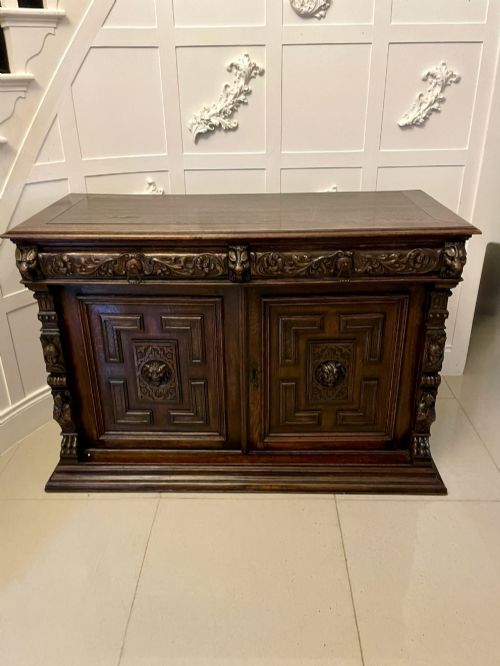
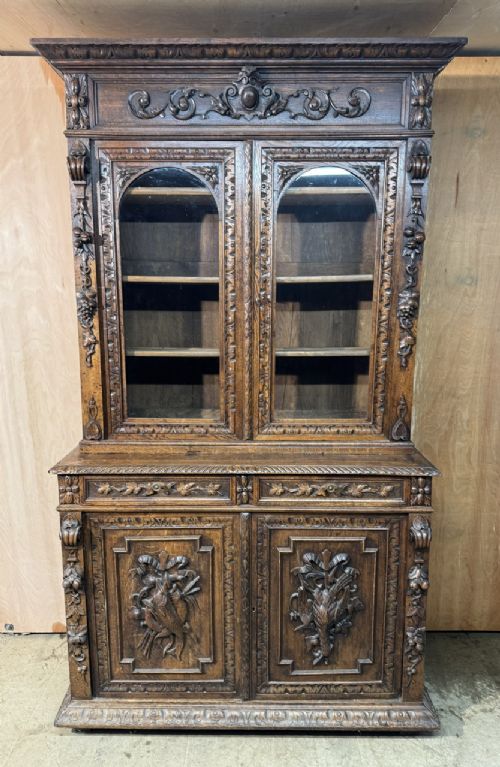
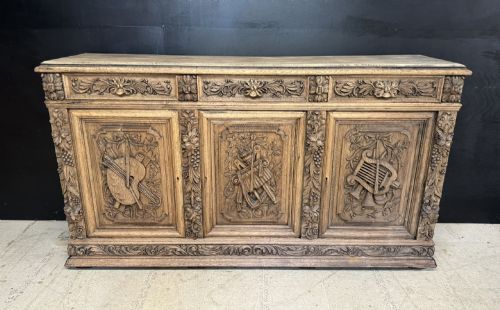
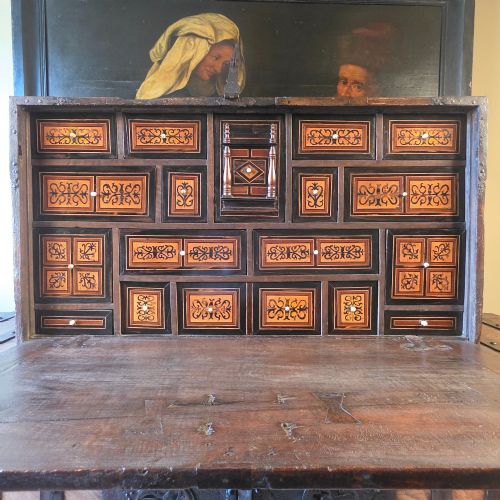
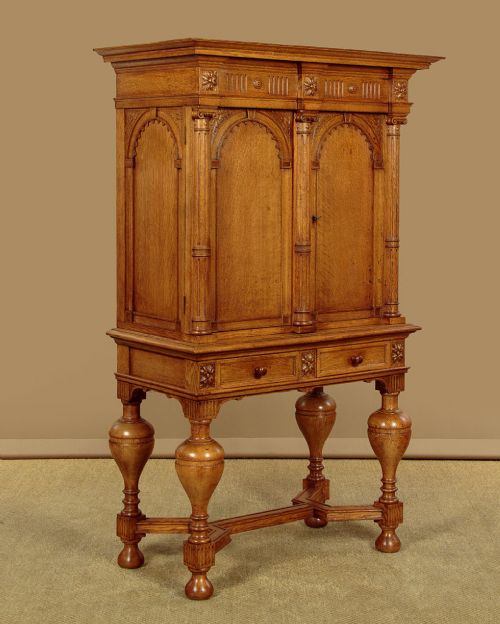
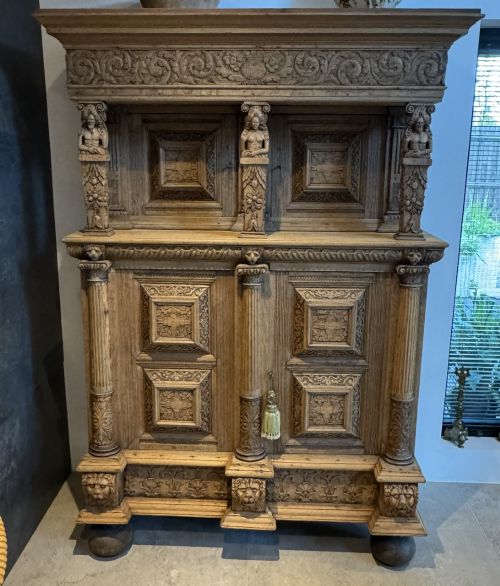
A renaissance style cabinet encompasses large storage furniture drawing on classical motifs, with the 19th Century Renaissance Revival pieces forming the majority of examples seen here.
The selection ranges from oak buffets and sideboards to walnut commodes and cabinets on stand, spanning origins from France, Italy, Flanders, and the Netherlands.
Earlier periods are represented by genuine 17th Century inlaid cabinets and cupboards, alongside occasional 16th century pieces and later 20th century revivals.
How they were made
Makers utilised solid oak and walnut as the primary timbers, building heavy carcass structures capable of holding deep relief carving and architectural mouldings.
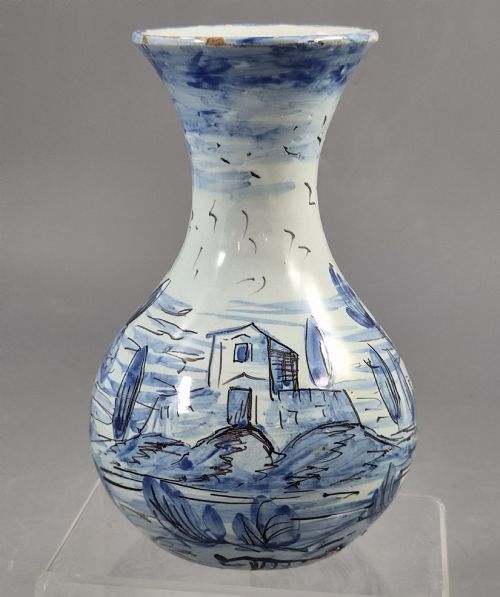
Metalwork in iron and brass provided hinges, lock plates, and handles, while ceramic elements such as tin-glazed earthenware appeared in specialised forms.
Surfaces received extensive hand-carved decoration, sometimes combined with inlay, dark staining, or hand-painted grotesque ornamentation.
One listed 1580 helmet quietly keeps watch over a marketplace otherwise dominated by heavy sideboards and towering cupboards.
What varies in quality
The depth and crispness of the woodcarving separate standard production from exceptional examples, with figures and strapwork showing varying degrees of sculptural competence.
Timber selection dictates the visual weight and longevity of the piece, with well-figured walnut and dense oak commanding greater presence than plainer secondary woods.
Melissa White·Cantagalli·Holland & Sons
The Renaissance Style Cabinet Glossary
- Bambocci
- A style of Italian furniture featuring small, carved grotesque figures or rustic scenes incorporated into the stiles and supports. They are most commonly found on walnut pieces from the seventeenth century.
- Grotesque
- A form of decorative art consisting of painted or carved representations of fanciful human and animal forms intertwined with foliage. This ornament appears frequently on nineteenth-century revival painted surfaces.
- Cabinet on Stand
- A distinct storage form consisting of an enclosed cabinet body elevated on a separate frame or stand. These pieces emphasise verticality and architectural proportion.
Renaissance Style Cabinet: Frequently Asked Questions
Where were renaissance style cabinets placed?
These large storage pieces traditionally stood in formal halls, dining rooms, and reception spaces where their imposing scale and carved detail could project status.
Today, they function well in large living spaces or dining rooms as focal storage points that anchor the room.
How do I care for antique oak furniture?
Oak furniture requires stable humidity levels to prevent timber movement and splitting in the heavy panels.
Apply traditional wax sparingly and polish with a soft cloth to maintain the finish without building up residue.
What is the difference between revival and original pieces?
Original pieces date from the sixteenth and seventeenth centuries and show the construction methods and wear patterns of their period.
Revival pieces, mostly from the nineteenth century, reinterpret these earlier classical forms using contemporary workshop practices of that later era.
Can I use a cabinet on stand for modern storage?
The interior compartments provide deep shelving and enclosed space suited for modern items like tableware or media.
Ensure the stand structure remains stable and place the piece away from direct heat sources to protect the historic timber.