


Renaissance Revival Seating
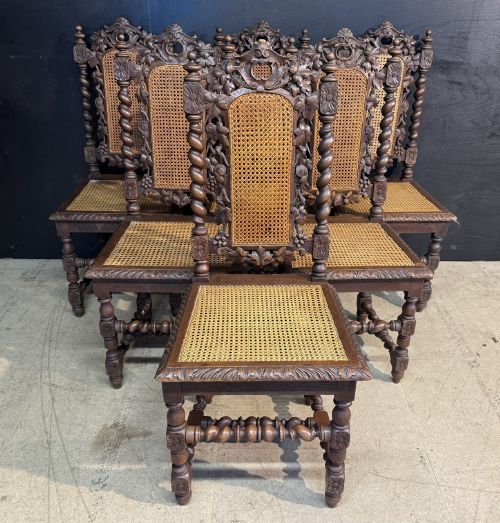
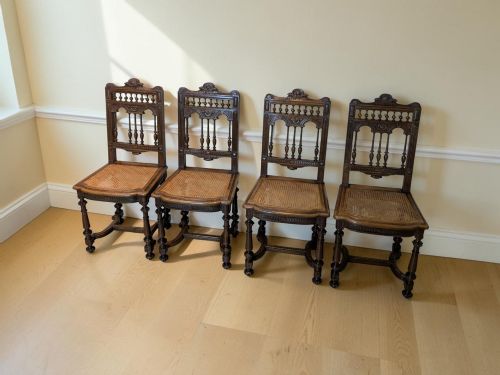
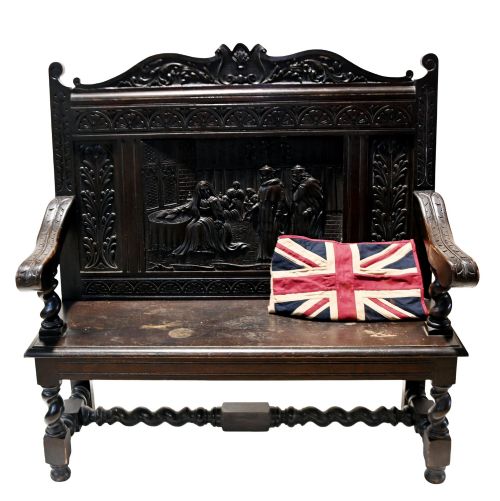
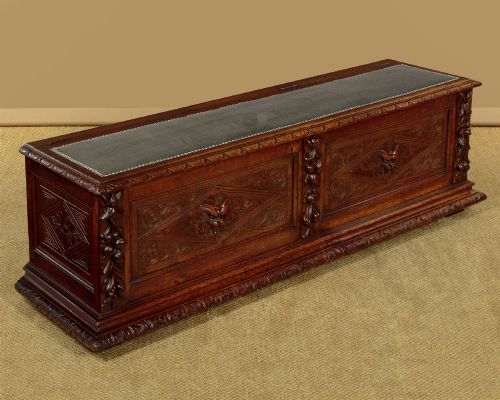
Renaissance revival seating brings heavy period character to a room through dark woods and deep historical carving.
Renaissance Revival Seating
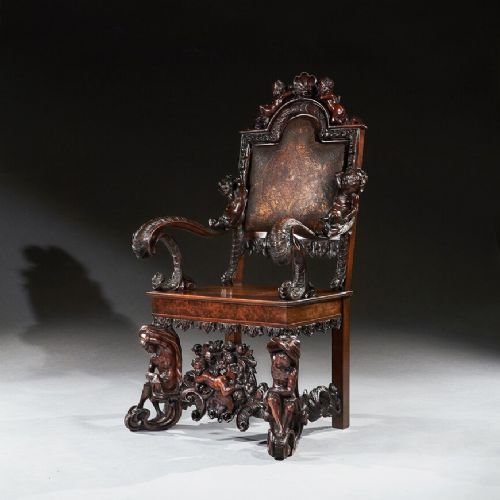
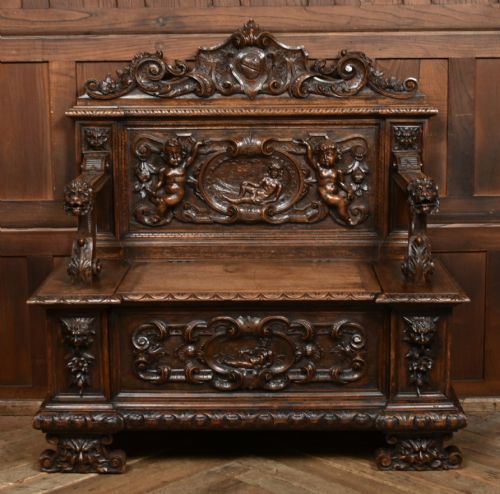
Renaissance revival seating comprises heavy, ornate chairs, benches, and settles produced largely during the nineteenth century, drawing heavily on Italian, French, and Flemish sixteenth-century forms. These items channel historical grandeur through substantial timber frames and elaborate ornamentation.
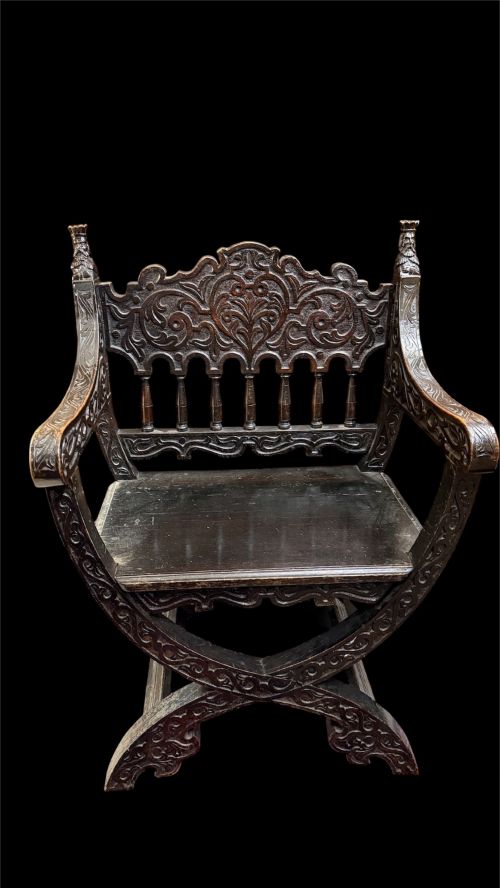
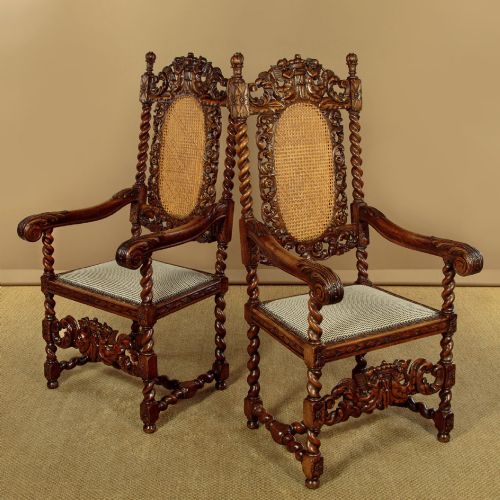
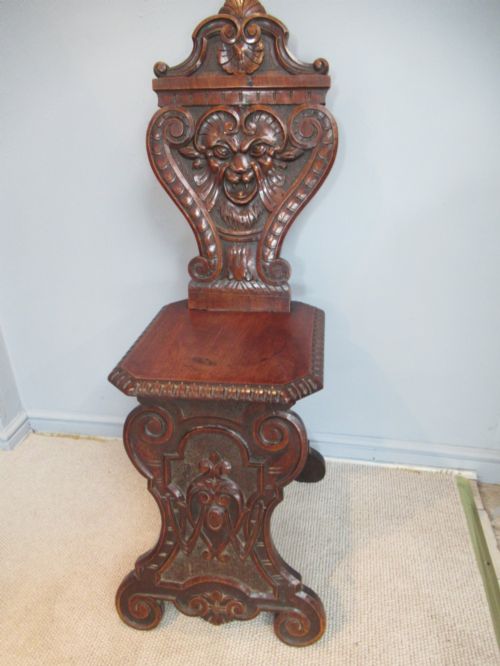
Armchairs, hall chairs, settles, and X-framed stools dominate this selection, reflecting the nineteenth-century taste for dramatic domestic furniture. Pieces frequently draw on specific continental aesthetics, such as Italian walnut armchairs or French oak seating.
The materials and motifs connect directly to historical revivalism, utilising dark timber and sculptural details like figural carvings and bone inlay. Buyers encounter everything from simple hall seating to exhibition-quality armchairs associated with named makers.
How they were made
Craftsmen built these pieces primarily from solid oak and walnut, chosen for their strength and suitability for deep carving. Mahogany, fruitwood, pine, and textile elements also appear across various forms.
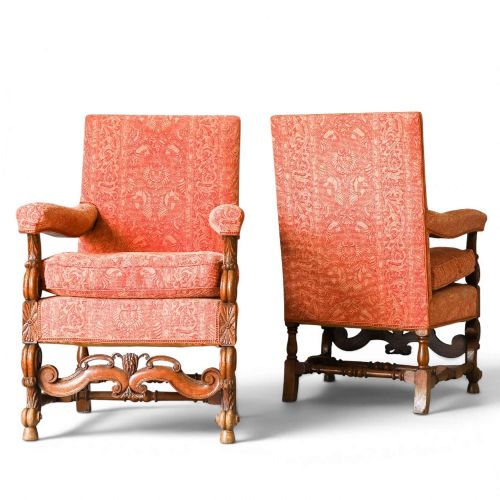
Makers employed traditional joinery combined with heavy relief carving, often incorporating turned elements, X-frames, and brass hardware. Certain examples feature specialised embellishments like bone inlay or upholstered leather and fabric panels.
Listings feature pieces from the nineteenth century, utilising oak, walnut, mahogany, and leather across armchairs, hall benches, and settles.
What varies in quality
The depth, crispness, and artistic ambition of the carving determine the upper tiers of quality, separating standard production from exhibition pieces attributed to master carvers. Proportions and the choice of dense, richly figured walnut or oak further distinguish finer examples.
Structural integrity relies on the execution of heavy joints, particularly in complex forms like X-framed chairs and settle boxes. The quality of secondary materials, including period leather and specialised inlay work, elevates certain pieces above domestic utility.
White, Allom and Co·Andrea Brustolon
The Renaissance Revival Seating Glossary
- Cassapanca
- A traditional Italian wooden bench with a hinged seat forming a chest, often featuring carved backrests and armrests. These pieces served dual purposes for seating and storage in grand hallways.
- Sgabello
- A light, portable wooden chair characterised by a solid back and trestle or octagonal slab legs rather than four conventional posts. Originating in Renaissance Italy, they stood primarily in entryways.
- Savonarola chair
- An X-framed folding armchair constructed from multiple curved wooden slats intersecting to form a lattice structure. Named after the sixteenth-century Florentine friar, this form reflects portable Renaissance luxury.
- Monks bench
- A convertible piece of furniture functioning as a table with a tilting back that transforms into a seat with a storage box underneath. They provide versatile utility while maintaining a heavy medieval or revival aesthetic.
- Curule
- A style of X-shaped seating derived from ancient Roman magistrate stools, utilised extensively in revival designs. The intersecting curved legs create a distinct architectural profile.
Renaissance Revival Seating: Frequently Asked Questions
Where did these chairs go in a Victorian home?
Homeowners typically placed heavy hall chairs, settles, and benches in grand entranceways, reception halls, or formal libraries where guests would encounter them first. Their imposing architectural presence suited transitional spaces rather than casual everyday rooms.
Smaller X-framed stools and corner chairs found placement in drawing rooms or studies as accent pieces. They provided decorative historical interest while remaining functional seats.
How do I distinguish Italian from French revival pieces?
Italian revival seating frequently utilises rich walnut, featuring architectural figures, figural carving, and bone inlay inspired by Venetian or Lombardy workshops. The silhouettes often reference sgabello or Savonarola forms.
French versions tend to rely on sturdy oak with distinct regional interpretations of sixteenth-century ornamentation. They often present broader proportions and heavier panel work associated with nineteenth-century cabinetmakers.
Are these seats comfortable for daily use?
Most pieces prioritize rigid architectural form and historical accuracy over ergonomic cushioning. Upright wooden backs and firm seats encourage an upright posture rather than relaxed lounging.
Certain armchairs and settles feature leather or fabric upholstery that softens the sit, though many hall chairs remain strictly wooden. Buyers often use them as statement pieces supplemented by cushions where needed.
How can I tell a nineteenth-century revival from an original sixteenth-century piece?
Nineteenth-century revival furniture typically displays machine-sawn timber components hidden beneath hand-carved surfaces, alongside standardised nineteenth-century fixings and assembly methods. The wood species and overall finishing reflect Victorian or continental workshop practices of the eighteen-hundreds.
Original Renaissance furniture exhibits tool marks consistent with early hand-tool technology and distinct timber shrinkage patterns developed over centuries. Wear patterns on genuine early pieces also differ significantly from nineteenth-century interpretations.