




Renaissance Carved Statue
A renaissance carved statue brings tangible 16th-century devotion and humanist portraiture into a room through centuries-old timber.
Renaissance Carved Statue
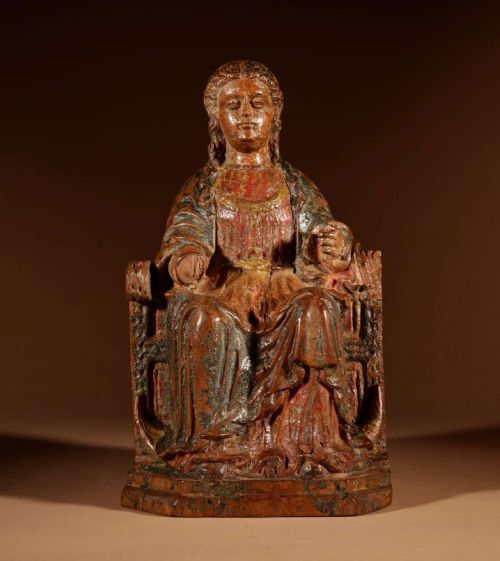
A renaissance carved statue represents figurative wood carving from the 16th century onward, encompassing religious figures, saints, and noble busts. Buyers seeking a renaissance carved statue will encounter continental European works depicting madonnas, angels, and apostles alongside later revival pieces.
The material record spans solid oak, walnut, and limewood, often enhanced with polychrome paint or gold leaf. These sculptures appear as singular seated figures, architectural fragments, and balanced pairs originating from France, Germany, Flanders, and Italy.
Materials and carving methods
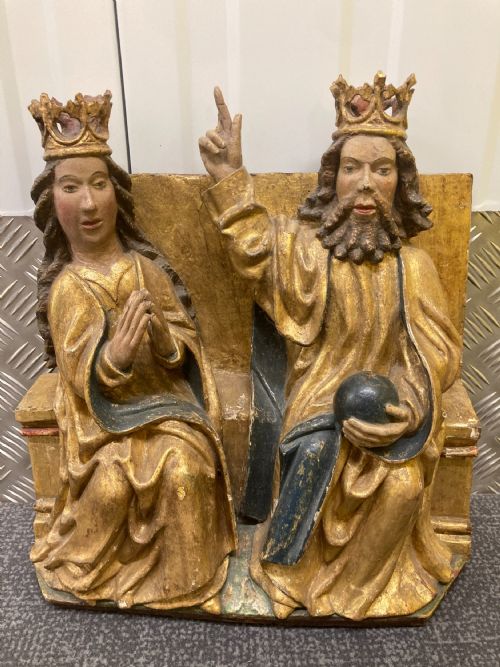
Surfaces were frequently coated with a fine gesso ground before receiving layers of polychrome paint or gold leaf application. This combination of carved wood and pigment protected the timber while adding rich colour and luminosity to religious groups.
A stoic wooden lion stands ready to guard the shelf alongside solemn saints and noblewomen.
Judging sculptural merit
Superior examples demonstrate confident anatomical handling, sensitive facial expression, and dynamic drapery that breaks cleanly away from the background timber. Lesser pieces show stiff, uniform cutting with mechanical tool marks and static posture.
The survival of original surface decoration, including traces of polychrome pigment and gold leaf, elevates the historical weight of a piece. Later interventions or stripped timber surfaces reduce the textural complexity intended by the original carver.
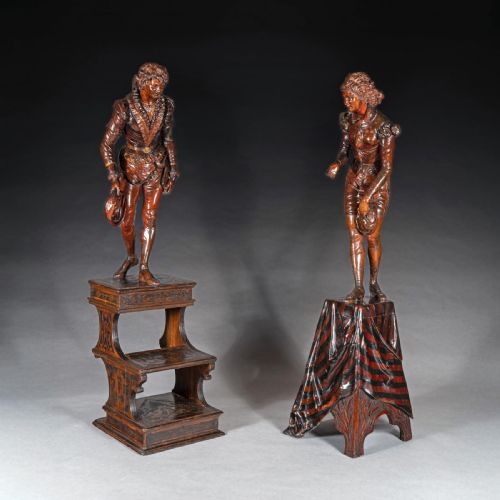
Valentino Besarel
The Renaissance Carved Statue Glossary
- Polychrome
- Painted in several colours. This surface treatment was applied over gesso to give lifelike hues to wooden figures.
- Giltwood
- Wood carved and prepared with a thin layer of gold leaf. It creates a reflective, opulent finish seen on sacred groups and altarpieces.
- Gesso
- A plaster mixture applied as a smooth base for paint or gilding. It seals the wood grain and allows fine detail work.
- Limewood
- A pale timber favoured by continental carvers for its fine, even grain. It permits intricate undercut details without splitting.
Renaissance Carved Statue: Frequently Asked Questions
How were these statues originally displayed?
Many figures stood within architectural niches of churches, chapels, or domestic altars as objects of daily veneration. Others formed part of larger carved retables or wall displays.
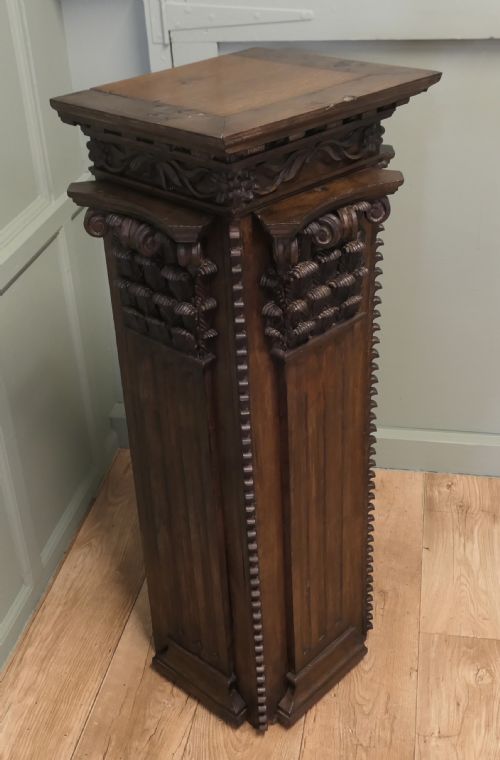
Over centuries, surviving pieces migrated into secular interiors, often placed on dedicated display pedestals or mounted directly onto walls as standalone artworks.
How do I spot a 16th-century original?
Examine the tool marks left by hand chisels and gouges, which differ markedly from the mechanical precision of later revival pieces. The natural oxidation of ancient oak or walnut also reveals deep age.
Check for worm galleries, shrinkage splits, and the remnants of gesso beneath old paint layers. These physical traits confirm the extended passage of time.
What is the difference between oak and limewood carvings?
Oak provides a robust, heavy grain suited to architectural reliefs and robust figures produced in northern European workshops. Its dense fibre resists fine undercutting but ages with great strength.
Limewood offers a softer, homogeneous medium that allowed continental masters to carve elaborate facial expressions and deep, fluttering drapery without splintering.
How should I care for an antique wood sculpture?
Keep the sculpture away from direct sunlight, radiators, and rapid humidity shifts to prevent the dry wood from cracking or warping. Dust gently with a dry, soft brush.
Avoid applying modern furniture waxes or oils, particularly over surviving polychrome paint or gold leaf, as these substances can soften ancient pigments.