

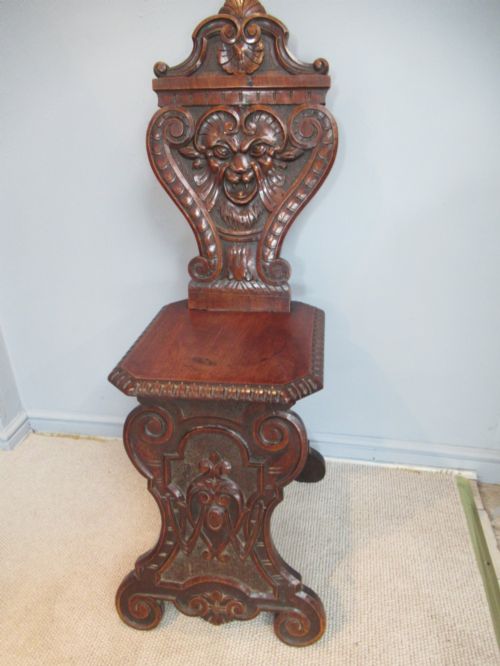
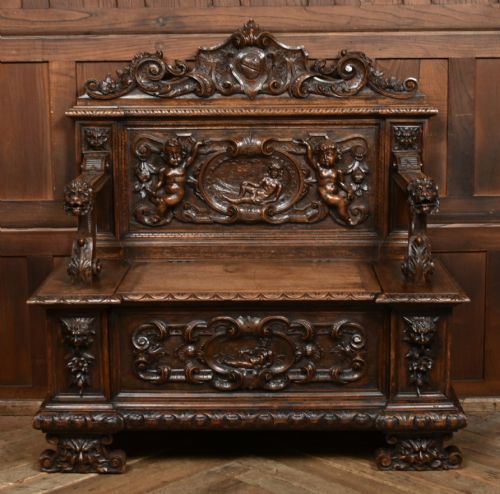


Renaissance Carved Bench
A renaissance carved bench brings heavy timber and classical relief into a hallway, and these pieces span sixteenth century originals to nineteenth century revivals.
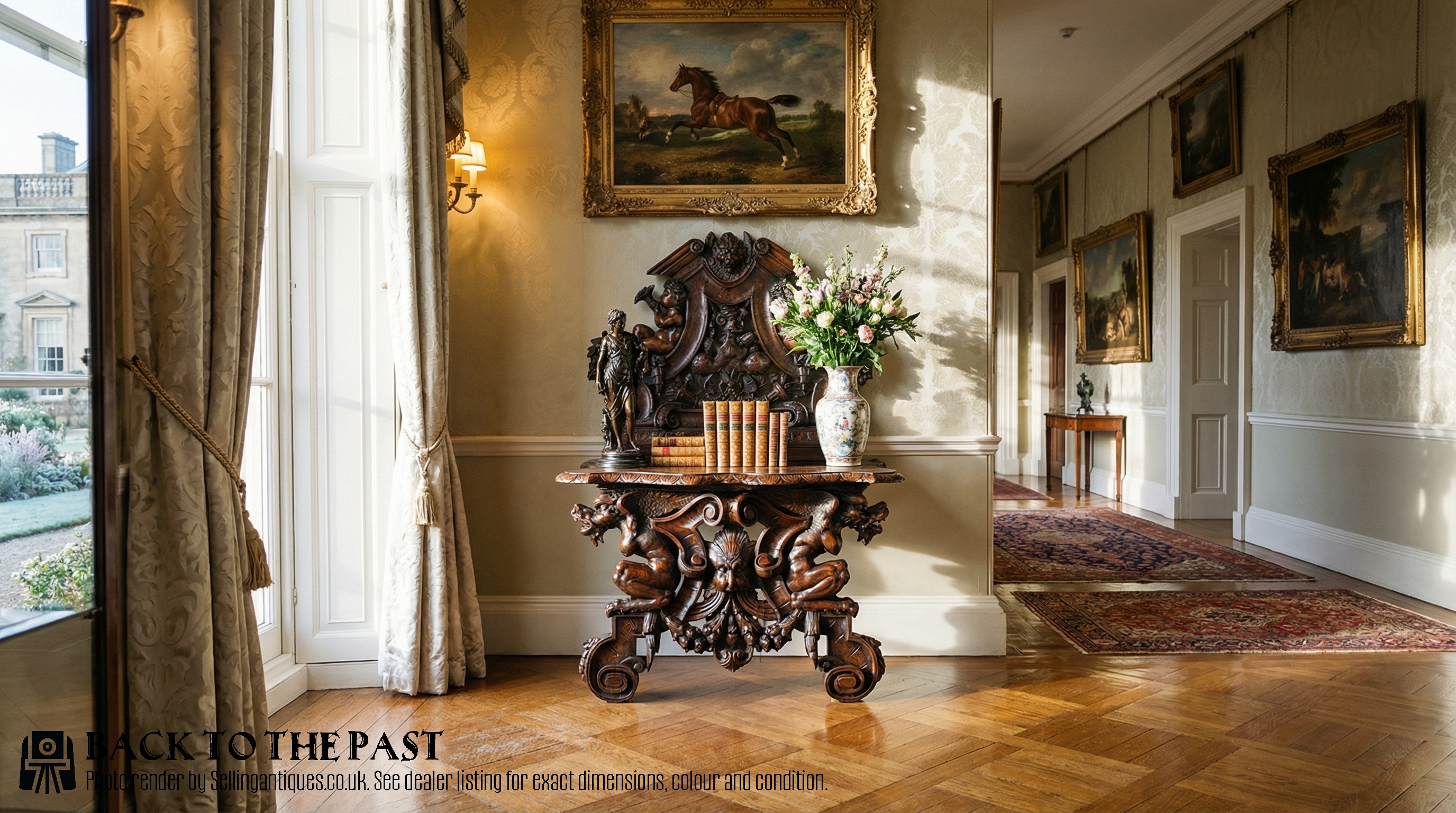
Renaissance Carved Bench
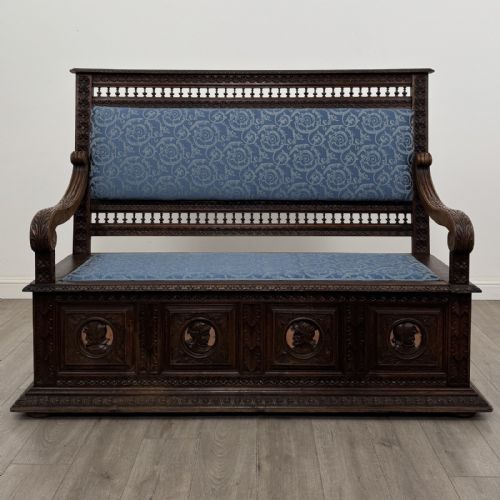
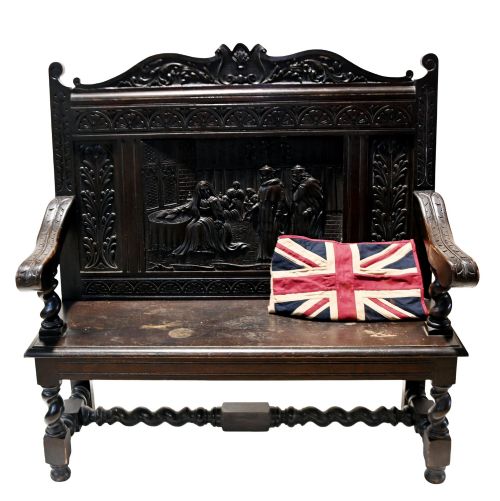
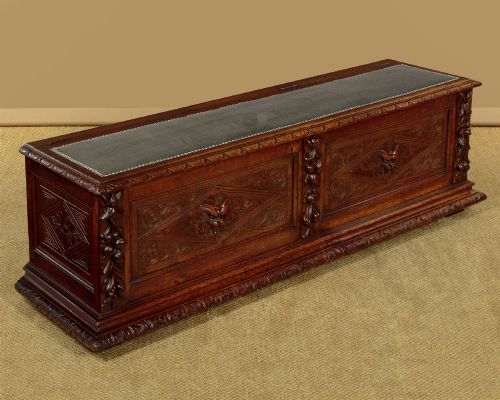
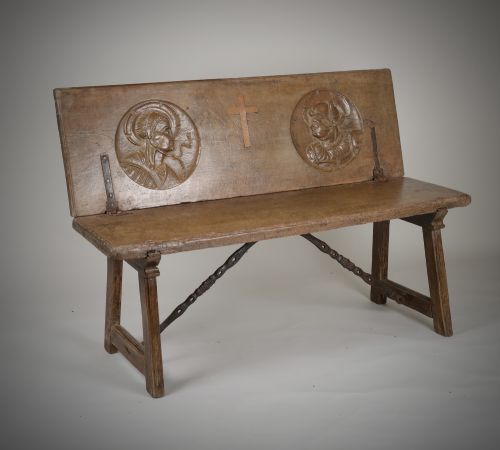
A renaissance carved bench encompasses sturdy oak and walnut seating forms designed for halls and grand rooms, including cassapancas, settles, and monks benches. The versions most commonly met on this page are nineteenth century revival pieces in oak and walnut, alongside rarer sixteenth century or eighteenth century examples.
These items serve practical seating and storage needs while displaying rich decorative carving rooted in Italian, Flemish, and Gothic traditions. Buyers encounter forms ranging from high-back settles with box seats to open X-framed stools and window seats.
Origins stretch across Italy, Flanders, the Netherlands, and Britain, capturing shifts in regional woodworking styles. The enduring appeal lies in the dense ornamentation and architectural presence these benches impart to an interior space.
How they were made
Makers relied primarily on solid oak and walnut, fashioning heavy structural members joined with traditional pegged and mortise techniques. Secondary timbers such as pine occasionally appear in internal or structural elements of larger settles.
Surface decoration relies on deep hand carving, relief panels, and figural motifs such as green men or classical figures. Upholstery, where present, utilises leather or velvet secured with brass detailing to complement the dark wood tones.
Renaissance Carved Bench Retail Price Guide 2026
Typical asking prices for renaissance carved bench among the pieces listed under this phrase on Sellingantiques today, from the lower quarter to the upper quarter. They describe what is for sale here now, not the wider market.
Stare too long into a Flemish oak panel and a green man will stare right back with foliage spilling from his grin.
What varies in quality
The standard of a renaissance carved bench depends heavily on the crispness and depth of the hand carving rather than the mere presence of decoration. Superior examples display fluid, anatomically convincing figures and sharp architectural mouldings that show the carver's complete mastery.
Timber selection and structural integrity further divide pieces, with dense, well-figured oak or walnut commanding greater regard than softer secondary woods. The integration of period construction methods without inappropriate later alterations marks the distinction between ordinary revival items and exceptional work.
The Renaissance Carved Bench Glossary
- Settle
- A wooden bench with a high back, solid arms, and frequently a box seat beneath the cushion. It was traditionally placed near hearths to block draughts in large rooms.
- Monks bench
- A convertible piece of furniture with a hinged back that flips forward to transform the seat into a table top. These items became popular during revival periods.
- X-framed stool
- A folding or rigid stool supported by intersecting curule legs forming an X shape. This ancient form was revived during the Renaissance and nineteenth century.
- Green man
- A sculptural motif depicting a human face carved with leaves, vines, or branches sprouting from the mouth. It symbolises rebirth and appears frequently in architectural wood carving.
Renaissance Carved Bench: Frequently Asked Questions
How do I care for carved wood?
Keep these benches away from direct heat sources and dramatic humidity swings to prevent the timber from splitting. Feed the dry oak or walnut occasionally with a traditional wax polish.
Avoid modern liquid sprays that can penetrate unsealed grain or damage historic finishes. Gentle dusting with a soft brush will protect the intricate recesses of the relief carving.
Where should I place a settle?
These imposing seats suit entrance halls, wide corridors, or large reception rooms where their architectural scale can anchor the space. High-back versions also function effectively to divide open-plan areas.
Ensure the floor is level and capable of supporting substantial weight, particularly with large oak or walnut examples. Leave sufficient clearance around the piece to appreciate the carved panels.
Are these benches comfortable?
Original pieces were built primarily for posture and status rather than lounging, meaning wooden seats can feel rigid. Many owners add loose cushions or custom velvet pads to soften the surface.
Benches equipped with box seats or hinged lids offer generous internal storage for blankets or boots. The fixed upright backs provide sturdy support when sitting.
How do I distinguish revival periods?
Nineteenth century revival pieces often display machine-assisted precision alongside hand finishing, whereas older items show irregular tool marks from hand axes and chisels. Examine the underside and interior joints for signs of age and construction consistency.
Hardware such as hinges and fixings provide clues, as machine-cut screws point firmly to nineteenth century manufacturing. Patina on the wood develops over generations of handling and polishing.