



Renaissance Armchairs
These renaissance armchairs bring heavy timber, carved figures and antique presence to a room, drawing on centuries of historical revivals.
Renaissance Armchairs
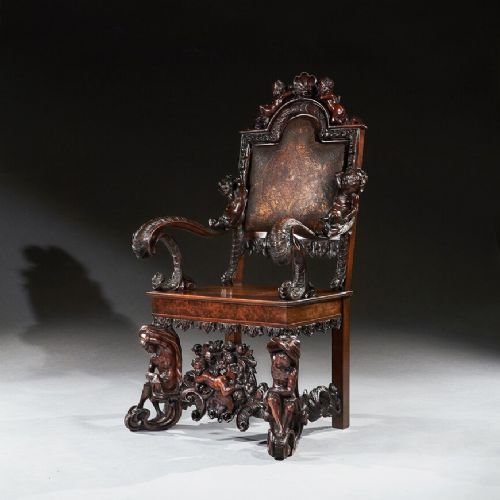
When you search for renaissance armchairs, you encounter robust seating shaped by nineteenth-century revivals alongside earlier continental examples. The selection includes walnut and oak throne chairs, elbow chairs, and curule X-frame designs.
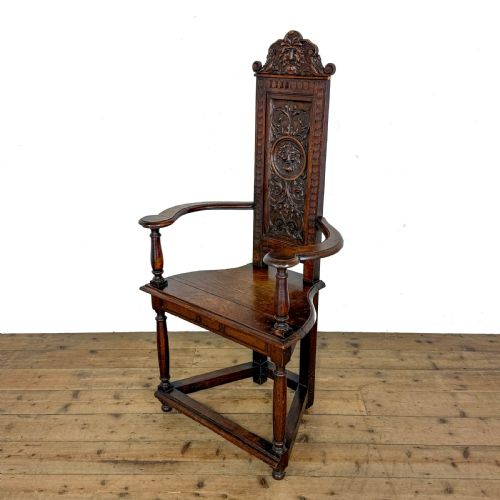
Most pieces on this page stem from the nineteenth century, including French Renaissance Revival and Italian styles. Makers drew heavily on earlier periods, producing heavily carved armchairs, rocking chairs, and caquetoire forms.
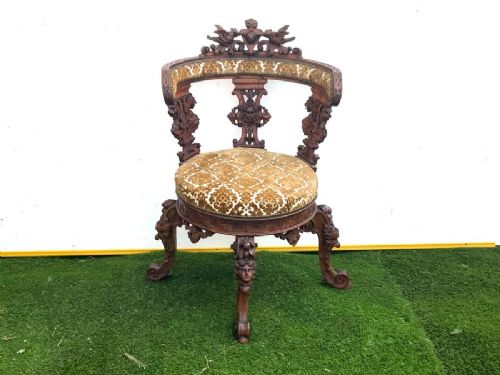
You also find corner chairs and audience armchairs utilising traditional materials like leather and brass. These seating forms carry distinct historical references, ranging from Italian Baroque Revival to Victorian Gothic.
How they were made
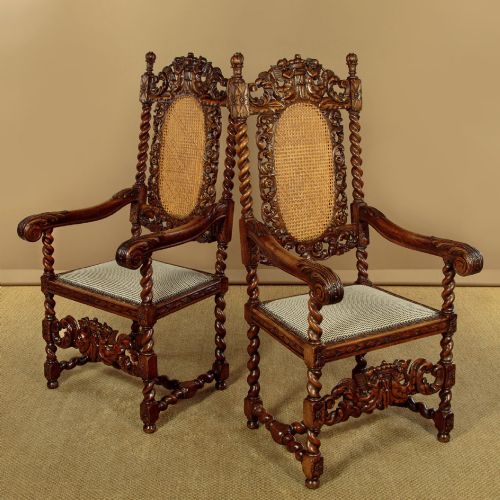
Carpenters and carvers shaped these pieces primarily from walnut and oak, utilising dense hardwoods to support deep, elaborate relief work. Timber surfaces often display extensive hand-carving alongside inlaid details or polychrome paint.
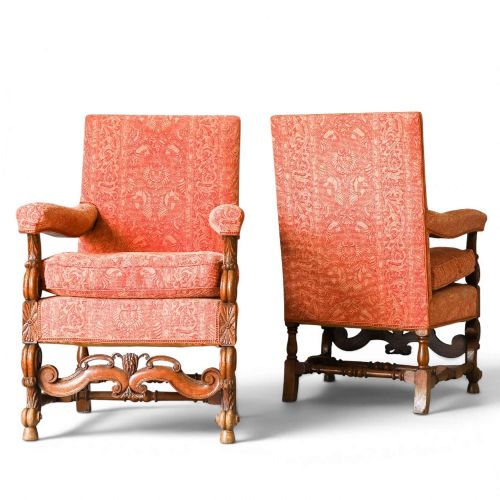
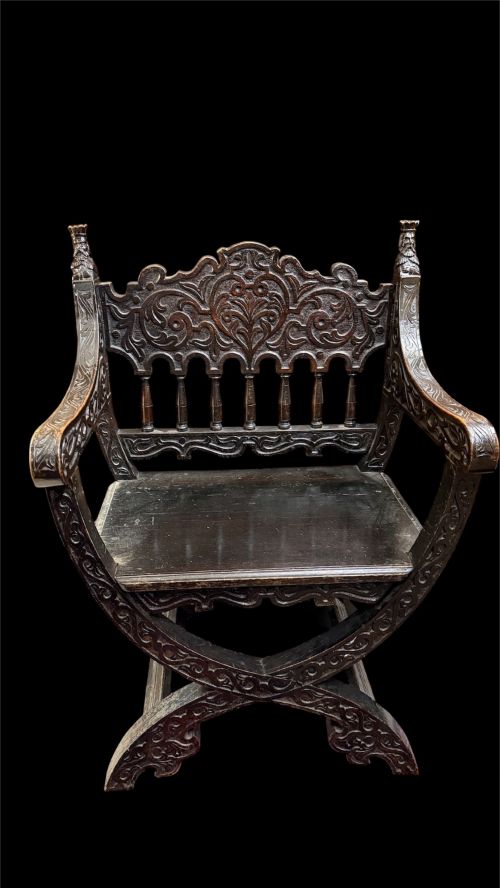
Upholstery techniques incorporate fabric, textile, and painted leather, secured frequently with brass elements. Frames employ traditional joinery methods, visible in X-frame Savonarola and Dante structures, as well as hip-joint construction.
Renaissance Armchairs Retail Price Guide 2026
Typical asking prices for renaissance armchairs among the pieces listed under this phrase on Sellingantiques today, from the lower quarter to the upper quarter. They describe what is for sale here now, not the wider market.
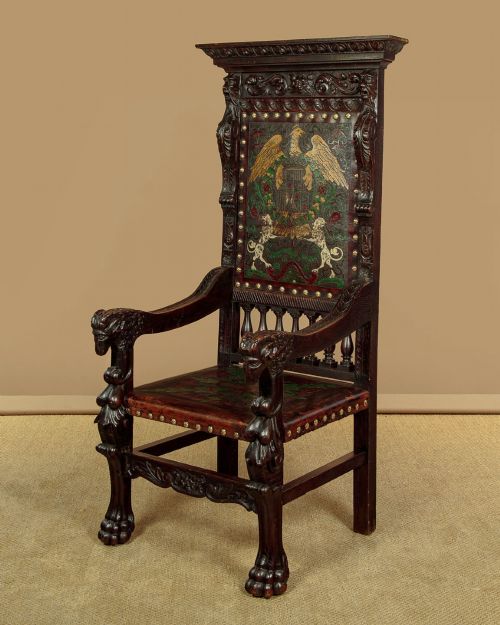
Some nineteenth-century carvers clearly enjoyed populating chair arms with fierce little wooden beasts.
What varies in quality
Quality rests upon the depth and precision of the wood carving, distinguishing simple production from exhibition-grade execution. Pieces after specific makers or classical models show superior sculptural ambition in figures and foliage.
The choice of primary timber and the integrity of the frame construction define the longevity of each armchair. Original upholstery materials and surviving painted or inlaid surfaces also elevate the standing of a piece.
White, Allom & Co.·Andrea Brustolon
The Renaissance Armchairs Glossary
- Caquetoire
- A light, high-backed wooden armchair originating in the sixteenth century, designed for conversation. These chairs typically feature narrow bodies and splayed armrests.
- Savonarola
- An X-frame folding armchair constructed from multiple curved wooden slats. This Italian Renaissance form resembles a classic curule seat.
- Curule
- An ancient chair shape featuring opposing concave legs that cross in an X-form. Nineteenth-century revivalists adopted this structure for ceremonial seating.
- Throne chair
- A high-backed, imposing armchair designed to impart authority. These pieces often feature heavy walnut or oak framing with extensive figural carving.
- Hip-joint chair
- A style of seating joined by interlocking turned wooden joints rather than standard mortise and tenon connections. This construction method appears in Spanish antique seating.
Renaissance Armchairs: Frequently Asked Questions
What is a caquetoire armchair?
A caquetoire is a sixteenth-century French conversation chair with a narrow trapezoidal seat and a high back. The design allowed women wearing wide farthingale dresses to sit comfortably.
Versions on this page date mainly to the nineteenth century, retaining the characteristic splayed arms and walnut construction of the early models.
How do I identify a Savonarola chair?
A Savonarola chair uses an X-frame structure made of multiple curved wooden slats intersecting to form the base and arm supports. Many incorporate a crest rail and folding capabilities.
This form derives from Italian Renaissance designs and appears frequently in nineteenth-century revival furniture.
Where were these armchairs made?
The pieces originate from various European centres, including France, Italy, Spain, and Austro-Hungary. Nineteenth-century British workshops also produced many of the revival styles seen here.
Continental pieces often utilise local walnut or oak, reflecting regional woodworking traditions from earlier centuries.
How do I style a renaissance armchair?
These armchairs serve as focal points in a room due to their dark timbers, high backs, and sculptural carvings. They pair effectively with minimalist modern interiors or traditional historic spaces.
Placement in a study, hallway, or corner allows the carved walnut or oak frame and leather upholstery to stand out without crowding the floor plan.