




Religious Wall Art Print
These religious wall art print pieces bring devotional subjects into domestic interiors through centuries of paper, canvas, and glass.
Religious Wall Art Print
When you search for a religious wall art print, you encounter devotional imagery spanning the 18th century, Georgian period, 19th century, Victorian era, and 1940. These works encompass wall art, framed prints, fine art prints, framed artwork, framed art, and oil paintings.
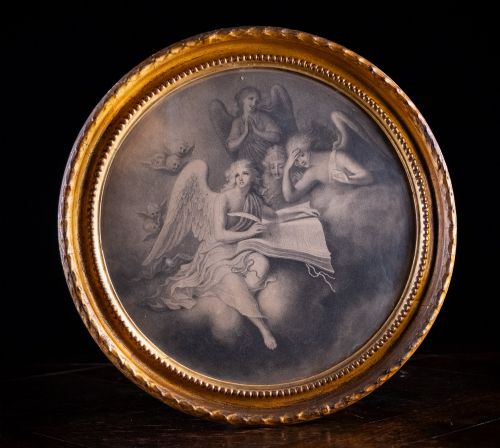
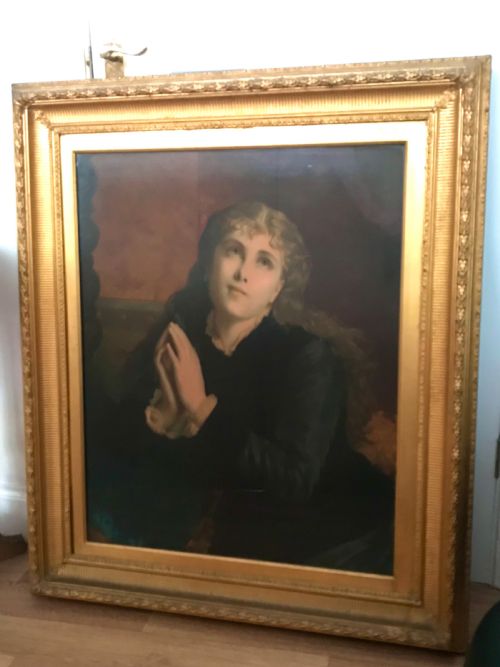
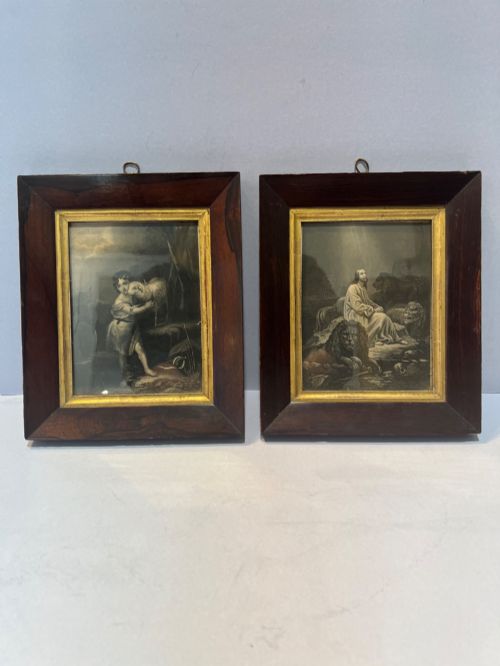
The selection here most frequently offers framed prints and reverse glass pieces from the 18th and 19th centuries, alongside classical engravings and oleographs on canvas. Subjects range from weeping angels and weeping figures to Mary Magdalene, the Madonna of the Chair, Adam and Eve, Saint Peter, and Christ.
Makers and publishers represented include Amand-Durand, FLETCHER after Sebastiaan Vrancx, Antonio Capellan after Michelangelo, F R Roffe, and Eugene Hindle. Styles span Neoclassical, Renaissance Revival, Dutch Golden Age, Victorian Neoclassical, Victorian and Gothic, and Victorian Academic Art.
How They Were Made
Makers produced these religious wall art print pieces using paper, canvas, and glass as the primary supports for ink, pigment, and gold leaf. Reverse glass techniques involved applying pigment and coloured mezzotint directly behind glass, often framed in giltwood or wood.
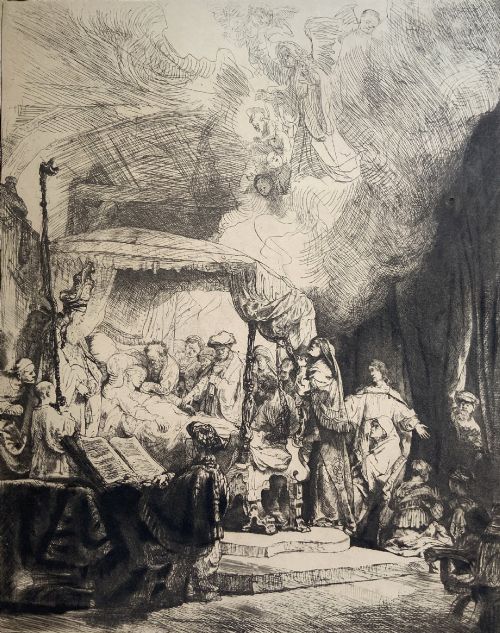
Printmakers utilised etching, engraving, and oleograph techniques to reproduce Old Master compositions and classical subjects. Publishers combined these printed or painted surfaces with protective glass and substantial wood frames.
Religious Wall Art Print Retail Price Guide 2026
Typical asking prices for religious wall art print among the pieces listed under this phrase on Sellingantiques today, from the lower quarter to the upper quarter. They describe what is for sale here now, not the wider market.
Early owners consulted The Christians Clock of Time paper sign to keep their spiritual schedules running smoothly.
What Varies in Quality
Quality in a religious wall art print depends on the precision of the engraving or etching lines and the fidelity of the pigment application. Finer examples retain crisp detail in the ink and brilliance in the gold leaf or hand colouring.
The preservation of the original glass, whether in reverse glass paintings or protective covers, influences the integrity of the piece. Superior specimens feature skilled execution by noted engravers or artists working after established masters.
Amand Durand·Sebastiaan Vrancx·Antonio Capellan·Michelangelo·F R Roffe·Eugene Hindle
The Religious Wall Art Print Glossary
- Mezzotint
- A printmaking process where the copper plate is roughened to achieve tones of grey and black before image details are scraped out. This technique allows for subtle gradations of light and shadow in religious subjects.
- Oleograph
- A type of chromolithography printed on canvas to simulate an oil painting. Manufacturers applied varnish to mimic the texture of genuine brushstrokes.
- Reverse Glass Painting
- An artwork created by painting or applying coloured mezzotint on the back of a glass panel so the image is viewed through the front. This method protects the pigment from atmospheric damage.
- Etching
- A printmaking method where acid cuts into unprotected areas of a metal plate to hold ink. Artists utilise this process to achieve fine, expressive lines.
- Giltwood
- Wood that has been coated with a thin layer of gold leaf or gold paint. It frequently borders antique religious frames to enhance their visual weight.
Religious Wall Art Print: Frequently Asked Questions
How do I hang a heavy framed print safely?
Ensure your wall fixings are secured into solid masonry or studwork rather than plaster alone. Use picture wire or D-rings rated well above the weight of the wood and glass frame.
Keep the piece away from direct sunlight and damp environments to protect the paper, canvas, and pigments over time.
What is a reverse glass painting?
A reverse glass painting is an artwork created by applying pigment or prints to the rear surface of a glass panel. When viewed from the front, the glass provides a glossy protective finish.
This technique was popular for devotional images during the 18th and 19th centuries because it kept colours vibrant.
How do I date an antique religious print?
Examine the paper quality, framing materials, and printing technique, such as engraving or etching. Paper made before machine production often shows chain lines from the mould.
Signatures, publisher details, and inscriptions also help narrow down the period, ranging from Georgian engravings to Victorian oleographs.
What subjects are common in these prints?
Common subjects include biblical scenes, portraits of Christ and the Virgin Mary, and figures such as Mary Magdalene and Saint Peter. Many works also feature angels, weeping figures, and allegorical Christian clocks.
These compositions often derive from Renaissance and Dutch Golden Age masters.