




Relief Dragon Urns
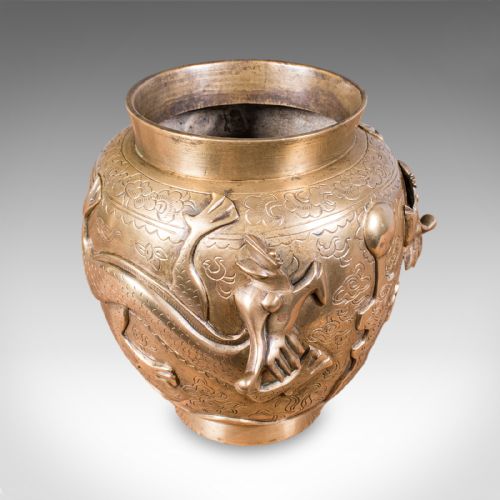
Relief dragon urns are heavily modelled vessels crossing late nineteenth-century Chinese and Japanese workshops, prized for the tactile depth of their scaly surface work.
Relief Dragon Urns
When searching for relief dragon urns, buyers encounter heavy metal and ceramic vessels originating from the nineteenth and early twentieth centuries. These pieces span Chinese and Japanese production, encompassing production periods such as the Meiji era and late Qing Dynasty.
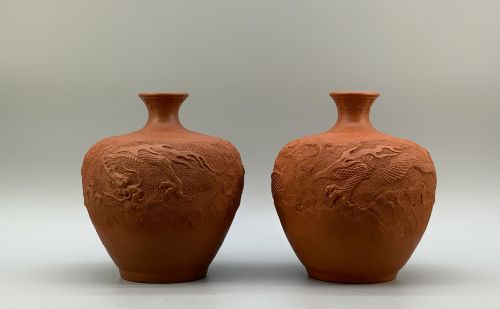
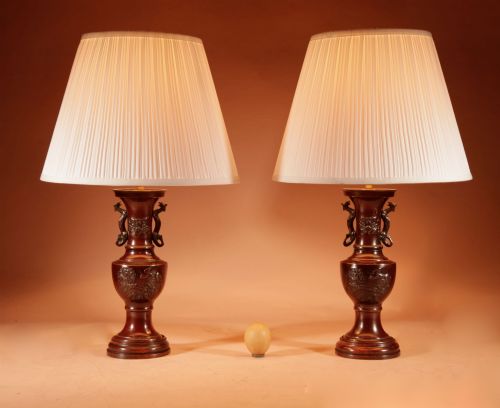
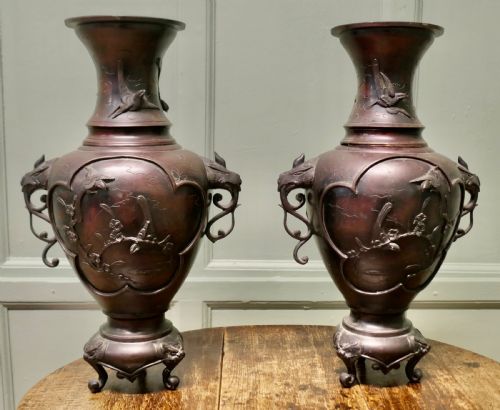
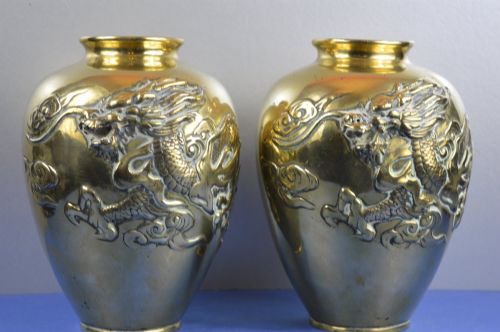
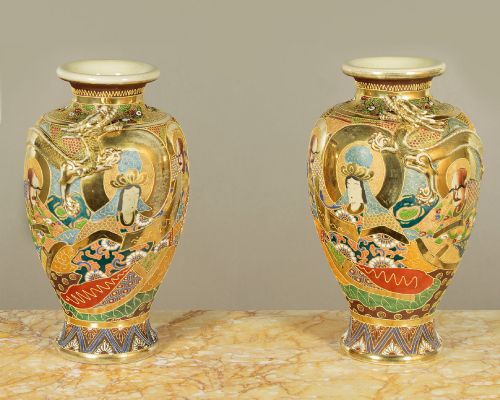
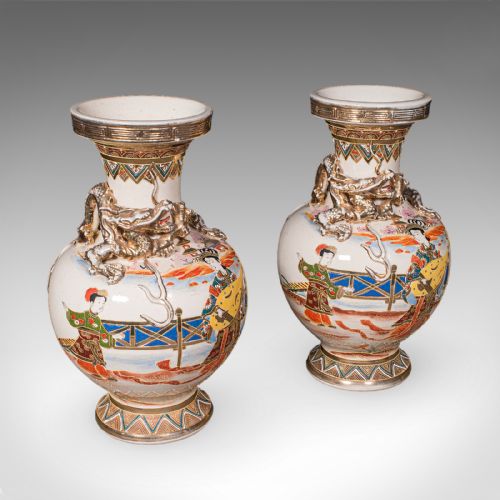
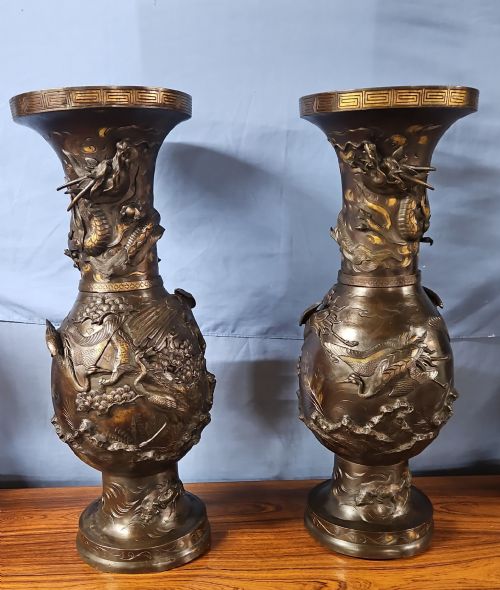
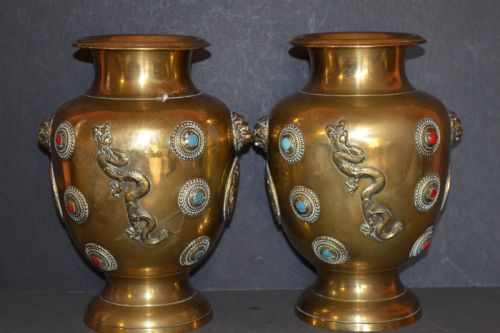
The forms on this page include baluster vases, jardinieres, and table lamps cast or modelled with prominent dragons winding around the body. Most examples appear as matched pairs, finished with high-relief detailing that stands clear of the main vessel wall.
Originating largely from Asian export markets of the Victorian period onwards, these urns combine sculptural dragon motifs with traditional vessel shapes. Buyers most frequently meet heavy bronze and red clay bodies executed with assertive modelling.
How they were made
Ceramic pieces utilise red clay, terracotta, and earthenware bodies, sometimes decorated with enamel and gold leaf accents. Satsuma and Tokoname workshops build up the surface texture using layered slip or moulded clay applications prior to firing.
Relief Dragon Urns Retail Price Guide 2026
Typical asking prices for relief dragon urns among the pieces listed under this phrase on Sellingantiques today, from the lower quarter to the upper quarter. They describe what is for sale here now, not the wider market.
Several heavy bronze specimens weigh over five kilos, ensuring the dragons are suitably anchored.
What varies in quality
Quality rests in the crispness of the modelling and the depth of the metalwork or clay relief. Superior pieces display sharply defined claws and individual scales that rise cleanly from the vessel body without blurring.
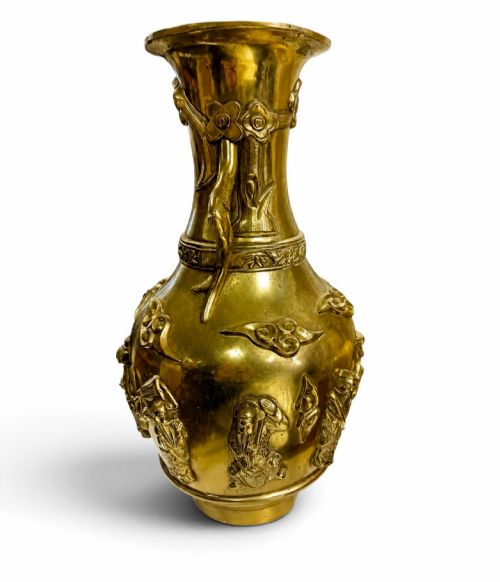
Weight and balance dictate the integrity of the cast bronzes, with heavier specimens demonstrating substantial metal thickness. Surface finishes also distinguish standard production from finer output, where patination or gilding remains rich and even.
The Relief Dragon Urns Glossary
- Baluster vase
- A tall vessel form characterised by a rounded body that tapers toward a narrow neck and flares slightly at the rim. This shape provides a stable canvas for wrapped dragon motifs.
- High-relief
- A sculptural technique where figures project significantly from the background plane, often standing almost entirely free of the vessel wall. In these pieces, the dragon bodies coil outward into three-dimensional space.
- Meiji Period
- The era of Japanese history lasting from 1868 to 1912, associated with intensive metalwork and ceramic production for export. Pieces from this time frequently exhibit disciplined bronze casting.
- Jardiñiere
- A large decorative ceramic or metal pot designed to hold growing plants. These open vessels often feature heavy dragon reliefs encircling the outer basin.
- Patination
- The natural or chemical coloration developed on the surface of bronze over time or through workshop treatment. Controlled patination enhances the contrast of the relief dragon details.
Relief Dragon Urns: Frequently Asked Questions
What materials are relief dragon urns made from?
The pieces listed on this page are constructed primarily from bronze, brass, and copper-alloys, alongside earthenware, terracotta, and red clay ceramics.
Metal examples often feature applied patination or gilt bronze work, while ceramic versions incorporate enamel and gold leaf decorations.
How can I tell Japanese from Chinese urns?
Distinguishing between the two traditions involves examining the specific styling of the dragon motifs and the associated base marks. Japanese pieces frequently align with Meiji period output, whereas Chinese examples may carry specific reign marks such as a Xuande base mark.
Form and material also offer clues, as certain red clay bodies and Satsuma ceramic styles point directly to Japanese kilns.
Are these urns usually sold as pairs?
Many of the metal and ceramic vessels listed appear as matched pairs, particularly within nineteenth-century bronze and Satsuma categories.
Single vases and jardinières also appear, but matched pairs remain a common format for display mantels and table arrangements.
How do I care for bronze dragon urns?
Bronze and copper-alloy surfaces require gentle dusting with a dry, soft cloth to prevent the accumulation of grit within the deep relief work. Avoid using chemical polishes or abrasive cleaners, which can strip the historic patination from the dragon scales.