


Regulator Floor Clock
These regulator floor clocks are precision timepieces housed in tall cases, prized by collectors for their accurate movements and striking architectural presence.
Regulator Floor Clock
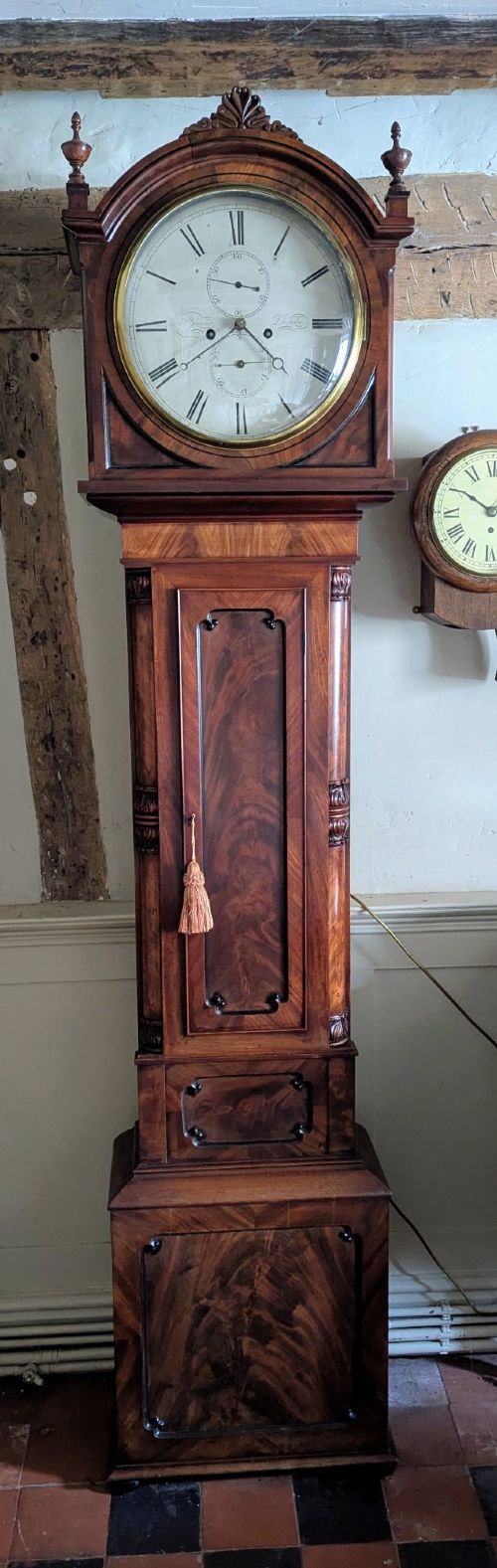
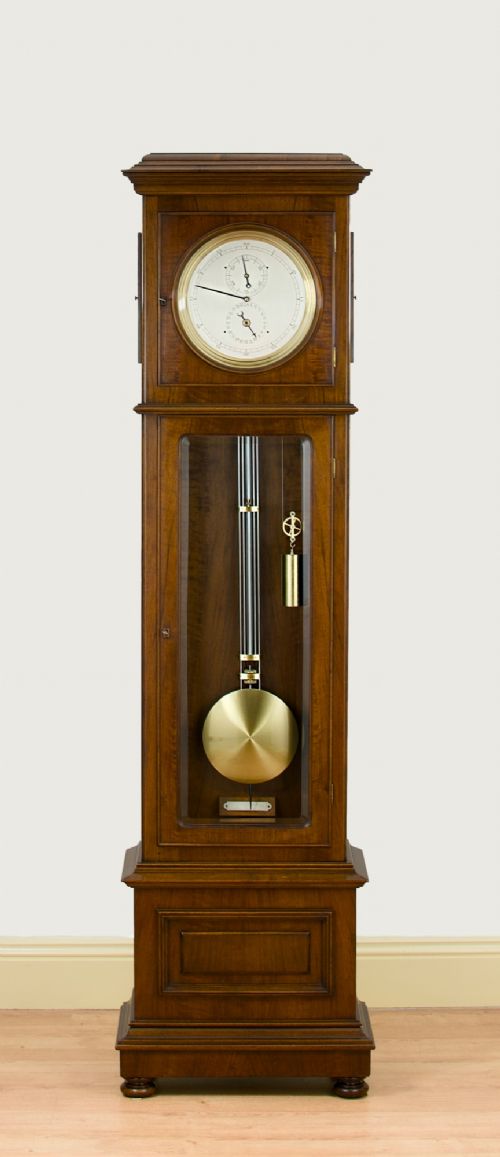
A regulator floor clock is a tall timekeeping instrument designed primarily for high accuracy, often featuring a long pendulum visible through a glazed door. These pieces span several centuries, with examples appearing from the Georgian, Regency, and Victorian eras through to the 1930s.
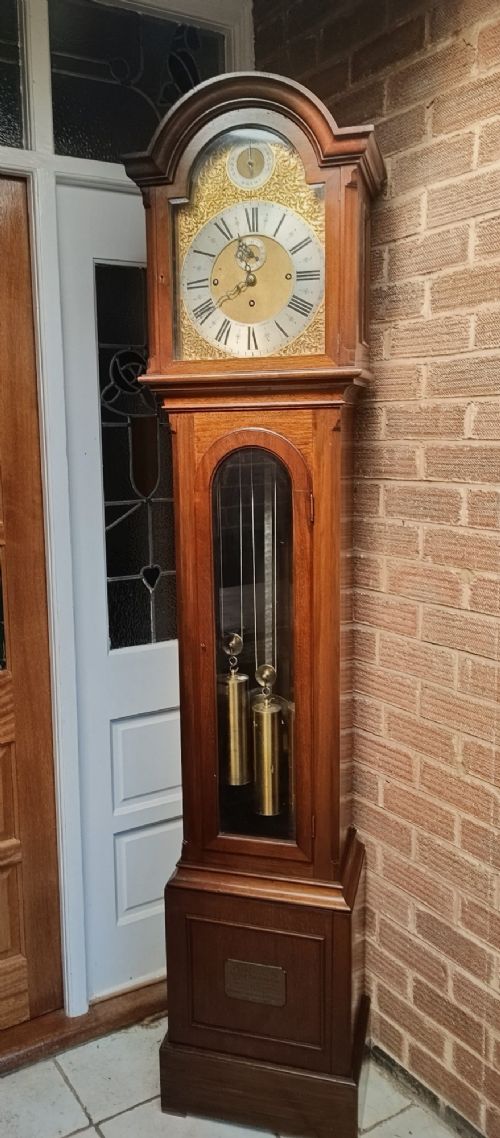
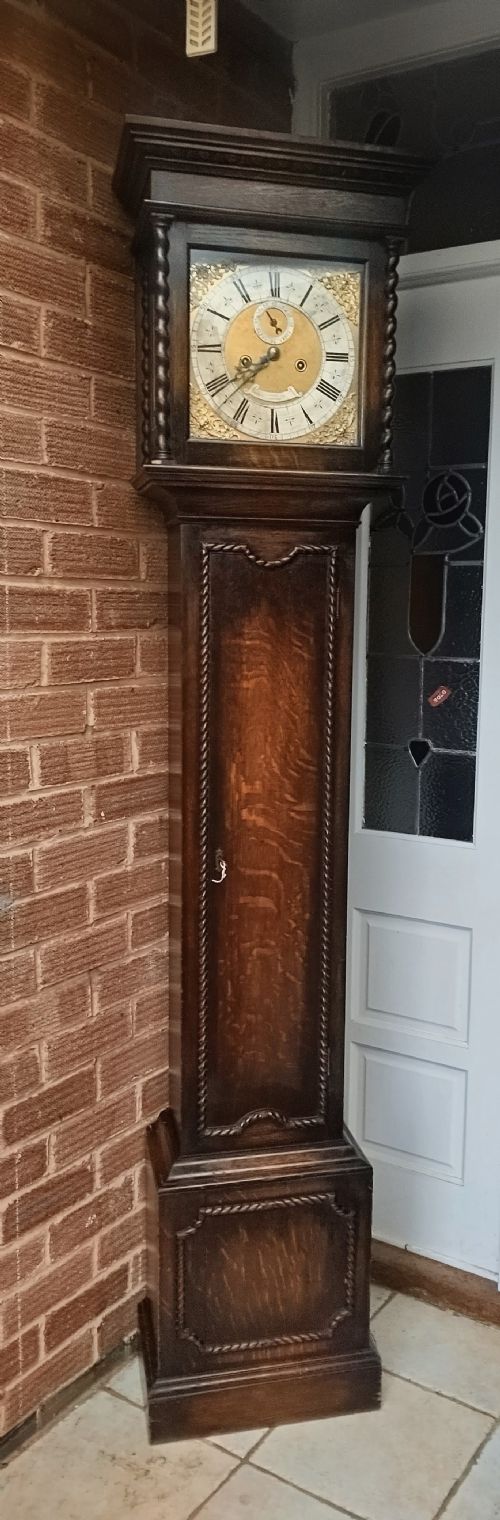
The most common form you will encounter on this page is the traditional longcase or grandfather clock format, housed in timber cabinets with brass and enamel dials. Alongside British works from makers in London, York, and Glasgow, you will find continental examples displaying French Louis XV and Louis XVI styles.
Makers adapted the form across different periods, shifting from classical mahogany proportions to Edwardian musical movements and later 1930s modernism. Each piece combines functional horology with the cabinet-making styles of its specific decade or century.
Materials and construction
Cabinet makers utilised dense hardwoods such as mahogany, oak, and kingwood to construct the tall floor cases, ensuring stability for the heavy internal mechanisms. These timber bodies frequently incorporate glass panels to protect the dial while allowing a clear view of the swinging pendulum.
The interior mechanical assemblies rely heavily on brass for gears and plates, paired with silvered metal or enamelled dials for clear legibility. Finer continental pieces further embellish the wooden carcasses with cast ormolu mounts and decorative inlays.
Materials span solid mahogany and oak through to decorative kingwood and ormolu mounts.
Distinctions in quality
Quality in these clocks rests heavily on the precision of the movement and the integrity of the maker's signature. Pieces bearing signatures from established regional or metropolitan workshops often indicate higher standards of horological engineering.
The choice of exterior materials and cabinetry work also drives distinction across the range. Solid mahogany or kingwood cases featuring refined brass or ormolu mounts sit at the upper end, supported by crisp dial engraving and uncompromised proportions.
Elliott·Gillett and Johnston·Lenzkirch·James Wood·Pearce and Sons·Aitchison of Glasgow·Hampston Prince and Cattles of York·Frederick Rowe of Great Marlow·Richard Rowell of Oxford·French Royal Exchange
The Regulator Floor Clock Glossary
- Regulator
- A precision pendulum clock used as a standard for setting other timepieces. They were designed for maximum accuracy in observatories, offices, and wealthy homes.
- Longcase clock
- A tall, freestanding pendulum clock enclosed in a wooden case with a weighted drop. Commonly referred to as a grandfather clock.
- Ormolu
- Gilded bronze used widely for decorative mounts on French furniture and clock cases. It provides a bright golden metallic finish.
- Silvered metal
- A metal dial surface treated with a silver solution to create a matte white finish for engraved numerals. This technique prevents glare and ensures high legibility.
- Chiming movement
- A mechanical clock feature that sounds the quarters or hours using bells or gongs. Some Edwardian examples play multiple tunes.
Regulator Floor Clock: Frequently Asked Questions
Where should I place my clock?
Position the piece against a solid interior wall away from direct sunlight and fluctuating heat sources like radiators. A stable foundation prevents vibrations that can disrupt the pendulum.
Ensure the floor is completely level so the clock beats in proper time and the escapement functions evenly.
How do I tell an 18th century case from a 19th century one?
Examine the proportions of the hood and trunk, as earlier Georgian cases often show simpler, more restrained architectural lines. Wood selection and secondary timbers inside the case also shift across decades.
Later Victorian and Edwardian examples frequently incorporate heavier mouldings and more ornate dial treatments compared to their earlier counterparts.
What is the difference between a longcase and a regulator?
While both share a tall floor-standing case, a true regulator prioritizes exceptional timekeeping precision over domestic convenience. They often feature specialised deadbeat escapements and a clear view of the second hand.
Standard longcase clocks focus on general household timekeeping and frequently include striking or chiming trains alongside calendar displays.