




Regional Windsor Chair
A regional windsor chair brings tactile local character to a room, formed by generations of country makers using native timbers.
Regional Windsor Chair
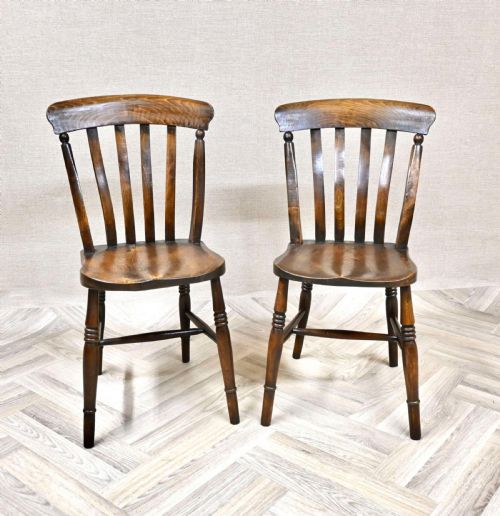
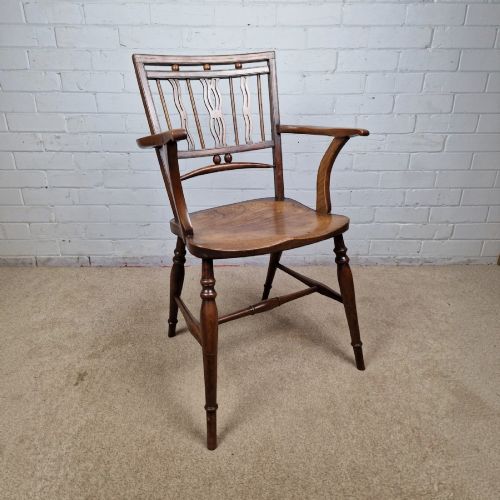
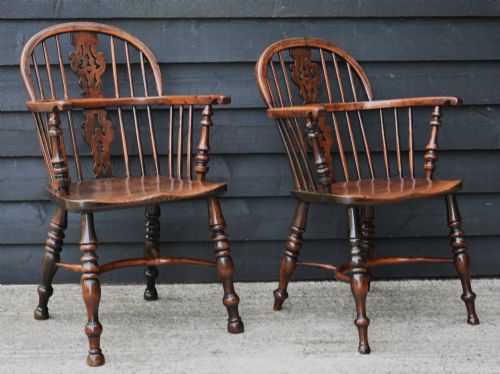
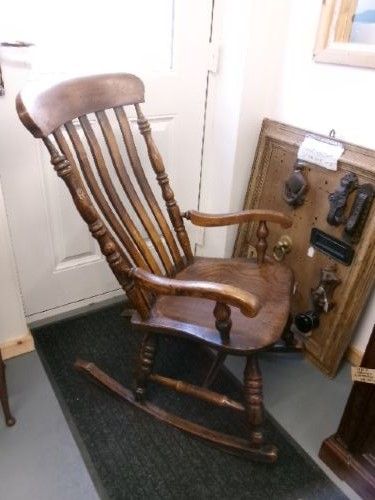
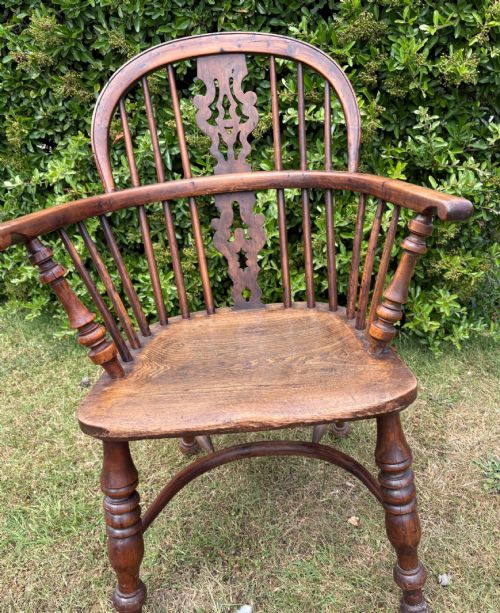
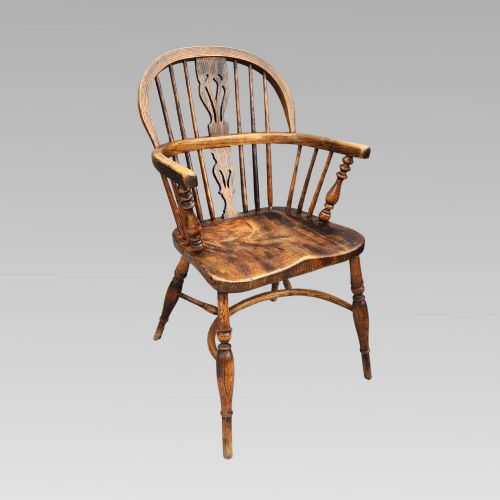
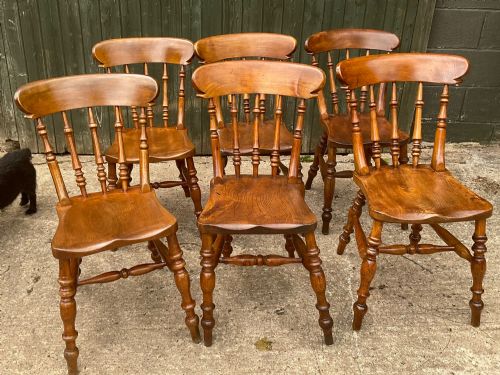
A regional windsor chair is a traditional timber seat defined by distinctive local idioms and construction methods developed across different counties. These pieces range from low back and high back armchairs to kitchen chairs, rocking chairs, and child's chairs.
Buyers are most likely to encounter nineteenth century and Georgian examples on this page. These seating options emerge from specific English regions including Yorkshire, the Thames Valley, Nottinghamshire, and the West Country.
How They Were Made
Makers constructed these chairs by combining contrasting native timbers for different structural parts. Seats were commonly carved from solid elm or oak, while backs and spindles utilised ash, yew, fruitwood, or cherrywood.
The traditional method relied on wedged tenon joints where turned spindles and legs passed directly through the thick wooden seat slab. Bending steam-softened wood allowed craftsmen to shape continuous bows and arm rails without weakening the grain.
Recorded forms span low backs, high backs, broad arms, and rocking variants attributed to specific regional workshops.
What Varies in Quality
Quality rests in the choice and figuring of the timber, particularly where richly grained yew wood or burr yew is selected for the arms and hoop. The handling of the turning on the legs and spindles reveals the competence of the local turner.
Proportion and scale distinguish finer examples from standard workshop production, with balanced arm spreads and well-sculpted seats commanding greater visual presence. The integrity of the original construction and the retention of clean joinery determine the standing of each piece.
Gabbitass Worksop·John Brand of Sleaford·Duncan McKellar of Fenwick·John Moss Worksop·Allsop Worksop·Rockley Maker
The Regional Windsor Chair Glossary
- Broad arm
- A chair featuring a wide, flat wooden armrest designed for writing or comfort. This feature appears frequently on regional examples from specific northern counties.
- Comb back
- A Windsor chair variation where vertical spindles rise through a flat horizontal arm rail to support a secondary cresting rail resembling a comb. It is an early and desirable regional form.
- Low back
- A Windsor chair configuration where the arm rail sits at a lower level around the sitter. These compact chairs are often constructed in yew wood.
- Stick back
- A chair design utilising simple turned or cleft uprights rather than a solid splat to form the backrest. This construction provides resilient support.
- Thames Valley
- A recognised regional style originating along the river valleys of southern England, frequently associated with high quality yew and fruitwood construction.
Regional Windsor Chair: Frequently Asked Questions
What is a regional windsor chair?
A regional windsor chair is a wooden seat built with a distinct combination of native timbers and local design traits. Different English districts developed recognizable variations in back shapes and arm styles.
Craftsmen adapted these seating forms to suit local domestic needs, resulting in diverse regional styles across the countryside.
How can I tell where a windsor chair was made?
Regional origins are identified by specific timber choices and structural characteristics unique to certain areas. For example, Thames Valley pieces often employ yew wood and fruitwood, while Yorkshire chairs display distinct spindle layouts and broad arms.
Local turnery patterns and back designs offer further clues to the workshop's geographic provenance.
Were these chairs used for dining?
Many of these pieces served as everyday kitchen and dining chairs around farmhouse tables. Matched sets were produced for domestic dining spaces.
Sturdier armchair versions were typically reserved for the head of the household or fireside placement.
How do I care for a historic wooden chair?
Maintain these chairs by keeping them away from direct heat sources and extreme humidity fluctuations. Applying appropriate wax feeds the timber and protects the historic surface finish.
Avoid over-cleaning to preserve the natural patina accumulated over centuries of use.