
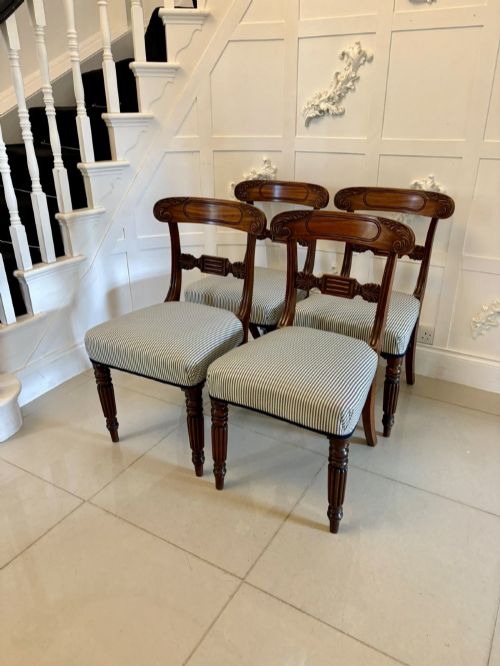
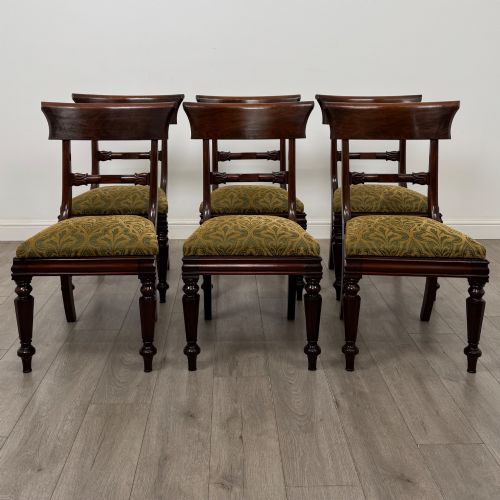
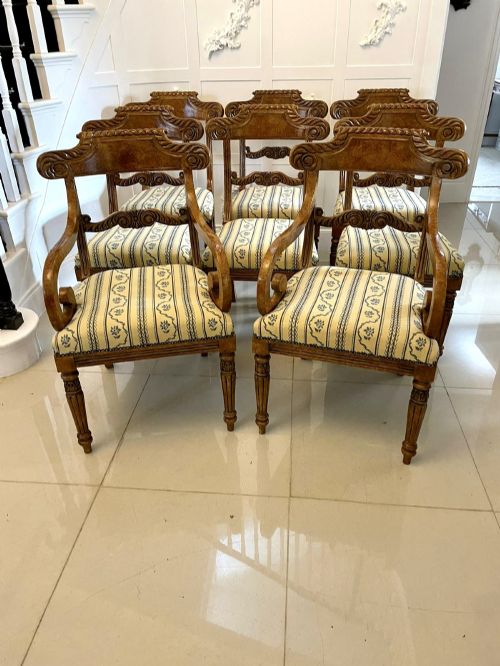
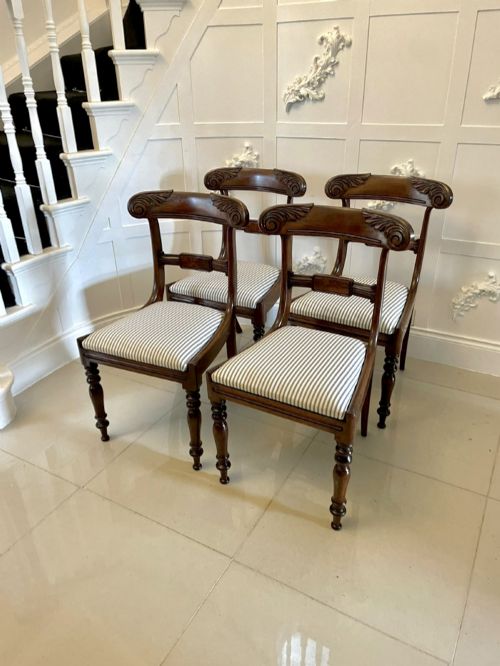


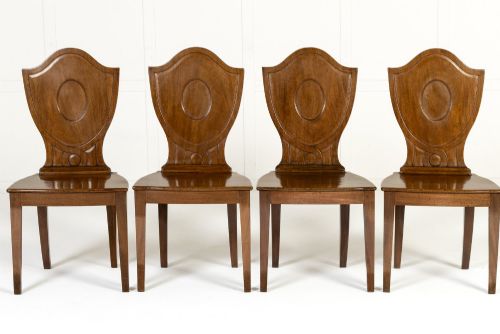
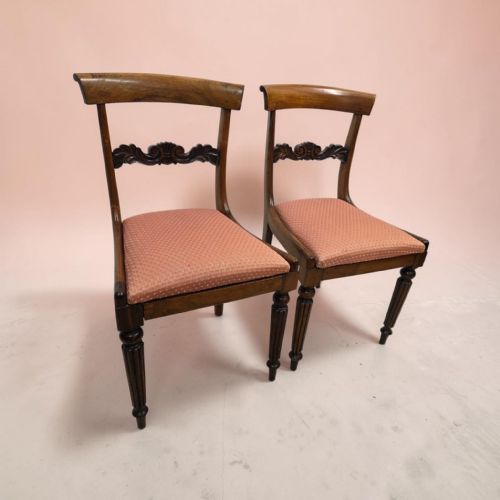
Regency Wooden Side Chairs
Regency wooden side chairs bring architectural clarity and refined timber to a room, offering enduring seating with distinct classical proportions.
Regency Wooden Side Chairs
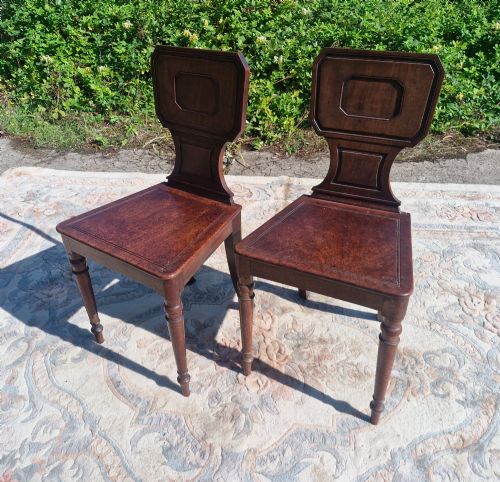
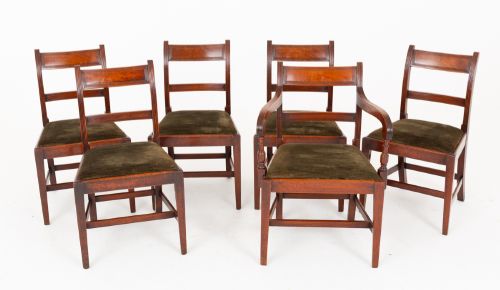
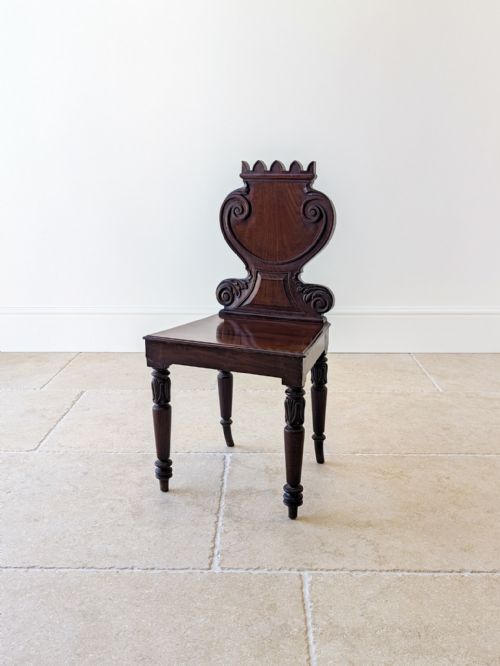
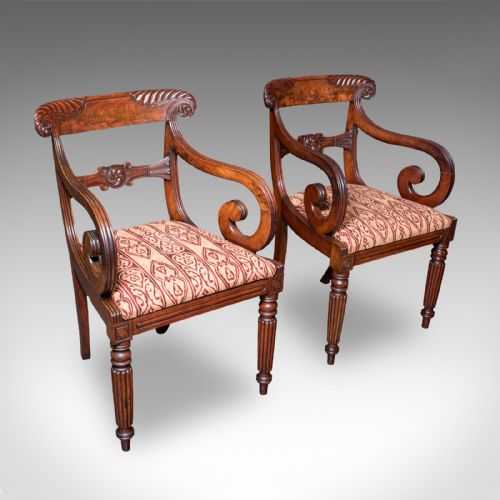
Regency wooden side chairs comprise dining seats, hall chairs, and occasional seating originating predominantly from the early nineteenth century. Buyers searching this phrase meet sturdy mahogany, rosewood, and fruitwood examples shaped by classical architectural influences.
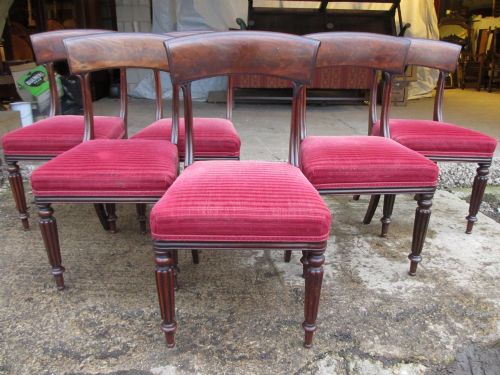
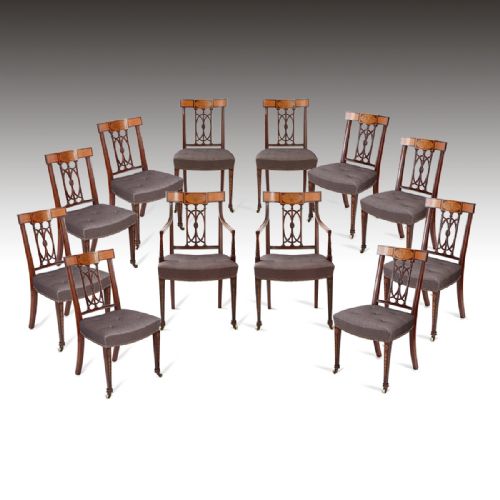
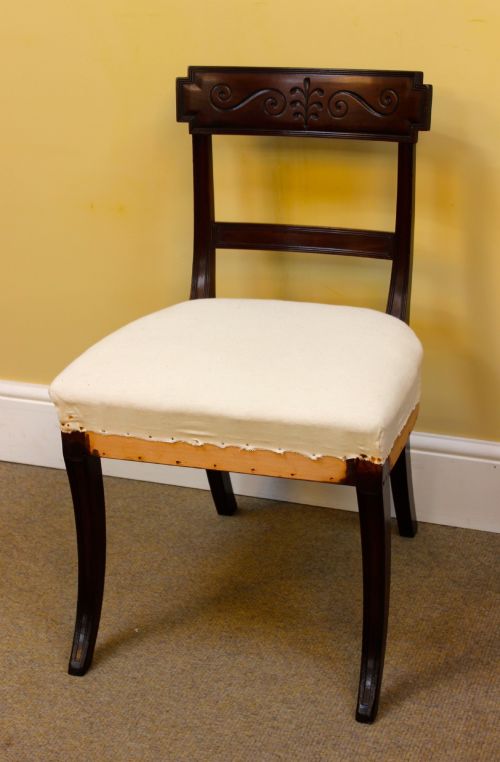
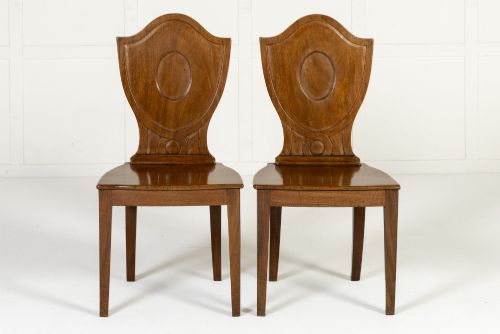
The selections span matched sets and individual pairs, reflecting both formal dining rooms and grand hallways. Many pieces display architectural motifs such as sabre legs, bar backs, and shield backs characteristic of the period.
While the core inventory adheres to Regency and William IV eras, later revivals also appear alongside Georgian survivals. Mahogany dominates the available forms, supplemented by cane seats, brass inlay, and painted decoration.
Materials and construction
Cabinetmakers relied heavily on dense tropical hardwoods like mahogany and rosewood, alongside native fruitwoods for regional variations. Timber selection ensured structural integrity for slender legs and curved backrests.
Detailed embellishment involved brass inlay, ebonisation, and painted decoration to mimic exotic grains like birds-eye maple. Seats utilised woven cane or drop-in upholstered pads covered in traditional fabric.
Joinery techniques prioritized rigid mortise and tenon joints to support the weight of occupants without heavy bracing. Turned and carved components demonstrate precise hand-tool work across splats, rails, and legs.
Current listings feature timber varieties spanning mahogany, rosewood, fruitwood, and decorative faux maple across the Regency, Georgian, and Victorian periods.
Standards of craftsmanship
Superior examples reveal crisply carved details and well-balanced proportions that maintain stability over centuries of use. Finer timbers exhibit deep, rich grain patterns and meticulous matching across sets.
The integrity of the frame assembly separates exceptional pieces from ordinary ones, particularly where back rails meet uprights. Original surface finishes and undisturbed joinery preserve the historical value of individual chairs.
Subtle variations in brass inlay precision and cane weaving tension distinguish high-workshop output from standard commercial production.
The Regency Wooden Side Chairs Glossary
- Sabre leg
- A concave curved leg that tapers toward the foot, typical of classical revival seating. This shape provides outward stability while maintaining a light visual profile.
- Bar back
- A horizontal wooden slat across the upper backrest of a chair, often curved to fit the spine. These elements frequently feature central carved tablets or brass mounts.
- Hall chair
- A rigid wooden seat designed primarily for display in an entrance hall rather than prolonged dining comfort. They often incorporate carved family crests or plain wooden seats.
- Shield back
- A heart-shaped or shield-shaped chair back popular in late Georgian designs. The internal splat usually fans out into intricate carved patterns.
- Cane seat
- A seating surface woven from peeled rattan strips in an open mesh pattern. This technique offers flexible support and a lightweight appearance.
Regency Wooden Side Chairs: Frequently Asked Questions
How do I identify a genuine Regency side chair?
Examine the timber choice, construction joinery, and classical decorative motifs such as sabre legs or brass inlay. Genuine examples show period-appropriate hand-tool marks and structural wear consistent with nineteenth-century manufacture.
Compare the proportions and wood patination against documented pieces from the Regency and William IV eras to confirm authenticity.
Can these chairs be used for everyday dining?
Most antique wooden side chairs remain structurally sound for daily use if the joints are secure and stable. Timbers like mahogany provide exceptional strength, though original cane seats require careful weight distribution.
Routine inspection of the underframe ensures that centuries-old glue joints continue to support regular sitting without strain.
What is the difference between a side chair and an armchair?
Side chairs are built without armrests, designed to sit neatly around a dining table or against a hallway wall. Armchairs include structural elbow supports and are traditionally positioned at the head of a table or in a morning room.
Both forms often share matching decorative schemes within larger dining sets.
How should I care for antique wood and upholstery?
Keep wooden surfaces away from direct sunlight and fluctuating heat sources to prevent timber splitting or veneer lifting. Apply appropriate natural waxes sparingly to maintain the protective patina of the mahogany or rosewood.
Protect fabric upholstery and cane work by avoiding excessive moisture and cleaning gently with soft, dry brushes.