

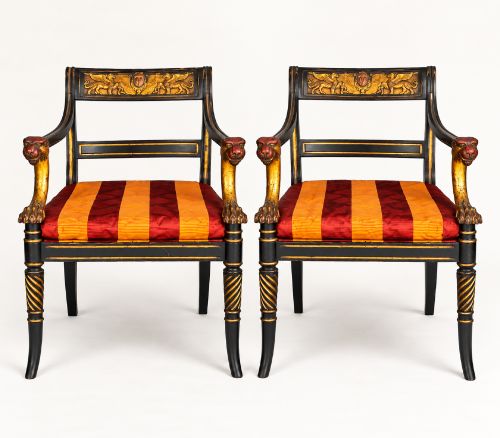
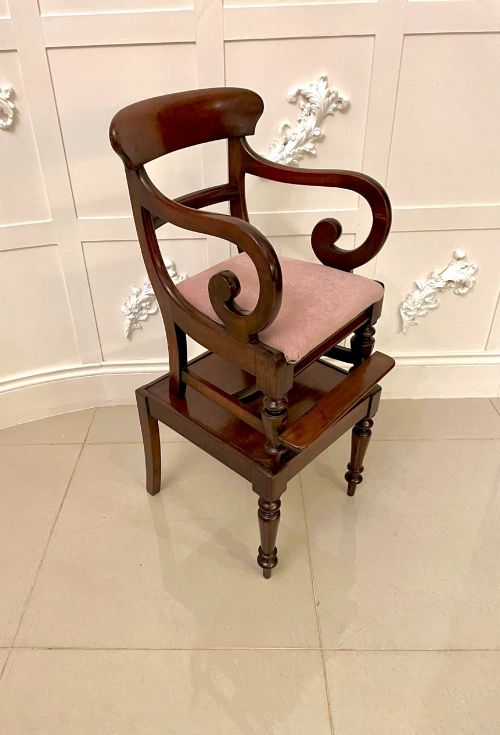
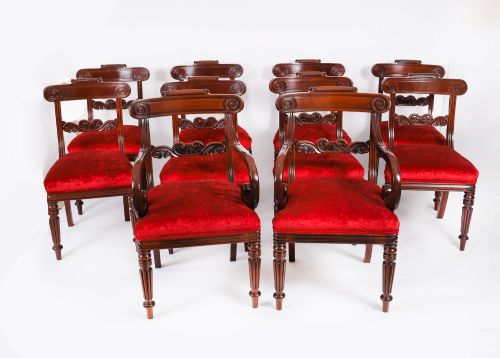
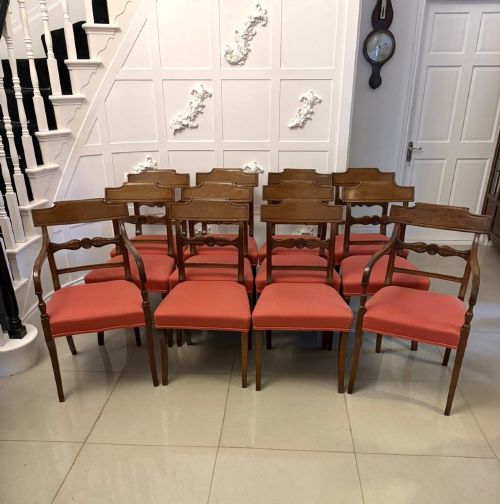

Regency Wooden Armchairs
Regency wooden armchairs combine clean classical lines with the rich warmth of polished timber, offering a grounded elegance for any seating arrangement.
Regency Wooden Armchairs
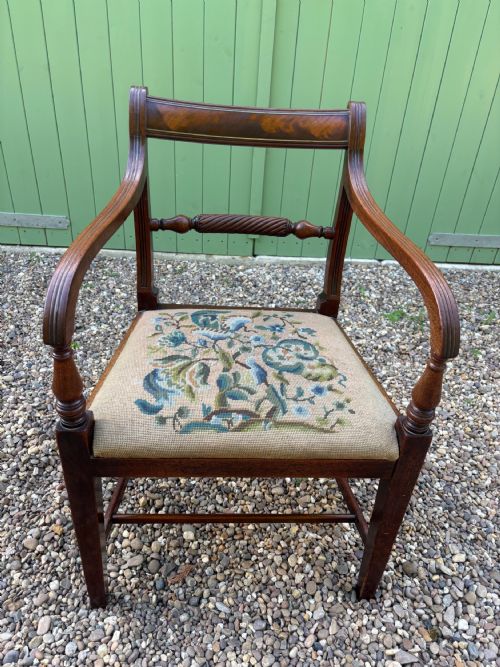
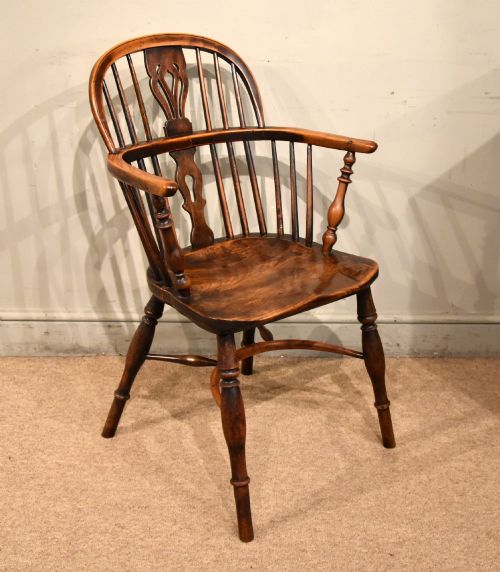
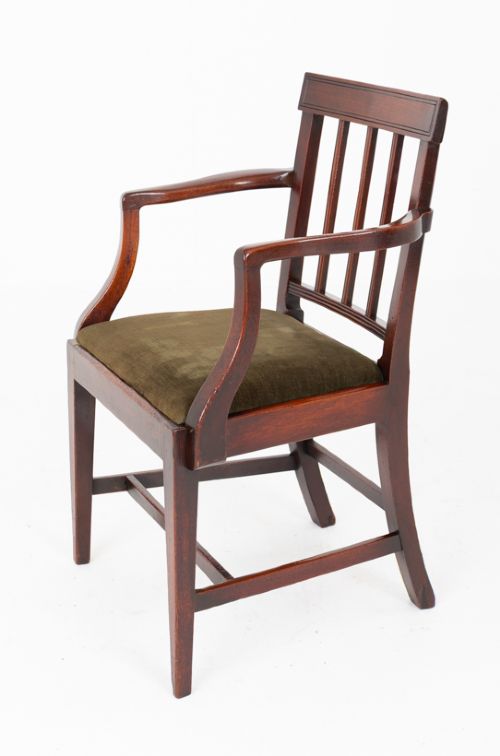
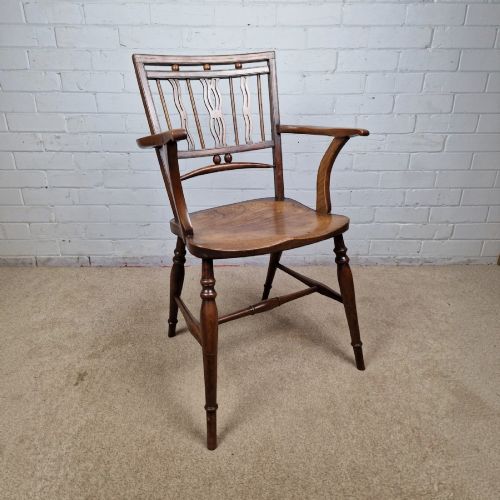
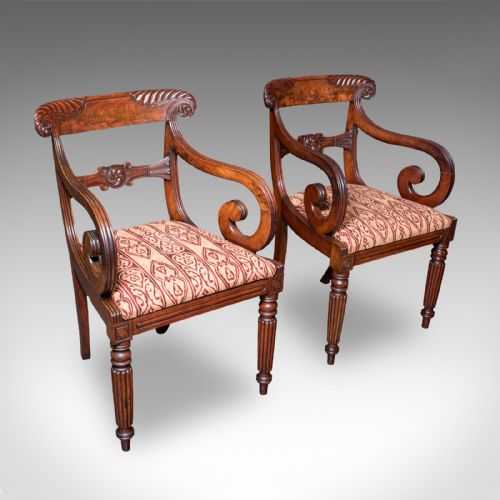
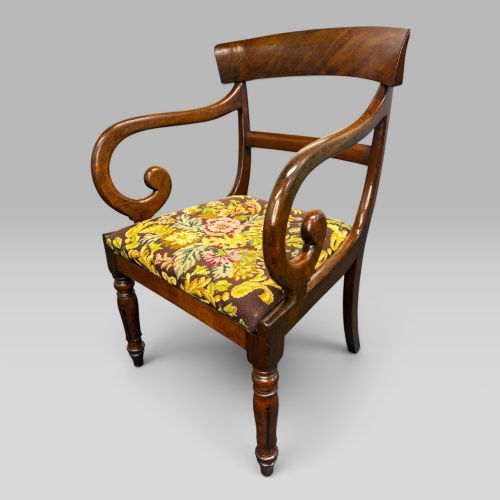
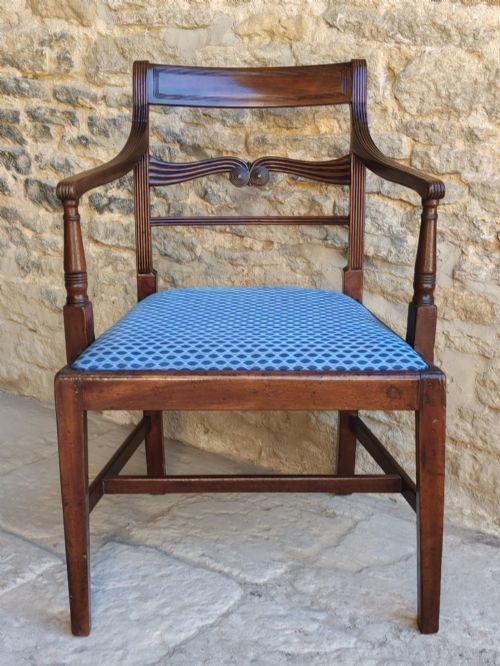
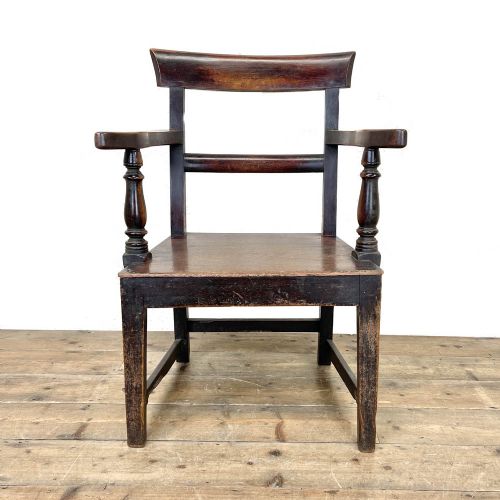
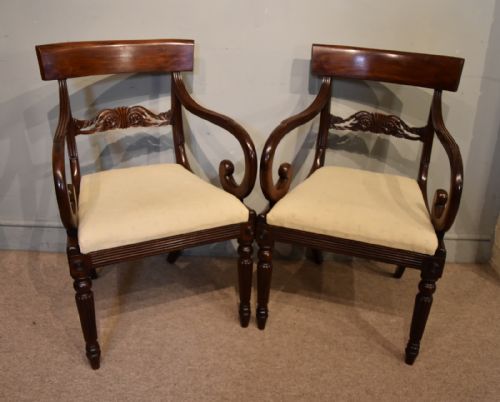
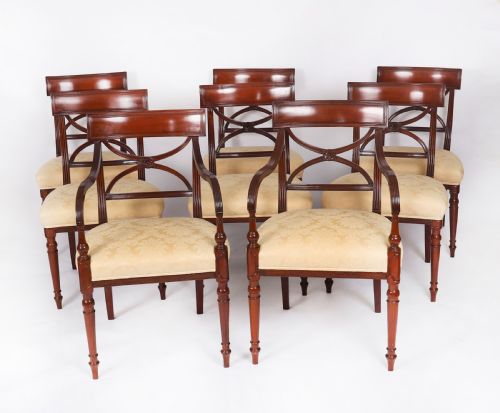
When you search for regency wooden armchairs, you encounter a focused selection of seating that spans formal dining carvers, library desk chairs, and regional country windsors. The core of what is available centres on mahogany formal armchairs alongside elm, yew, and fruitwood country designs.
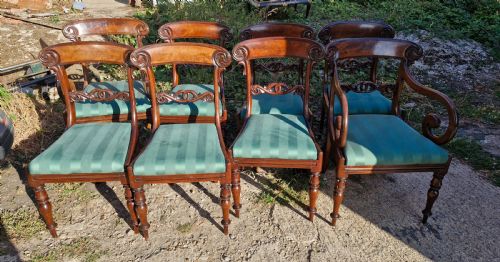
The pieces on this page draw from the Regency, Georgian, and William IV periods, capturing both urban drawing rooms and rural vernacular workshops. Dining carvers and elbow chairs dominate the selection, often appearing singly or in matched sets.
Origins range widely from refined English cabinetmakers to provincial regional makers utilising local timbers. This mix provides a direct link to nineteenth-century domestic seating habits, whether for formal dining or fireside reading.
What varies in quality
The refinement of the carving separates standard production seating from exceptional examples, particularly in the crispness of reeded legs, scrollwork, and back rails. Timber selection dictates the base visual appeal, with dense, figured mahogany sitting above plainer utility woods.
Structural integrity depends upon the original joinery remaining tight and undisturbed through centuries of use. Subtle details such as gracefully curved arms and well-balanced proportions distinguish master carpentry from straightforward regional manufacture.
Regency Wooden Armchairs Retail Price Guide 2026
Typical asking prices for regency wooden armchairs among the pieces listed under this phrase on Sellingantiques today, from the lower quarter to the upper quarter. They describe what is for sale here now, not the wider market.
Listings feature mahogany, yew, elm, fruitwood, and cane, spanning the Regency, Georgian, William IV, and Victorian periods.
The Regency Wooden Armchairs Glossary
- Carver
- An armchair designed to match a set of dining chairs, usually featuring arms set wider to accommodate formal clothing. These pieces sat at the head of the dining table.
- Elbow chair
- An alternative term for an armchair, often used to describe seating with short arms that terminate before the front edge of the seat.
- Windsor
- A chair constructed with a solid wooden seat into which the legs and back spindles are wedged directly. These country pieces often combine yew, elm, and fruitwood.
- Crinoline stretcher
- A bentwood brace shaped like a hoop that connects the legs of a Windsor chair to provide extra rigidity. It is typically found on mid-nineteenth-century regional examples.
- Ropeback
- A chair back featuring carved decoration resembling a twisted rope, characteristic of the Regency period. This motif reflects classical maritime and architectural influences of the time.
- Shield back
- A chair back designed in the outline of a heraldic shield, popularised during the Georgian era. The internal splats often feature intricate carved openwork.
Regency Wooden Armchairs: Frequently Asked Questions
What is a carver chair?
A carver chair is an armchair built to match a set of single dining chairs, traditionally placed at the head and foot of the table.
These pieces feature open arms designed to accommodate historical attire while providing a supportive seat during long meals.
How do I identify a Regency armchair?
Regency armchairs are recognised by their classical proportions, scroll arms, and influences drawn from ancient Roman and Greek design.
They frequently utilise dark mahogany, saber legs, and carved details such as rope twist motifs or brass accents.
What is a Windsor armchair?
A Windsor armchair is a sturdy wooden seat where the legs and back spindles are tenoned directly into a thick, shaped solid wood seat.
These chairs usually combine different timbers, such as elm for the seat and yew or fruitwood for the bowed back and spindles.
Where should I place an antique elbow chair?
Antique elbow chairs work well as occasional seating in a hallway, reception room, or paired with a desk in a study.
Their compact scale and open arms allow them to fit comfortably against walls or beside fireplaces without overwhelming smaller spaces.