



Regency Wine Cooler Brass
These pieces of regency wine cooler brass bring classical proportion and gleaming metalwork straight into a dining room or drawing room.
Regency Wine Cooler Brass
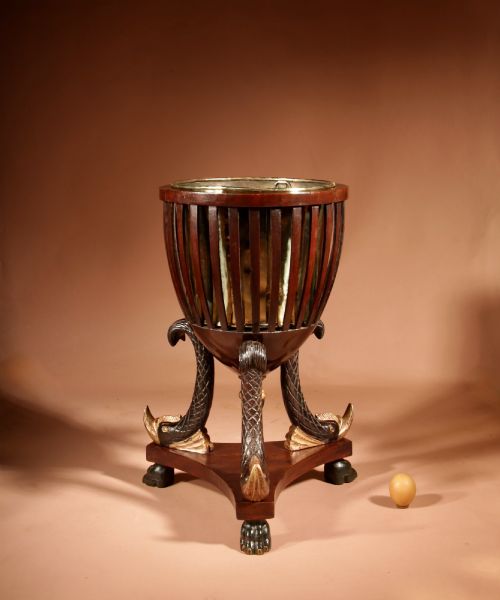
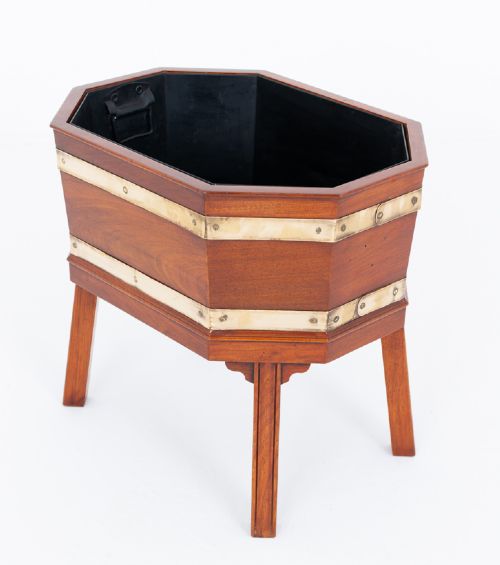
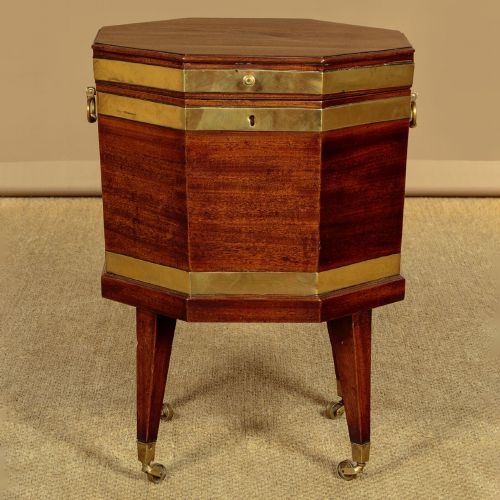
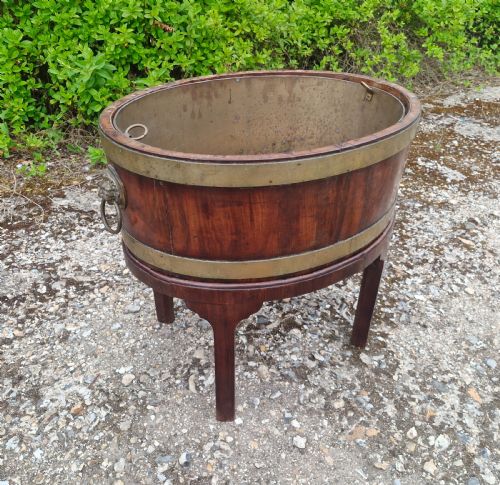
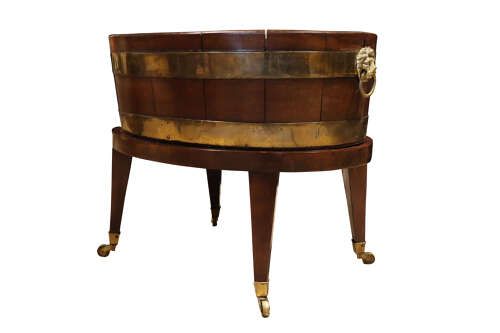
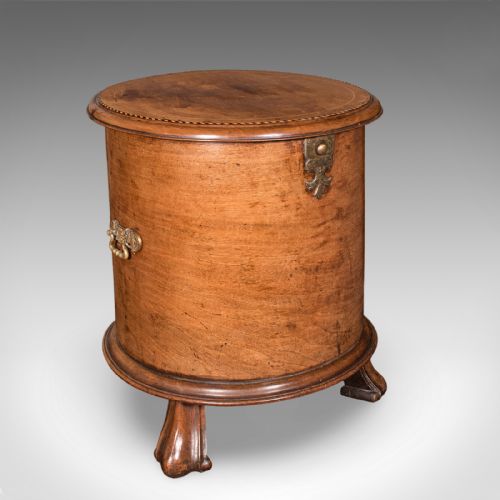
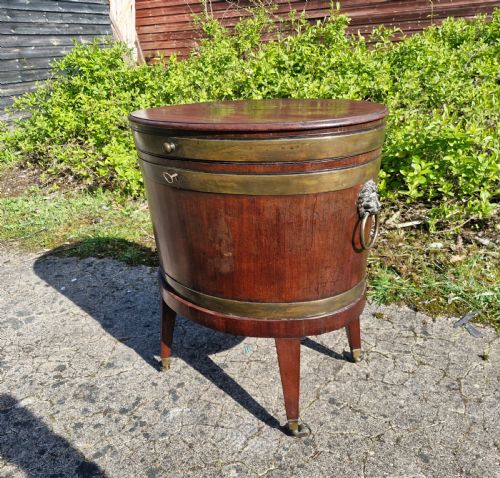
When searching for a regency wine cooler brass, a buyer looks at vessels designed to chill wine or hold bottles at the dining table during the Georgian and Regency periods. The forms seen most often on this page take the shape of a sarcophagus, an oval bucket, an elliptical tub, or a cylindrical planter.
Makers of the era also produced pieces influenced by French Empire and Dutch Empire styles, alongside later revivals from the twentieth century. These items served practical domestic duties for wine and champagne, though many function today as plant jardinières or display pieces.
The materials span rich dark timbers fitted with robust metal bands, liners, and mounts. Walnut, oak, and ebonised wood join mahogany, whilst copper, zinc, and gilt bronze provide the contrasting metallic elements that define the group.
Materials and construction
Cabinetmakers utilised solid and veneered timbers such as mahogany and walnut, frequently employing coopered construction methods to build curved staves for buckets and tubs. These wooden bodies were reinforced with structural brass bands, hoops, and handles to secure the joints.
Metals played a dual role in both utility and ornament, with zinc and copper liners holding ice and water inside the wooden frames. Exterior decorative work relied on brass repoussé, cast mounts, and animal head handles fastened securely to the timber.
Listings span pieces from the Georgian and Regency eras alongside twentieth-century revivals in mahogany, walnut, and brass.
Markers of quality
The standard of a piece rests upon the crispness of its cooperage and the weight of its brass mounts. Superior examples display tightly joined timber staves and heavy, well-cast metal fittings that sit flush against the wood.
Proportion and decorative restraint separate finer workshop production from simpler utilitarian items. The integration of classical motifs, such as neoclassical lines or animal head handles, dictates the formal success of the design.
Gillows of Lancaster and London·Charles Heathcote Tatham
The Regency Wine Cooler Brass Glossary
- Cellarette
- A lockable container or box used to store wine bottles near the dining table. They frequently feature internal partitions and brass carrying handles.
- Coopered
- Built using curved wooden staves bound together with metal hoops, much like a traditional barrel. This technique provided the strength needed for holding wet contents.
- Sarcophagus
- A monumental container shape with sloping sides, often resting on paw feet or a plinth base. This classical form proved popular for grand Regency wine coolers.
- Repoussé
- Metalworking technique where the metal is hammered from the reverse side to form a raised design in relief. It appears frequently on brass jardinières and planters.
- Jardiniere
- An ornamental pot or stand designed to hold growing plants or flowers. Many wine coolers transitioned to this decorative use over time.
Regency Wine Cooler Brass: Frequently Asked Questions
What is a regency wine cooler brass used for today?
These vessels suit modern interiors as standing planters, champagne holders at gatherings, or decorative floor pieces in a hallway.
Their robust metal liners and waterproof interiors mean they handle live potted plants and ice with ease.
How do I tell a Regency period piece from a later copy?
Examine the timber shrinkage, the method of hand-cut dovetailing, and the composition of the internal metal liners. Period items display hand-forged fixings and timber patination consistent with early nineteenth-century workshop practices.
Twentieth-century revivals often use more uniform machine milling and standardised brass screws.
What is the difference between a cellarette and a wine cooler?
A cellarette typically takes a box or cabinet form, sometimes with a fitted interior to keep individual bottles secure and occasionally locked. Wine coolers more frequently follow open bucket, tub, or sarcophagus shapes designed for immersion in ice.
Both terms often overlap in historic descriptions and marketplace listings.