
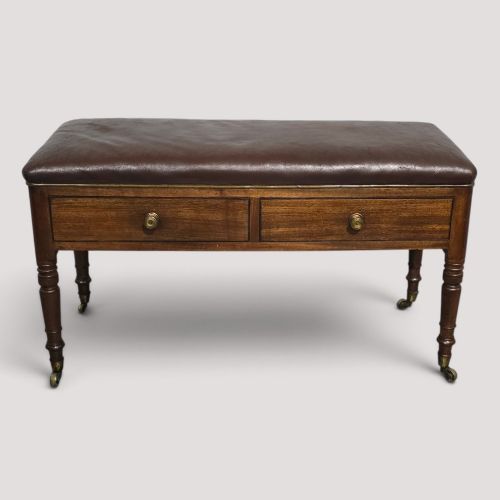
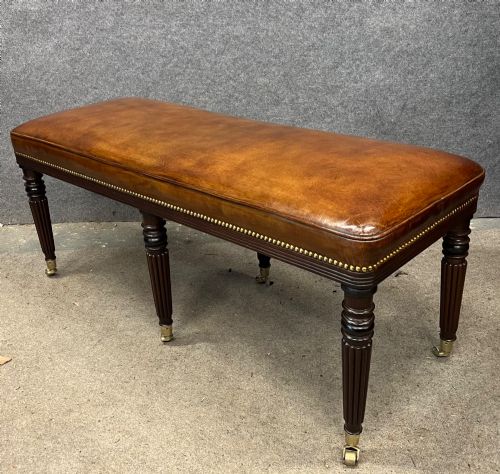
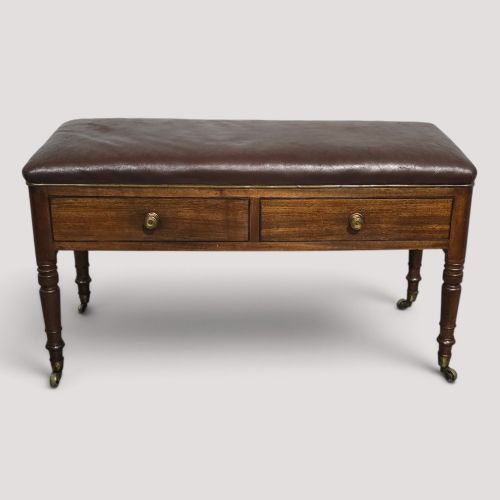
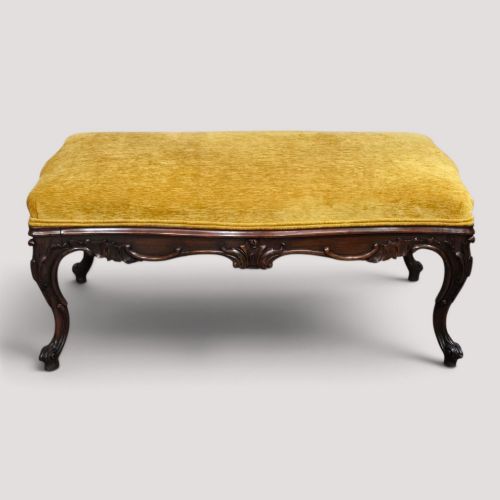
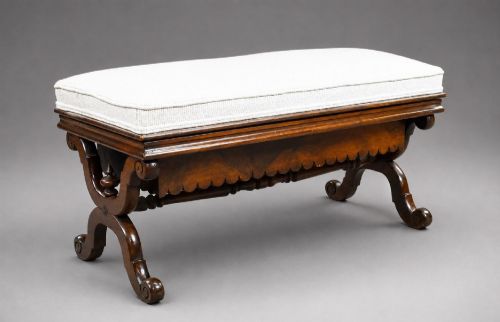
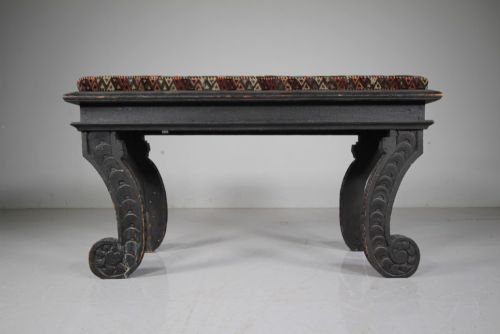
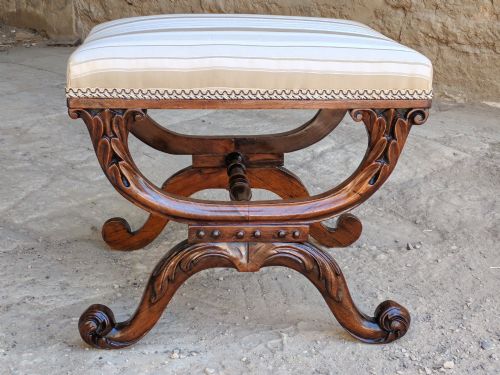
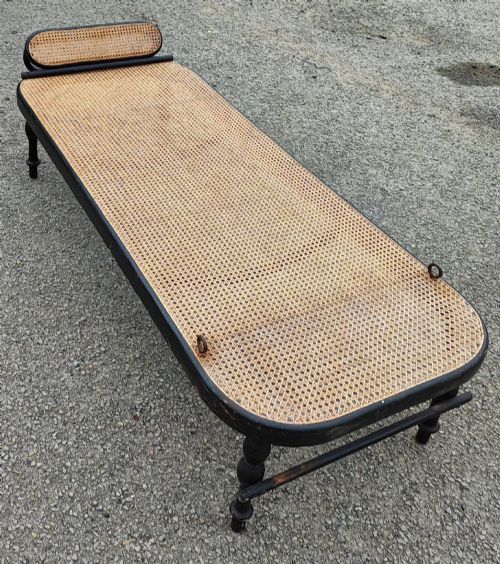


Regency Window Stool
Regency window stools are elegant seats designed for placement beneath sills, uniting the classical restraint of the period with practical domestic comfort.
Regency Window Stool
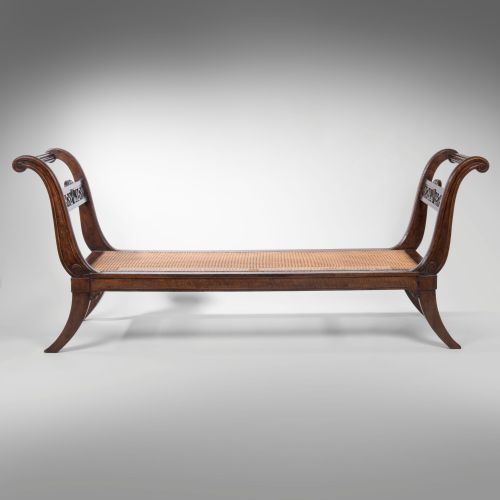
A regency window stool serves as a low, elongated seat traditionally positioned beneath a bay or sash window in a grand interior. These pieces function as window seats, long benches, ottomans, and dressing stools.
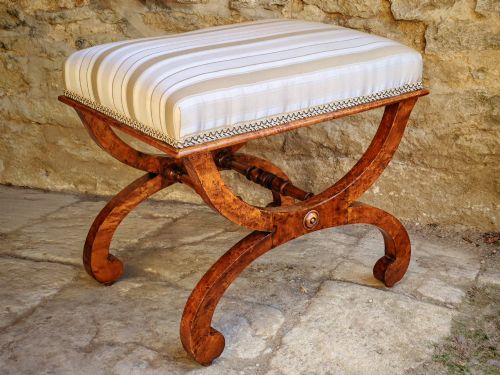
The selections here span the nineteenth century, including Georgian and Regency periods alongside later revivals, William IV pieces, and Victorian interpretations. Forms range from simple rectangular mahogany frames to sculptural X-frame designs and curule models.
Makers and workshops across England, Ireland, France, and Italy produced these seating forms to complement architectural window recesses. Buyers encounter both single window stools and matched pairs upholstered in varied fabrics, leather, and cane.
Materials and Construction
Cabinetmakers constructed these frames using dense timber species including mahogany, rosewood, burr maple, and painted pine. Joinery techniques supported both rectilinear forms and curved X-frames or cabriole legs.
Surface treatments incorporated ebonising, gilding with gesso, and polished wood finishes to highlight the grain. Upholstery methods utilised fabric, leather, and cane inserts secured to long benches and low stools.
The inventory records Italian giltwood and gesso pieces alongside English mahogany window seats and French Empire ottomans.
Distinctions in Quality
The distinction between standard domestic seating and superior examples lies in the selection of timber veneers and the crispness of carved ornamentation. Richly figured rosewood and burr maple elevate the presence of a window stool.
Structural complexity also defines the better pieces, particularly those employing X-frames, curule supports, or complex gilded gesso work. Provenance and original maker attribution further elevate the standing of individual window seats.
Gillows
The Regency Window Stool Glossary
- Regency
- An English design period spanning the early nineteenth century defined by neoclassical influences and archaeological revivalism. It draws heavily on ancient Greek, Roman, and Egyptian motifs.
- Curule stool
- A form of ancient Roman magistrate seat featuring intersecting curved legs that form an X-shape. These seats often feature giltwood and gesso finishes.
- X-frame
- A structural furniture support constructed from two crossing members that form an X shape when viewed from the side. This form appears frequently on high-status dressing stools and window seats.
- Ebonised
- Wood treated with a dark stain or finish to imitate expensive ebony. This technique creates a stark, formal contrast in nineteenth-century interiors.
- Gesso
- A plaster-based mixture applied to wood frames to create a smooth surface for gilding. It allows craftsmen to carve intricate relief details before applying gold leaf.
Regency Window Stool: Frequently Asked Questions
Where were regency window stools placed?
These seats were designed specifically to sit within the deep architectural recesses of nineteenth-century windows. They provided a low vantage point for looking outdoors or reading in natural light.
Beyond windows, owners placed them at the foot of beds or along hallway walls as supplementary seating.
How do I identify a Regency period piece?
Identification relies on observing specific neoclassical design motifs, timber choices such as dark mahogany and rosewood, and construction methods consistent with the early nineteenth century. Stylistic markers include fluted legs, scroll ends, and curule supports.
Comparing pieces against documented workshop models helps clarify the date of manufacture.
Can these stools be used as everyday seating?
These historical stools function well in modern interiors for occasional seating or as low ottomans and benches. Their compact height makes them adaptable for placement in hallways, dressing rooms, and living spaces.
Maintenance involves regular care for the wooden frames and checking the condition of the upholstery.