






Regency Wall Table
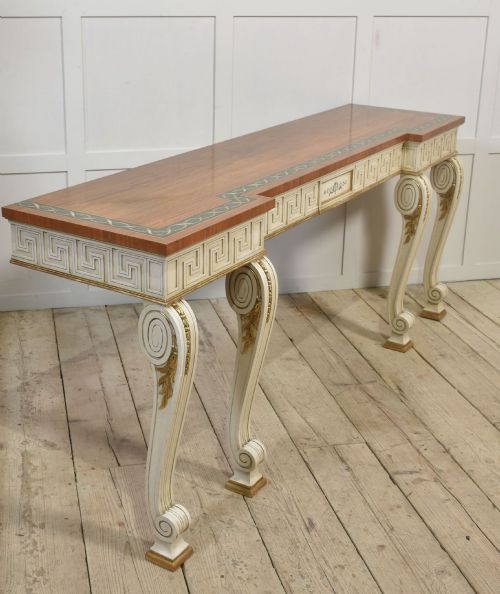
A regency wall table brings architectural dignity and compact surface space to an interior, most frequently appearing as a mahogany or giltwood console.
Regency Wall Table
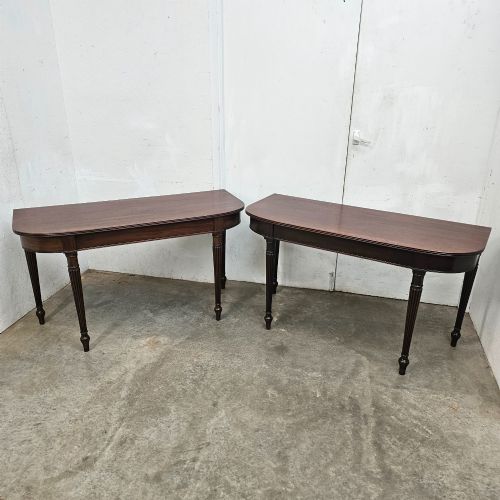
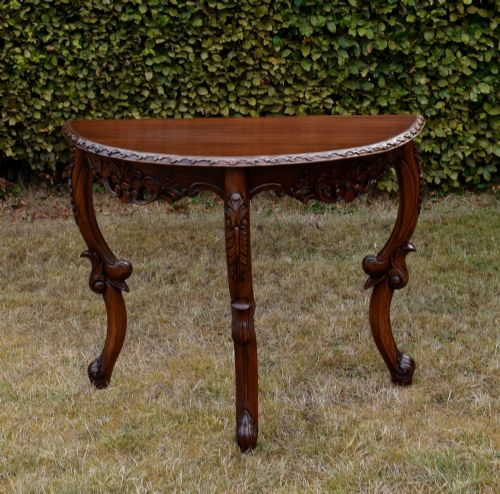
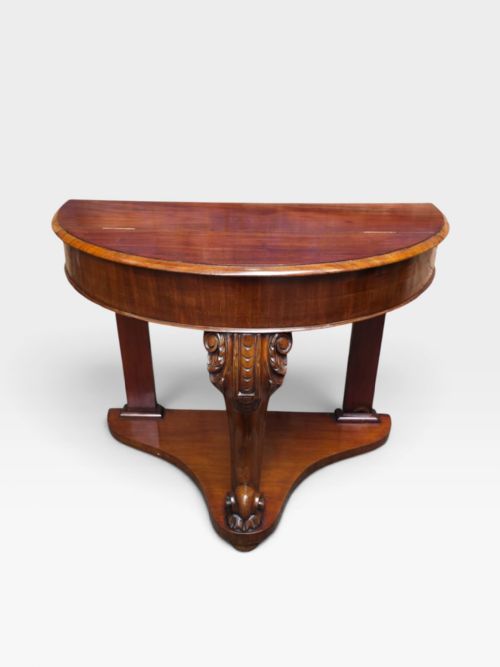
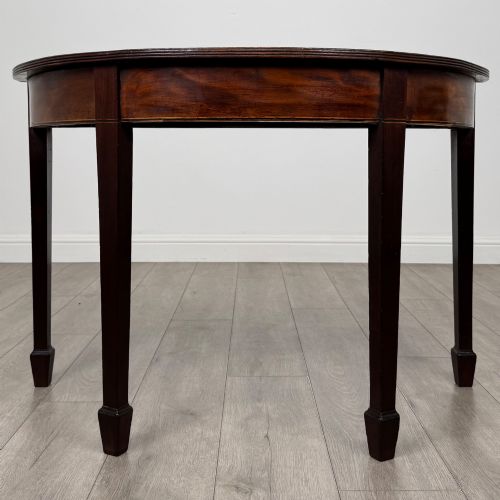
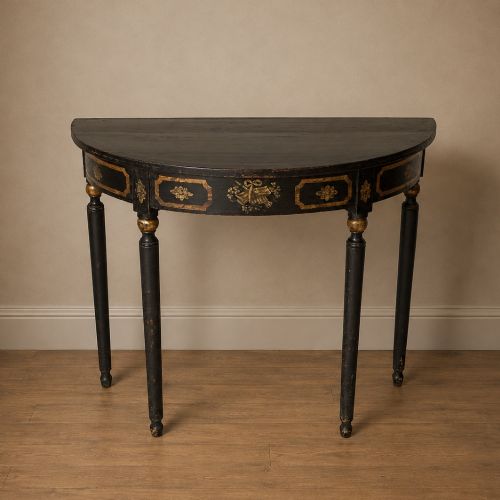
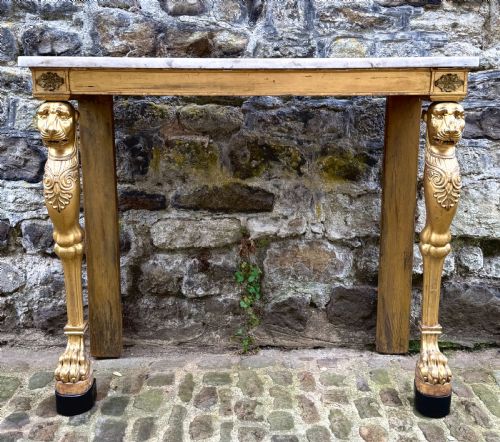
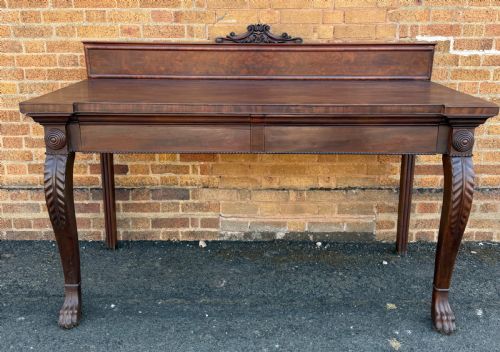
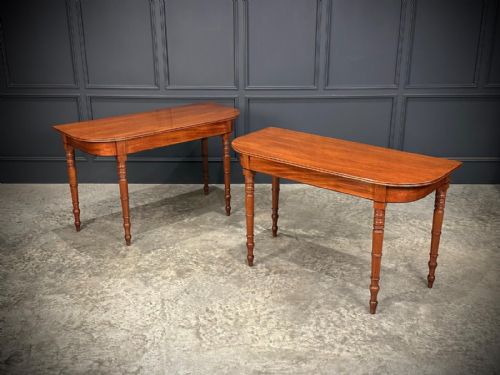
When you search for a regency wall table, you encounter console tables, serving tables, and pier tables designed to stand against a wall, often accompanied by a matching mirror. The examples seen here span the nineteenth century, including Georgian, William IV, and Regency periods, alongside occasional later interpretations.
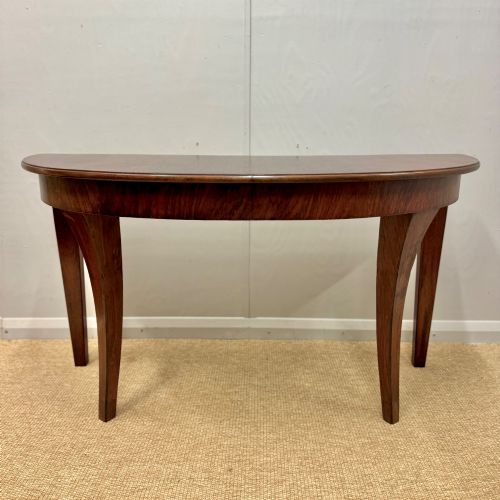
The dominant forms are rectangular or demi-lune tables, anchored by timber frames or mounted directly to the wall structure. Mahogany is the primary material, alongside rosewood, oak, walnut, and painted or giltwood finishes, frequently paired with marble tops.
Originating as formal reception room furniture, these tables provided a surface for decorative objects or lighting beneath wall mirrors. Today, they function effectively in hallways and reception rooms where floor space is limited.
How they were made
Cabinet makers utilised solid timbers alongside rich veneers, applying flame mahogany, pollard oak, or rosewood over stable secondary woods. Surface enrichment involved hand-carved details, parcel gilt highlights, and applied gold leaf on giltwood frames.
Stonemasons and joiners fitted heavy marble slabs directly into timber rails, while specialised painters applied dark painted finishes, Chinoiserie motifs, and neoclassical decoration to softwoods and hardwoods.
Regency Wall Table Retail Price Guide 2026
Typical asking prices for regency wall table among the pieces listed under this phrase on Sellingantiques today, from the lower quarter to the upper quarter. They describe what is for sale here now, not the wider market.
The listings span the 18th, 19th, and 20th centuries, featuring materials from marble and brass to flame mahogany veneer.
What varies in quality
The distinction between standard execution and superior craftsmanship lies in the selection of timber figures and the crispness of carved mouldings. Finer pieces demonstrate precise joinery, balanced proportions, and high-grade materials such as figured mahogany or genuine marble rather than painted substitutes.
Original surface treatments and gilding retain a depth that separates untouched or sensitively maintained pieces from later alterations. The integration of structural supports, such as concave legs or substantial console brackets, dictates the architectural presence of the piece.
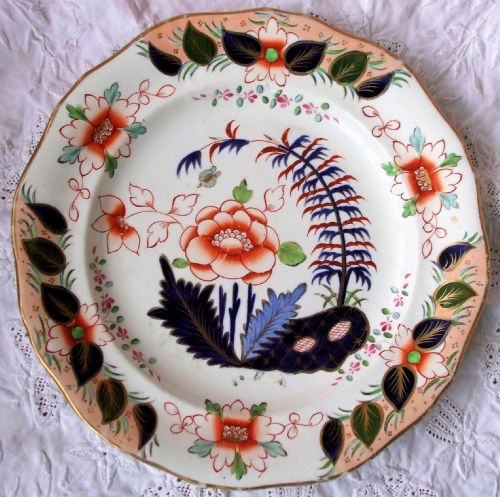
John Davenport of Longport·Cording of London·Thomas Connold of Alysham
The Regency Wall Table Glossary
- Demi-lune
- A half-moon shape used for console and side tables designed to sit flush against a wall. This curved form became particularly popular during the late eighteenth and early nineteenth centuries.
- Giltwood
- Timber, usually softwoods or gesso-prepared hardwoods, coated with gold leaf or metallic powder. It provides the bright reflective surfaces characteristic of neoclassical and Regency decorative furniture.
- Console table
- A table supported by wall brackets or console legs, designed to occupy minimal floor space. They frequently stood beneath pier mirrors in formal rooms.
- Parcel gilt
- A decorative technique where specific carved elements or mouldings are highlighted with gold leaf against a contrasting painted or polished wood ground. It accentuates architectural details.
- Pier table
- A low table designed to stand against the wall between two windows, typically positioned directly beneath a pier glass mirror. They share a close lineage with console tables.
Regency Wall Table: Frequently Asked Questions
Where should I place a console table?
These tables suit hallways, narrow entrance passages, and living rooms where a deep surface would obstruct movement. Their flat backs sit directly against the wall for stability.
Positioning them beneath a mirror or painting creates a traditional focal point that draws the eye upward and balances vertical wall space.
How do I care for a marble top?
Marble surfaces require regular wiping with a soft, damp cloth and neutral soap to prevent staining from liquids. Avoid acidic cleaners that can etch the polished stone.
Using felt pads under decorative objects protects the natural stone from scratches and preserves the finish over time.
What is the difference between a console and a serving table?
Serving tables are generally longer and deeper, originating as dining room furniture meant to hold dishes and silverware. Console tables are shallower and decorative, built primarily for display.
Both types share wall-mounting or leg configurations designed to keep the front open and accessible.
How do I identify a Regency period piece?
Regency furniture dates from the early nineteenth century, characterised by neoclassical influences, sabre legs, and architectural motifs inspired by ancient Greece and Rome. Look for dark hardwoods, brass inlay, and restrained classical carving.
Later Victorian or twentieth-century revivals often borrow these forms but display different timber patination and internal construction methods.