

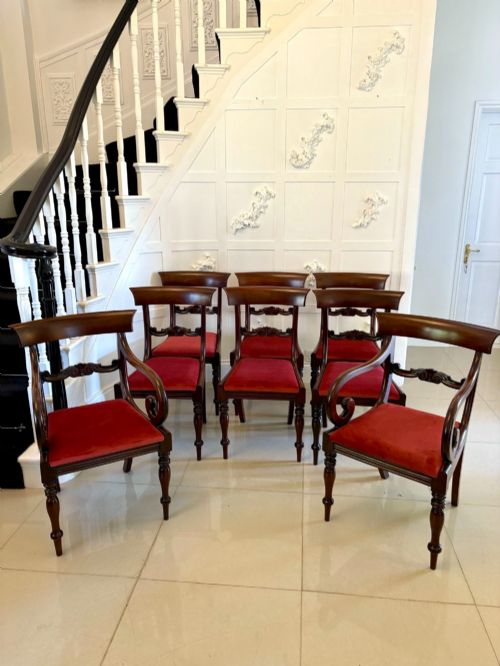
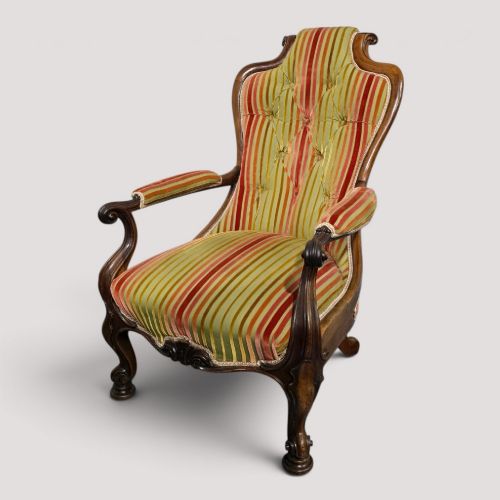
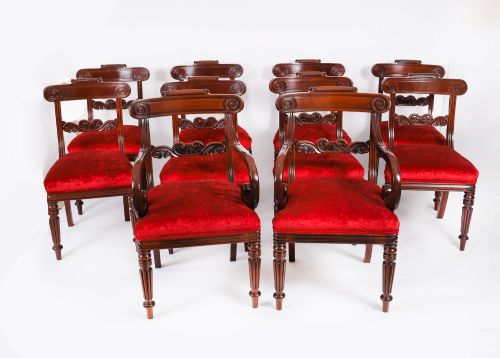
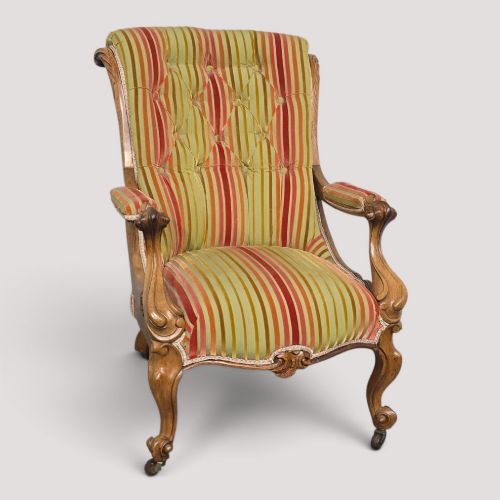



Regency Velvet Armchairs
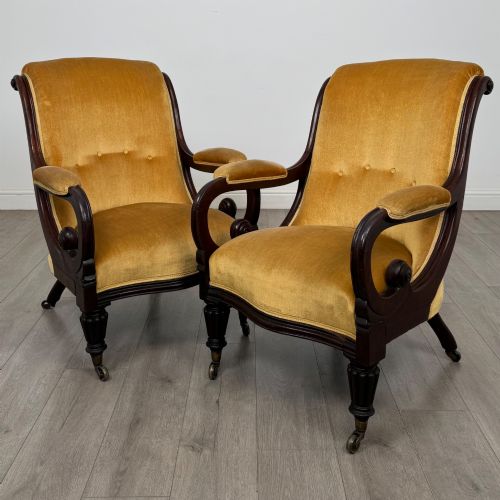
Regency velvet armchairs bring architectural dignity and rich texture to a room, combining solid timber frames with soft upholstery.
Regency Velvet Armchairs
When you search for regency velvet armchairs, you encounter seating built during the early nineteenth century alongside later revivals from the Edwardian era and the nineteen-twenties. These pieces take various forms, ranging from library and desk chairs to dining carvers and slipper chairs.
The materials recorded in these listings combine structural mahogany, rosewood, oak or cane with textile surfaces including velvet and various fabrics. Frames frequently display styles from the Regency, William IV, George III and Victorian periods.
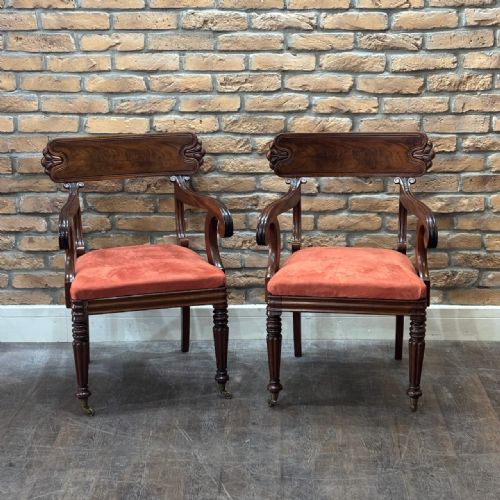
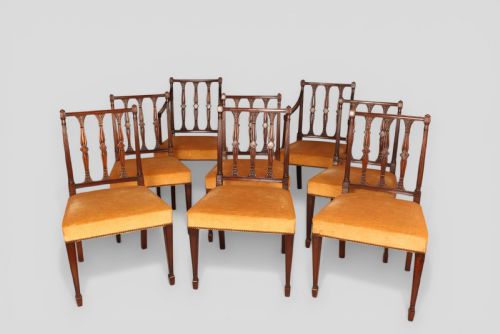
Library armchairs and tub chairs dominate the heavier forms, while dining chairs with scroll arms and open armchairs offer lighter proportions. Pairs and sets appear alongside single examples.
Construction and materials
Makers shaped these chairs primarily from dense timbers such as mahogany and rosewood, occasionally utilising oak for internal framing. Selected pieces incorporate brass mounts, cane panels and rattan cane work.
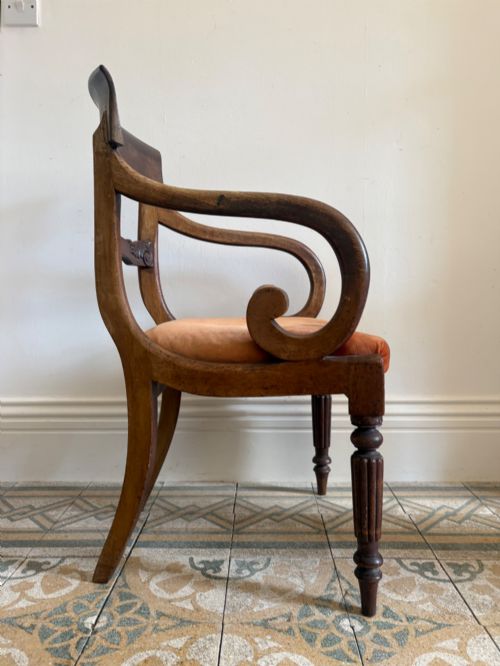
Upholstered elements rely on textile coverings like velvet laid over sprung or stuffed foundations. Carved decoration, scroll arm details, lyre shapes and monopodia supports demonstrate period joinery and carving techniques.
Regency Velvet Armchairs Retail Price Guide 2026
Typical asking prices for regency velvet armchairs among the pieces listed under this phrase on Sellingantiques today, from the lower quarter to the upper quarter. They describe what is for sale here now, not the wider market.
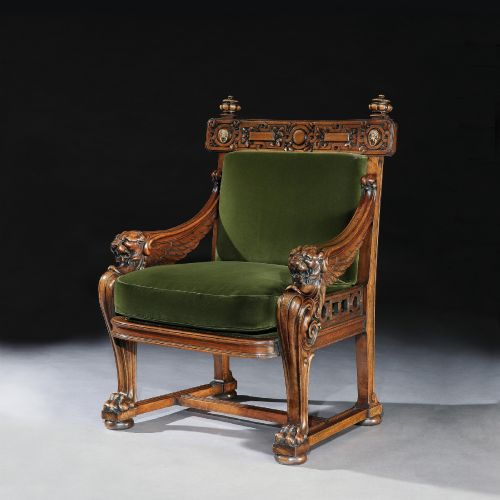
Lion monopodia feet stare steadfastly from beneath nineteenth-century library seats.
Assessing quality and proportion
Quality rests upon the crispness of carved wooden details, the balance of proportions in forms such as library chairs and desk chairs, and the integrity of the timber frame. Fine examples exhibit thoughtful grain selection in mahogany or rosewood and precise joinery at stress points.
Later revivals from the Edwardian period or the nineteen-twenties differ from nineteenth-century originals in timber weight and construction nuance. The presence of secondary materials like brass or cane adds complexity to the manufacture and distinguishes standard dining chairs from library armchairs.
Thomas Hope·Gillows·Miles & Edward's
The Regency Velvet Armchairs Glossary
- Monopodia
- A carved support resembling a single animal leg, often terminating in a paw or claw foot. These details appear on library armchairs.
- Bergère
- An enclosed upholstered armchair with wooden framing and cane or upholstered sides. This form provides deep seating.
- Carver
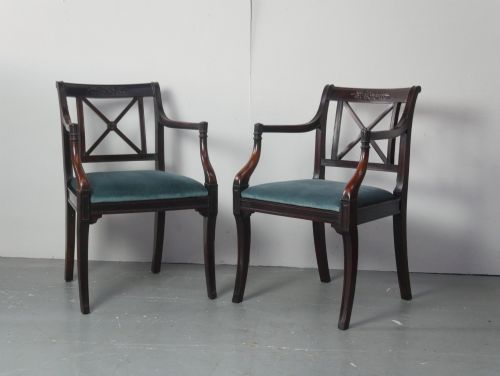
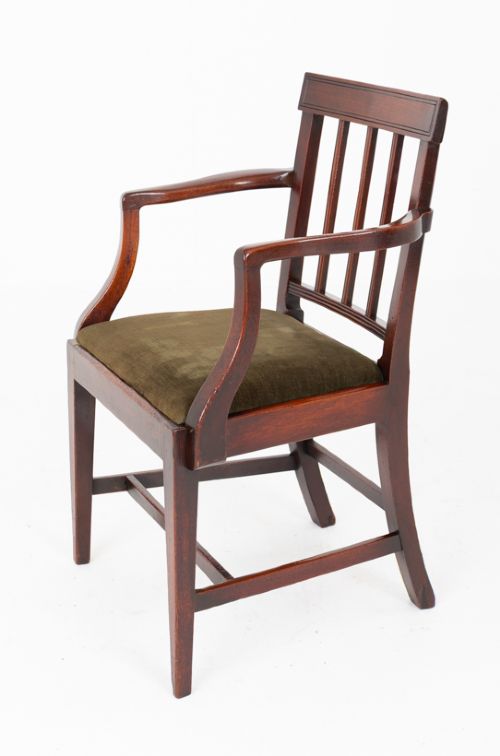
- An armchair designed to match a set of dining chairs, usually placed at the table ends. These feature open arms to accommodate dining.
- Tub chair
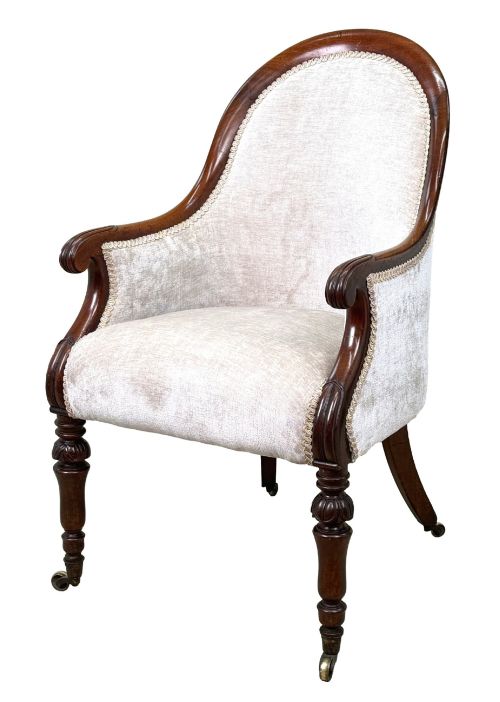
- An armchair with a continuous curved back and armrest rail forming a semicircular enclosure. This shape offers supportive seating.
- Slipper chair
- A low-to-the-ground armchair traditionally used in bedrooms for dressing. These have compact proportions.
Regency Velvet Armchairs: Frequently Asked Questions
How do I identify a library armchair?
Library armchairs feature robust mahogany or rosewood frames designed for comfort and extended reading use. They often incorporate tub backs, lyre arms, or X-frame structures.
These heavier seats stand apart from lighter dining carvers and bedroom slipper chairs through their substantial proportions and supportive cushioning.
What is the difference between Regency and Regency revival?
Original pieces date from the early nineteenth century, displaying period timber patination and traditional joinery methods. Regency revival pieces date from later periods such as Edwardian times or nineteen-twenty.
Revival furniture mirrors the classical restraint and scroll arm motifs of the original era but utilises the manufacturing standards of its own decade.
Where should I place a bergere chair?
Bergere chairs suit drawing rooms, studies, and large bedrooms where their cane panels and wooden frames can be viewed from multiple angles. Their enclosed sides create a distinct seating enclosure.
Pair them with reading lamps or position them near fireplaces to highlight their architectural silhouette.
How do I care for velvet upholstery?
Velvet surfaces require gentle brushing with the pile to maintain the texture and remove surface dust. Avoid placing these chairs in direct sunlight to protect the textile colour.
Professional cleaning ensures the pile remains plush without flattening the fibres against the timber frame.