

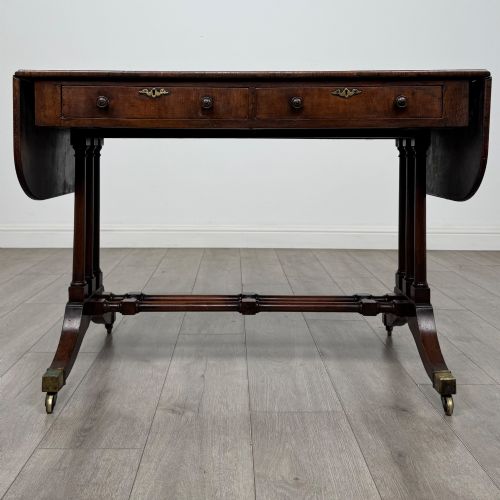

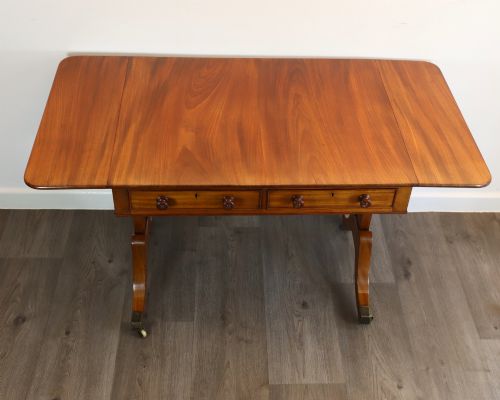


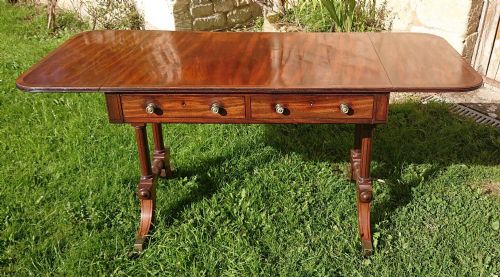


Regency Twin Drawer Table
Regency twin drawer table designs offer exceptional timber and proportion, making them the defining centrepiece for any classic drawing room.
Regency Twin Drawer Table
A regency twin drawer table encompasses sofa tables, side tables, and desks originating across the Regency, Georgian, Victorian, and Edwardian periods. The titles on this page demonstrate that the most frequent forms are sofa tables equipped with two drawers, alongside occasional side tables and writing desks.
Makers and manufacturers worked within the Regency, Georgian, and Victorian styles, employing woods such as mahogany, rosewood, elm, and yew wood. Buyers searching for a regency twin drawer table will encounter pieces featuring brass details and boxwood stringing, spanning dates from the eighteenth century into the early twentieth century.
The physical form typically balances drop leaves or freestanding proportions with twin drawers set into the frieze. These versatile tables served various domestic functions from writing to needlework, and today they function efficiently as sofa tables or side tables in refined interiors.
How they were made
Cabinet makers utilised solid timbers and veneers of figured mahogany, rosewood, elm, and yew wood over supportive secondary woods. The construction relies on traditional joinery methods to build stable frameworks for the frieze drawers and drop leaves.
Decorative embellishment often includes brass inlay work and boxwood stringing set directly into the polished wooden surfaces. Surfaces were finished to highlight the natural grain patterns of the figured mahogany and rosewood.
Regency Twin Drawer Table Retail Price Guide 2026
Typical asking prices for regency twin drawer table among the pieces listed under this phrase on Sellingantiques today, from the lower quarter to the upper quarter. They describe what is for sale here now, not the wider market.
The listings on this site feature timbers including mahogany, rosewood, yew wood, elm, and boxwood across multiple periods.
What varies in quality
Quality rests upon the choice of timber, with highly figured mahogany and rosewood representing the upper tier of production. The selection of decorative elements, such as brass inlay and fine boxwood stringing, elevates a piece beyond plain utility.
Proportion and scale dictate the success of the design, where small proportions or freestanding capabilities demonstrate superior workshop execution. The integration of twin drawers that align neatly with the frieze marks the difference between standard and finer examples.
The Regency Twin Drawer Table Glossary
- Sofa table
- A rectangular table designed to stand in front of a sofa, typically featuring drop leaves on either side and two drawers in the frieze.
- Frieze
- The horizontal band beneath the top of a table where the twin drawers are traditionally housed.
- Drop leaf
- A hinged flap at the side of a table that can be raised to extend the surface area or lowered when space is required.
- Stringing
- A narrow strip of contrasting wood, such as boxwood, inlaid into the surface to create decorative borders.
- Figured wood
- Timber displaying an attractive, natural grain pattern, such as flame mahogany or burr elm, chosen for its visual appeal.
Regency Twin Drawer Table: Frequently Asked Questions
What is a regency twin drawer table?
A regency twin drawer table is typically a sofa table or side table featuring two drawers set into the frieze, often accompanied by drop leaves.
These pieces were produced across the Regency, Georgian, and Victorian eras in timbers including mahogany, rosewood, and yew wood.
How were these tables used originally?
Originally placed in front of sofas or used around the drawing room, these tables served multiple domestic purposes including writing and needlework.
Their versatile design allowed the drop leaves to be raised or lowered depending on the daily requirements of the household.
How do I identify a Regency period piece?
Regency pieces often display characteristic restraint, balanced proportions, and specific decorative accents like brass inlay and figured veneers.
Comparing the timber selection, such as rosewood or mahogany, alongside the style helps distinguish genuine Regency items from later Victorian or Edwardian revivals.
Where should I place a sofa table?
A sofa table sits naturally behind a sofa, against a wall, or freestanding in the middle of a room due to finished backs.
Their narrow profile makes them adaptable for hallways and sitting rooms where surface space is needed without blocking circulation.