
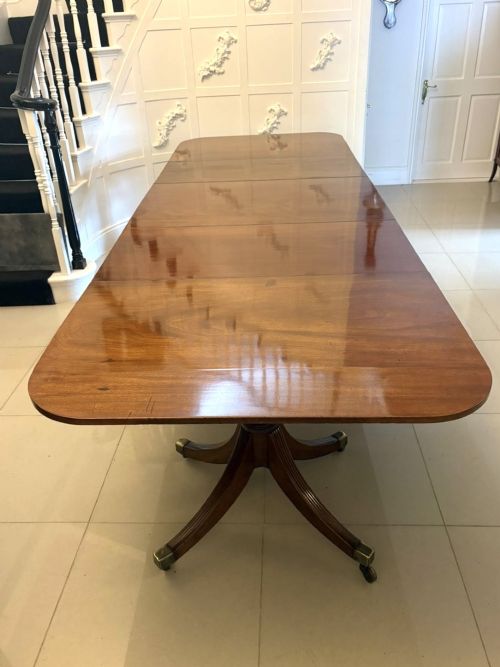
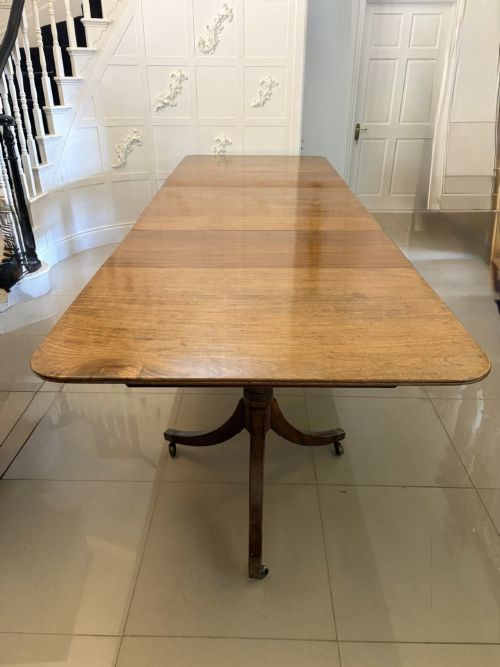

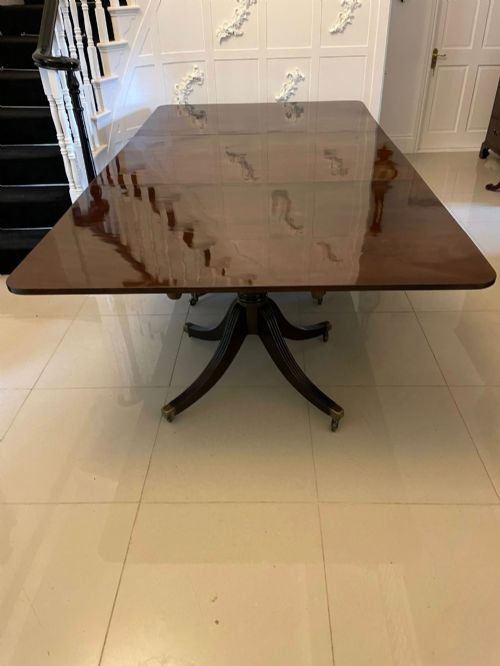
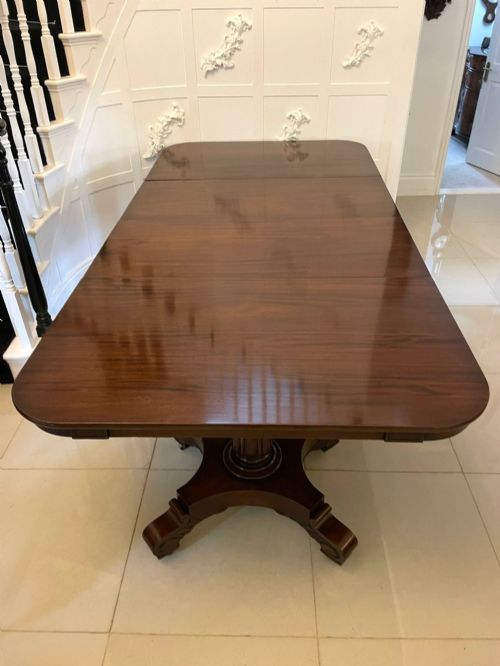
Regency Triple Pedestal
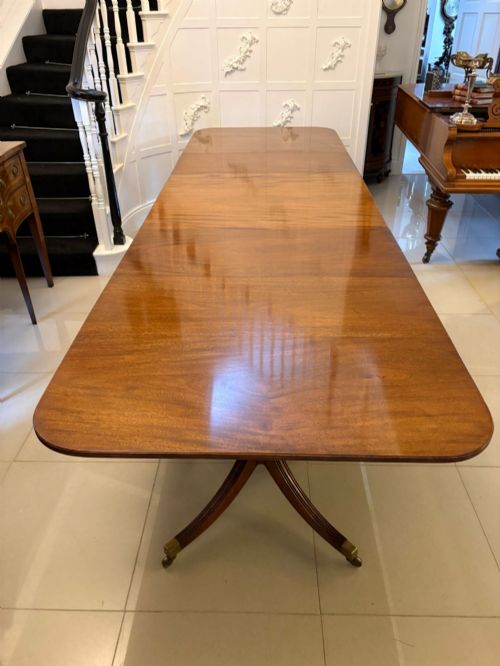
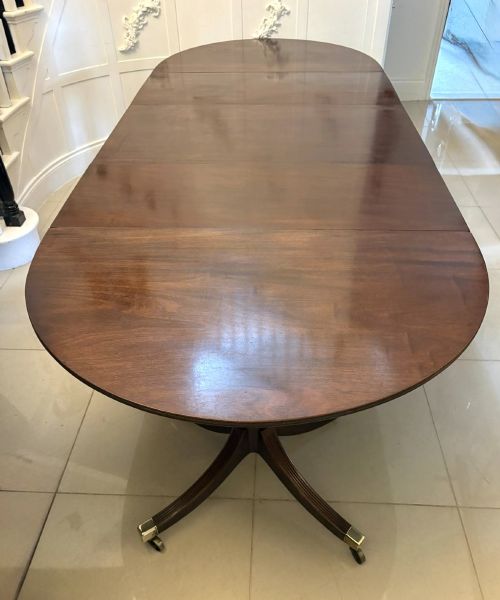
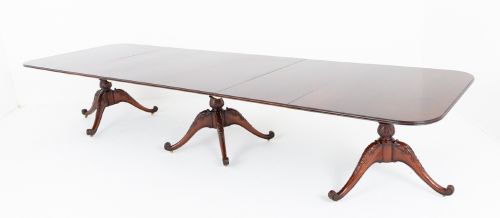
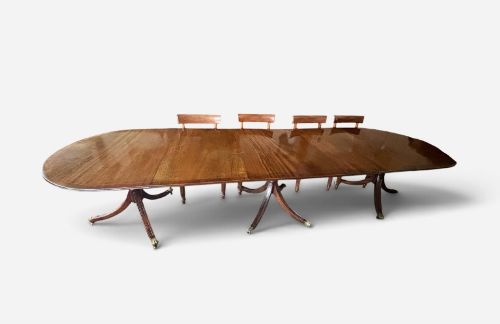
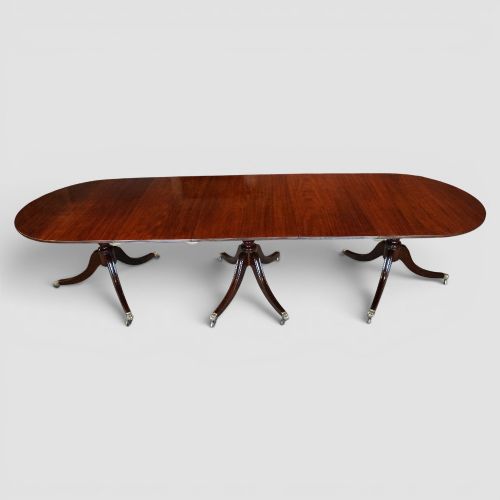
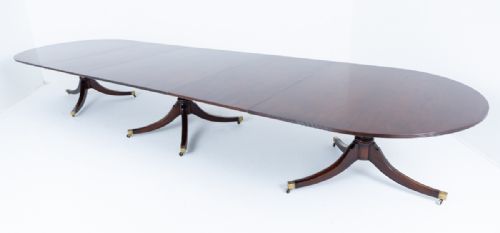
A regency triple pedestal dining table provides an impressive scale and flexible length for hosting.

Regency Triple Pedestal
A regency triple pedestal table is a grand dining table supported by three distinct pillars, designed to extend with leaves to accommodate large gatherings. These tables span several periods, appearing in authentic nineteenth century iterations alongside later revivals from the Edwardian era and the early twentieth century.
Materials and construction methods
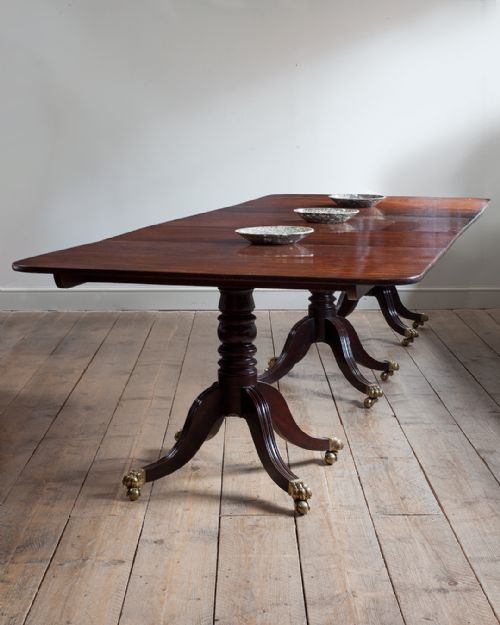
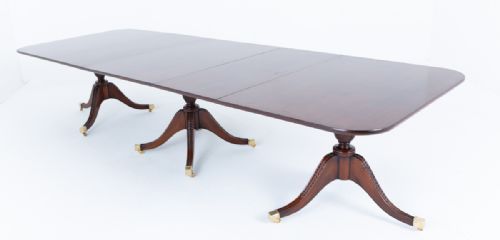
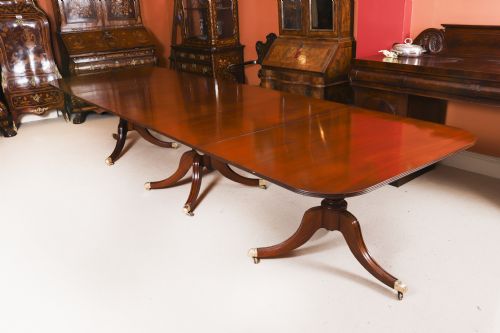
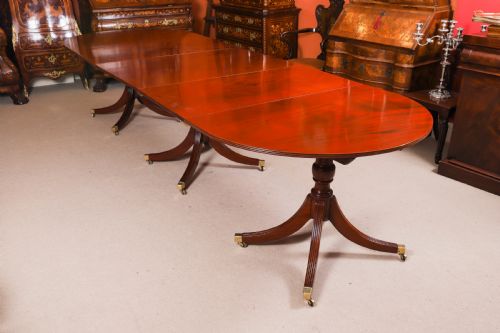
Tables incorporate pillar supports beneath the main surface, distributing weight across three bases rather than standard four-leg designs. This three-pillar architecture allows the central section and outer leaves to move smoothly during extension.
Some tables stretch far enough to host a small village feast, provided you own enough chairs.
Distinctions in craftsmanship and materials
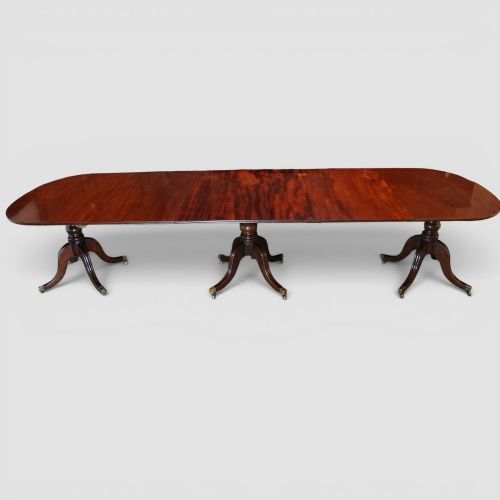
Quality varies significantly in the selection of the mahogany veneer and the intricacy of the pedestal turnings. Superior examples display deeply figured timber grain across the entire surface and leaves.
The sophistication of the pedestal bases and the inclusion of subtle inlay work separate standard production tables from exceptional pieces. Heavier proportions and refined brass castors indicate a higher standard of manufacture.
Whytock & Reid
The Regency Triple Pedestal Glossary
- Pedestal
- A central column support resting on a carved base that holds the weight of the table top. These pillars replace standard corner legs to allow greater seating clearance.
- Extending dining table
- A table designed with removable leaves and a sliding mechanism to alter its overall length. This allows hosts to adjust the seating capacity for different occasions.
- Figured mahogany
- Timber selected for its decorative and undulating grain patterns rather than a plain surface. It creates rich visual depth across large table tops.
- Regency revival
- A stylistic movement occurring around nineteen hundred that recreated the elegance of early nineteenth century furniture. These pieces emulate the proportions and details of the original Regency period.
- George III style
- Furniture designed to reflect the classical proportions and aesthetic associated with the reign of King George the Third. Pieces often feature balanced forms and select mahogany timbers.
Regency Triple Pedestal: Frequently Asked Questions
How many people can a regency triple pedestal table seat?
These tables typically seat between ten and twenty-two guests depending on the inclusion of extension leaves. The length scales up through the addition of extra sections.
Buyers select specific lengths based on their dining room dimensions and their regular hosting requirements.
What is the difference between original Regency and Regency style?
Original pieces date from the early nineteenth century and carry the patina of age. Regency style tables are later reproductions made during the Edwardian era or the twentieth century.
Both versions utilise mahogany and follow similar architectural principles, but differ in their production era.
How do extension leaves work on these tables?
Leaves are added into the centre of the table when the pedestals are pulled apart. This mechanism expands the surface area to accommodate more chairs.
When fewer guests are present, the leaves are removed and stored separately to shorten the overall length.
What timber was used to build these dining tables?
Mahogany is the primary wood seen across these listings, valued for its durability and rich dark tones. Cabinet makers often chose figured variants to highlight the natural grain.
Brass hardware such as castors frequently complements the mahogany construction on the base pillars.