

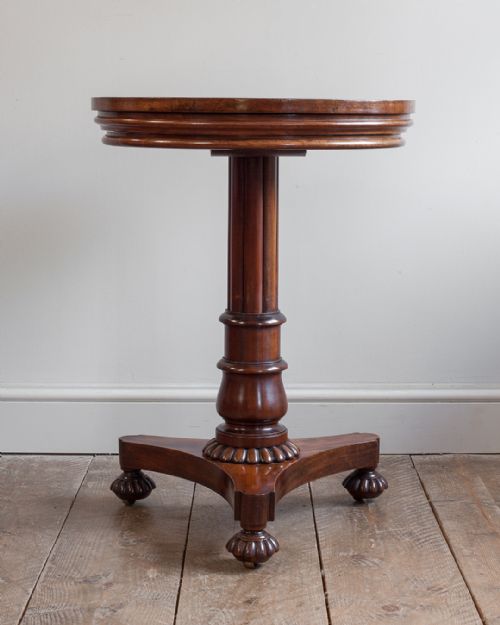
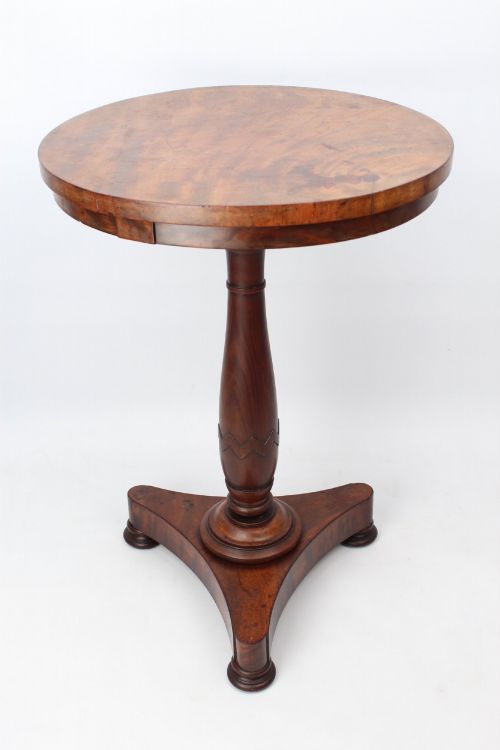
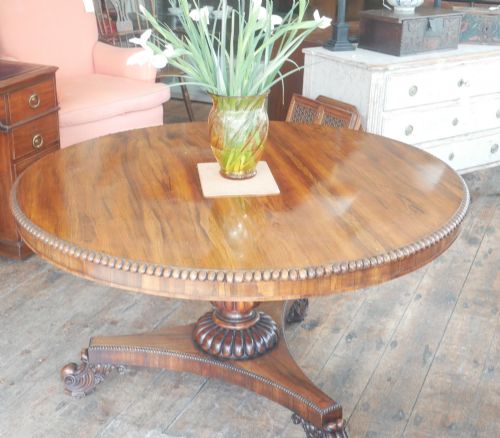
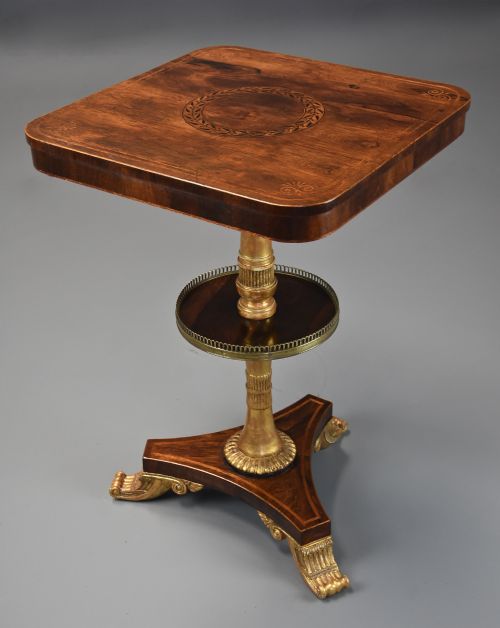
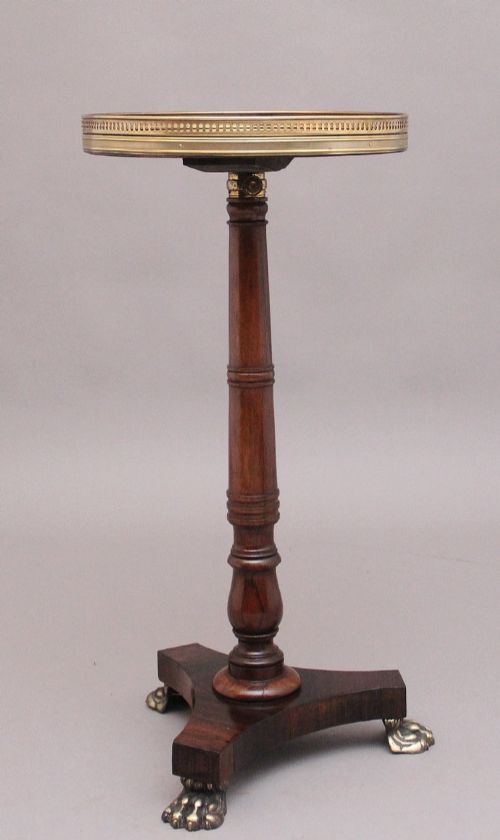
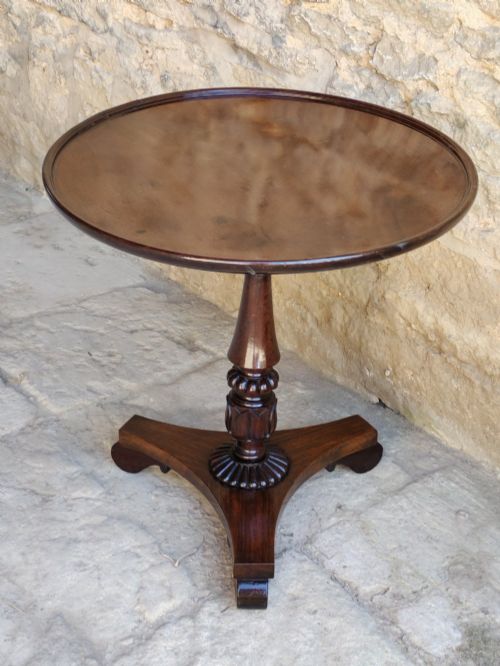

Regency Triform Base Table
A regency triform base table brings a sculptural pedestal and rich timbers into a room, uniting architectural proportion with practical utility.
Regency Triform Base Table
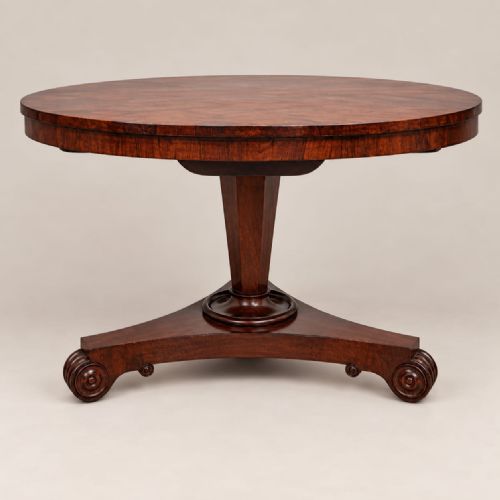
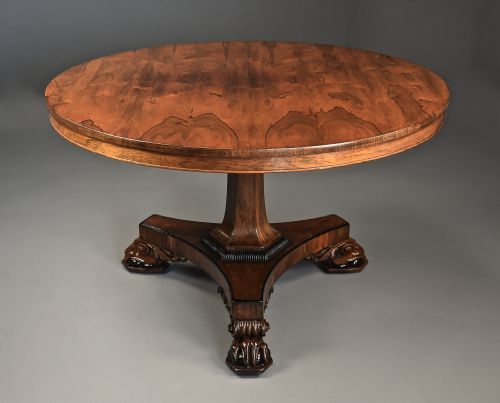
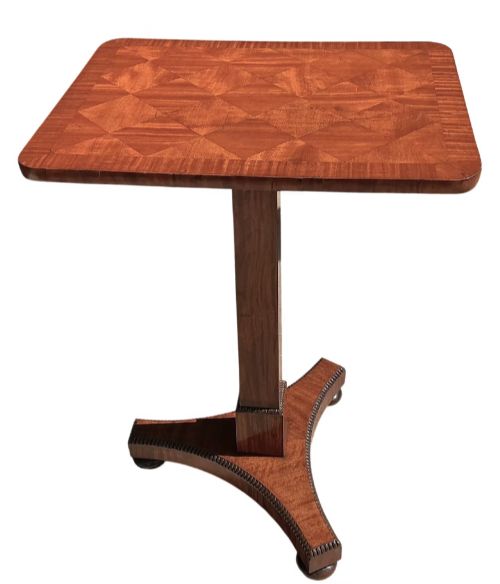
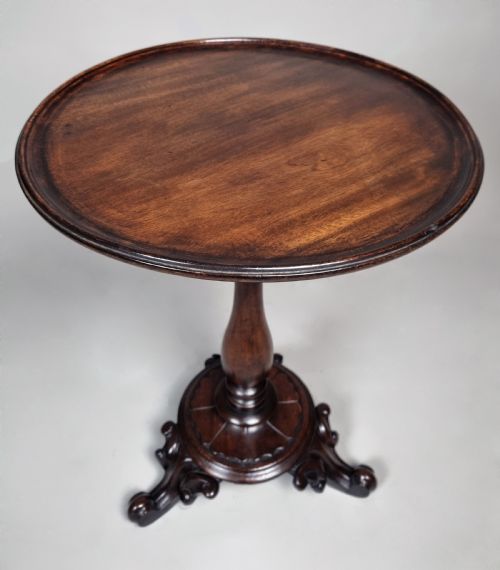
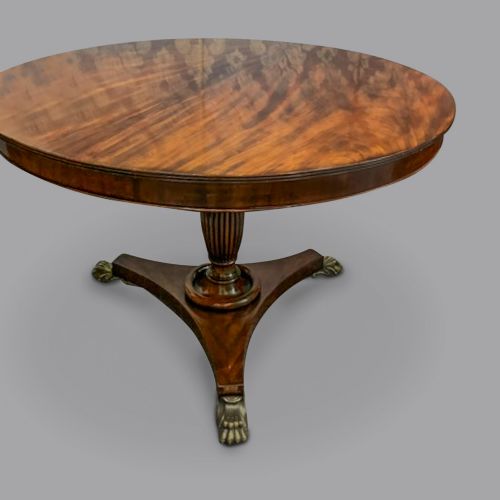
A regency triform base table centres on a three-sided pedestal support, frequently carrying a circular or square top designed for dining, breakfast, or display. These pieces emerge primarily from the Regency, George IV, and William IV periods across the nineteenth century, alongside later nineteenth- and twentieth-century interpretations.
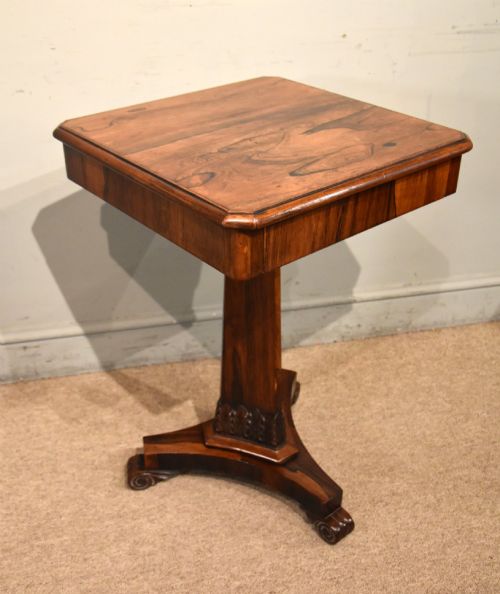
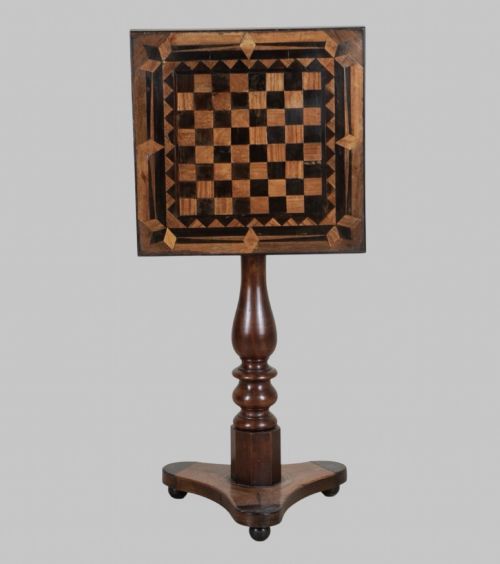
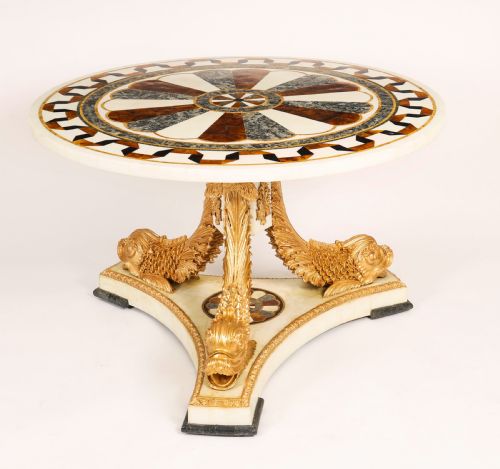
Buyers meet forms ranging from large breakfast and centre tables to compact wine tables, occasional tables, games tables, and plant stands. Rosewood and mahogany dominate the selection, often accompanied by marble tops, brass details, and giltwood accents.
Origin variations span English workshops as well as Scottish and Irish commissions, encompassing occasional pieces like tea poys alongside central hall tables.
How they were made
Cabinetmakers constructed these tables using dense hardwoods like rosewood, mahogany, and goncalo alves, frequently applying veneers over secondary timbers to achieve striking grain patterns. Boxwood stringing, brass inlay, and parcel gilding enhanced the polished surfaces.
Pillars and columns converged upon three-sided plinths or stepped feet, sometimes incorporating carved wooden dolphins or brass paw mounts to stabilise the heavy tops. Tilt-top mechanisms and telescopic columns appeared on breakfast and occasional variants to aid versatility.
Materials span rosewood, mahogany, goncalo alves, walnut, marble, and giltwood with brass and boxwood details.
What varies in quality
The refinement of the timber selection dictates the visual impact, separating simple solid or veneered surfaces from highly figured rosewood and specimen marble tops. Cabinetmaking skill shows in the stability of the triform junction and the crispness of carved details like parcel gilt enrichments.
Proportion and execution distinguish standard production from attributed cabinetmaker output, where geometric precision in inlaid games boards and sophisticated turning elevate the piece.
Gillows·Walker-Lancaster·George Bullock·Strahan of Dublin
The Regency Triform Base Table Glossary
- Triform base
- A three-sided pedestal support that diverges into three feet or a triangular plinth. This configuration provides steady weight distribution beneath a central column.
- Tilt top
- A hinged table top that folds vertically when not in use. This mechanism allowed tables to sit against walls to save space in period interiors.
- Goncalo alves
- A dense exotic hardwood with distinctive dark brown and golden contrasting figuring. Cabinetmakers utilised it for high-status nineteenth-century tables.
- Tea poy
- A small box or chest mounted on a central pillar designed to store loose tea leaves. Examples often share the triform support structure of the period.
Regency Triform Base Table: Frequently Asked Questions
What is a triform base?
A triform base is a three-sided architectural support structure used to anchor a central column. It balances weight across three distinct points.
This design prevents wobble on uneven floors while creating a distinctive triangular footprint beneath the table top.
How were breakfast tables used?
Breakfast tables served as versatile morning dining tables and parlour furniture. Their tilt-top mechanisms allowed them to be stashed away.
During the day they functioned as centre tables for reading, writing, or displaying decorative objects in principal rooms.
Are these tables solid rosewood?
Most nineteenth-century tables utilise cabinet-grade timbers applied as veneers over stable secondary woods. This technique prevented warping across wide expanses.
Solid construction appears on smaller items like wine tables and occasional stands where timber movement is easier to control.
How do I spot a William IV table?
William IV pieces typically feature heavier proportions, robust scrolling pillars, and substantial plinths. Rosewood and rich mahogany are common.
Carved details tend to be bold and architectural, reflecting the transition from Regency elegance to early Victorian weight.
Can I use a chess table daily?
Chess tables with specimen marble or inlaid tops accommodate everyday use provided spills are managed promptly. The stable triform base supports normal tasks.
Care should be taken with vintage polished finishes when placing hot mugs or heavy objects directly onto the surface.