


Regency Three Tier Table
These regency three tier table designs combine graduated open shelves and serving tiers to bring functional multi-level display into nineteenth-century rooms.
Regency Three Tier Table
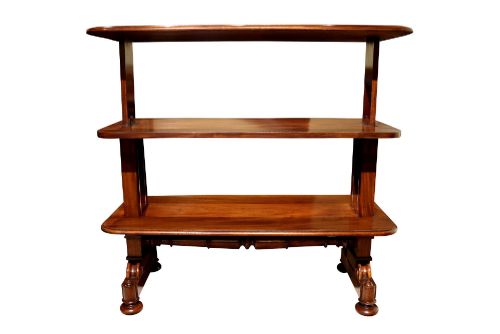
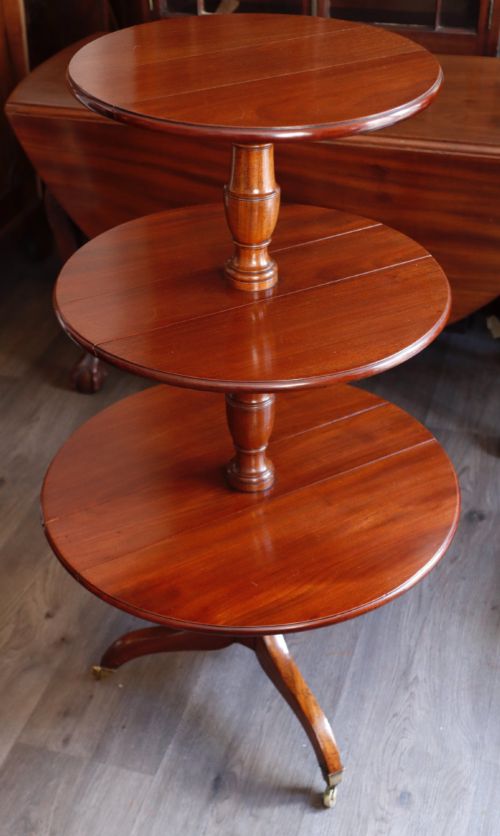
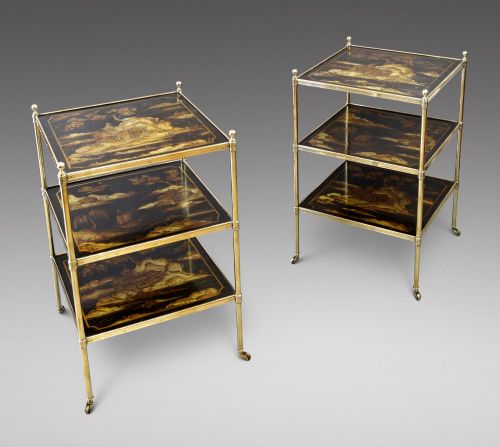
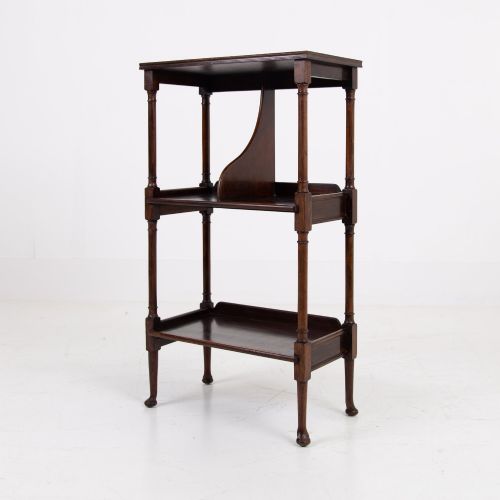
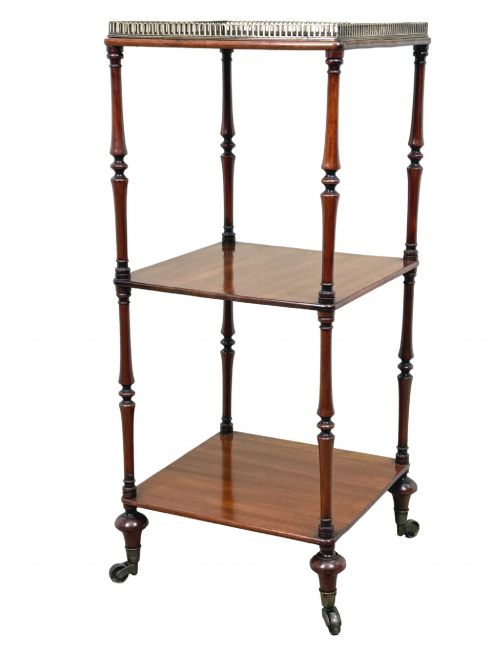
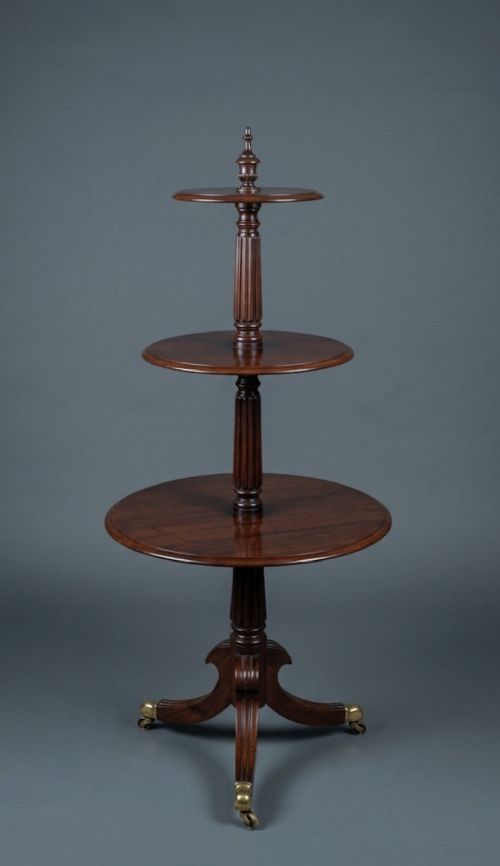
A regency three tier table typically appears as a whatnot, dumb waiter, or etagere with stacked horizontal surfaces supported by upright columns or turned posts. These pieces served practical roles for dining rooms, libraries, and parlours, holding books, china, or serving dishes across multiple levels.
The selections span the late Georgian, Regency, and William IV eras, alongside later revival pieces from the twentieth century. Mahogany remains the dominant timber, accompanied by rosewood, oak, burr elm, and pollard oak.
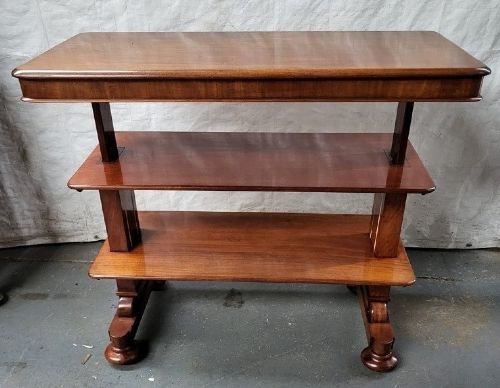
Open display stands and revolving tiers offer different practical arrangements for modern rooms. A buyer meets both stationary serving buffets and movable revolving tables across the current selection.
Materials and construction
Cabinet makers utilised solid and veneered timbers such as mahogany, rosewood, and walnut, often selecting figured grains for top surfaces. Brass casters, gallery rails, and joining rods provided structural support and mobile convenience for heavier dumb waiters.
Turned upright supports and pillar columns hold the graduated tiers together, sometimes incorporating folding mechanisms or metamorphic movement. The construction relies on sturdy joinery to bear weight across the stacked shelves without sagging.
The listings span multiple historical eras, including Georgian, Regency, William IV, and twentieth-century revival periods.
Judging execution and finish
The refinement of the turned supports and the choice of timber figure set individual examples apart. Superior pieces exhibit carefully matched grain patterns across all three tiers and crisp moulding details along the shelf edges.
Proportion and scale dictate the visual success of each tier. Master workshops achieved balanced heights between the shelves, whereas lesser examples can appear heavy or awkward in their vertical spacing.
The Regency Three Tier Table Glossary
- Whatnot
- An open shelving unit with multiple tiers designed for displaying ornaments, books, or china in a principal room. They became popular during the late eighteenth century and remained in favour through the Victorian period.
- Dumb Waiter
- A tiered serving table fitted with revolving or stationary shelves intended to hold food and utensils near a dining table. Their multi-level design reduced the need for servants during meals.
- Etagere
- A piece of furniture consisting of a set of open shelves for displaying small objects or ornaments. The term derives from the French language and often applies interchangeably with a whatnot.
- Metamorphic
- Furniture designed to transform into another functional form through folding, rising, or sliding mechanisms. These ingenious pieces allowed a single table to serve multiple domestic purposes.
- Fiddleback mahogany
- A highly figured variety of mahogany wood showing wavy transverse grain patterns that resemble the back of a violin. Cabinet makers reserved this timber for prominent decorative surfaces.
Regency Three Tier Table: Frequently Asked Questions
What is the difference between a whatnot and a dumb waiter?
A whatnot is primarily an open display stand for books and ornaments used in living spaces or bedrooms. A dumb waiter is specifically designed for dining rooms to hold serving dishes and plates.
While both share a multi-tier construction, dumb waiters frequently incorporate revolving shelves or heavy brass castors for movement during meals.
How do I place a three tier table in a modern room?
These tables fit easily into corners or beside seating areas where vertical storage matters more than floor space. The open shelves hold books, plants, or lamps without blocking light.
Smaller circular tiers work well as occasional tables, while rectangular etageres function effectively against plain walls.
Are these tables sturdy enough for daily use?
Solid timber construction and sturdy turned uprights make these pieces robust for holding everyday items. The multi-level design distributes weight evenly across the vertical supports.
Care should be taken when moving heavy or large dumb waiters, particularly those fitted with delicate brass castors or revolving mechanisms.
How can I tell a Regency period piece from a later revival?
Regency and late Georgian pieces display authentic timber ageing, hand-cut joinery marks, and period-appropriate brass fittings. The weight of the timber and the hand-finished turning on the columns differ from twentieth-century machinery.
Revival pieces from the Edwardian or later eras often show uniform machine milling and lighter secondary woods beneath the surface veneers.