
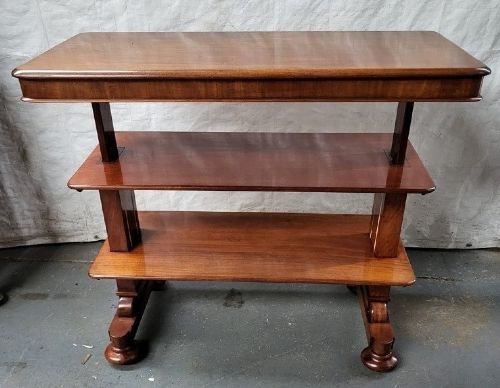


Georgian Tier Server
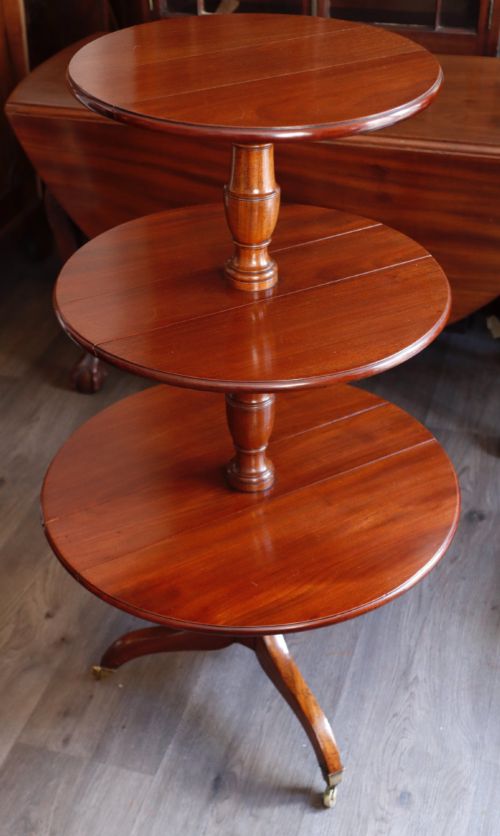
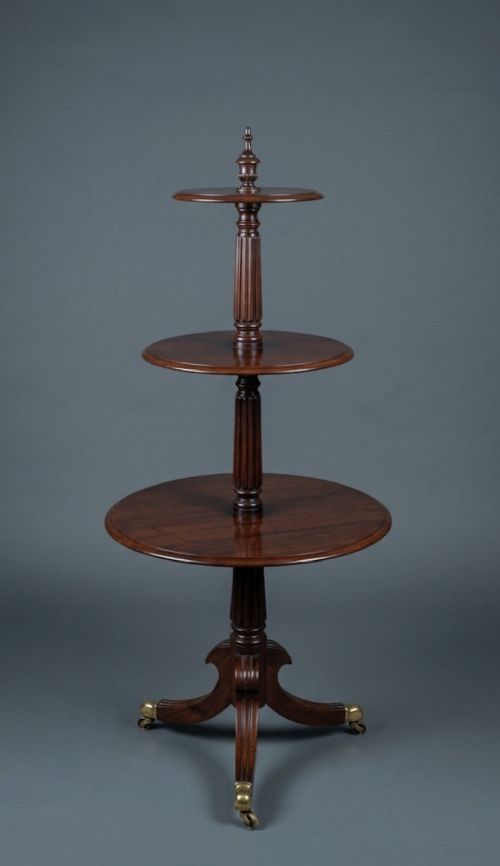
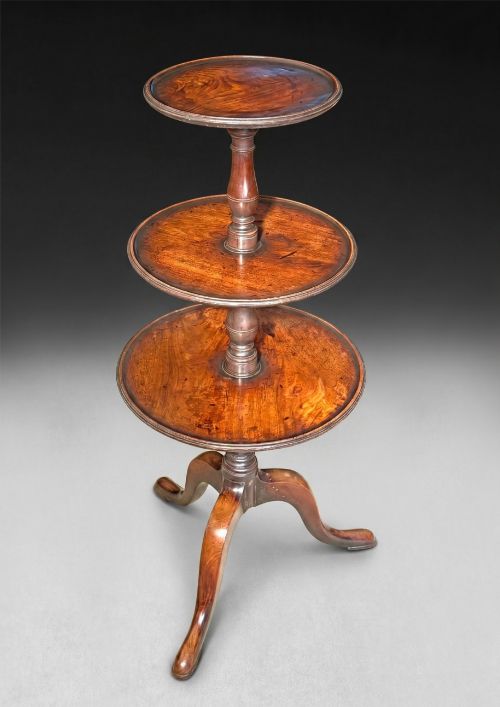
A georgian tier server provides multiple graduating levels for dining service, offering practical display space in mahogany.
Georgian Tier Server
A georgian tier server primarily takes the form of a dumb waiter or buffet, designed to hold dishes during meals without extra staff present in the room. These functional pieces appear most frequently as multi-tiered circular tables dating from the eighteenth and nineteenth centuries.
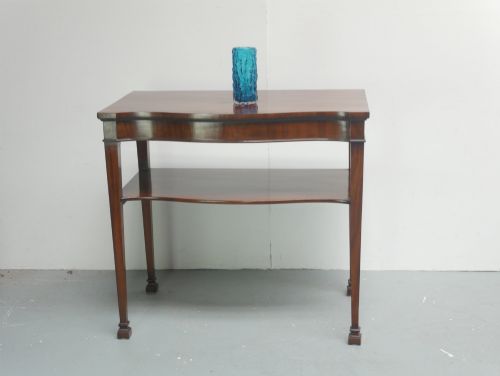
The inventory showcases variations ranging from two-tier round tables to substantial three-tier constructions with folding drop-leaves. Alongside traditional dumb waiters, related forms such as console tables, side tables, and metamorphic buffets populate the selection.
Originating largely within the Georgian and Regency periods, these pieces bridge dining room utility and furniture design. Makers constructed them to stand beside dining tables or against walls, utilising revolving tiers and tripod bases for stability and access.
Distinctions in craftsmanship
Quality rests in the selection of timber figures, such as fiddleback mahogany or pollard oak, which elevate standard utility pieces into refined furniture. The weight and proportion of the central pillar dictate the structural integrity of multiple heavy tiers.
Refinement appears in the turning of the pedestals, the precision of brass castor fittings, and the smooth operation of drop-leaf folding shelves or revolving trays. Superior examples maintain balance and graceful proportions across three graduating levels.
Several tiered servers include revolving tops, allowing guests to spin the condiments past without leaning across the table.
Gillows
The Georgian Tier Server Glossary
- Dumb waiter
- A freestanding tiered stand used to hold food, drink, or tableware during dining. These servers remove the need for constant attendants during meals.
- Tripod base
- A three-legged support structure commonly found beneath the central column of circular tier servers. This design ensures stability on uneven dining room floors.
- Drop-leaf
- A hinged shelf section that folds down to save space when not in use. Such mechanisms appear on select eighteenth and nineteenth-century servers.
- Pollard oak
- Timber taken from pollarded trees, noted for a clustered knot pattern. Cabinetmakers used this decorative wood on select servers.
- Lazy susan
- A revolving tray mechanism incorporated into tabletop tiers. This device allows diners to access shared dishes easily.
Georgian Tier Server: Frequently Asked Questions
What is a georgian tier server used for?
These servers held extra plates, glasses, and dishes during formal meals to reduce the need for servants in the dining room.
Today, owners utilise them as display stands for decorative objects, drinks cabinets, or practical side tables in living spaces.
How many tiers do these servers have?
The pieces available feature either two or three graduating tiers mounted on a central pillar.
Three-tier versions often incorporate folding drop-leaf sections for adjustable storage and display options.
What woods are commonly found?
Mahogany is the primary timber seen across the collection, often featuring figured grain patterns like fiddleback.
Pollard oak and brass hardware also appear on specific nineteenth-century examples to provide structural and decorative contrast.
How do I date a tier server?
Dating relies on stylistic markers associated with periods such as the Georgian, Regency, and William IV eras. Cabinetmaking techniques, leg styles, and turning details help differentiate eighteenth-century items from later nineteenth-century interpretations.