


Regency Style Ottoman
These regency style ottoman pieces bring classical elegance and practical seating to a room, drawing on the refined forms of the nineteenth century.

Regency Style Ottoman
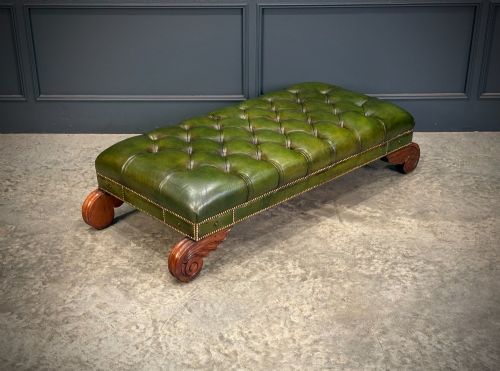
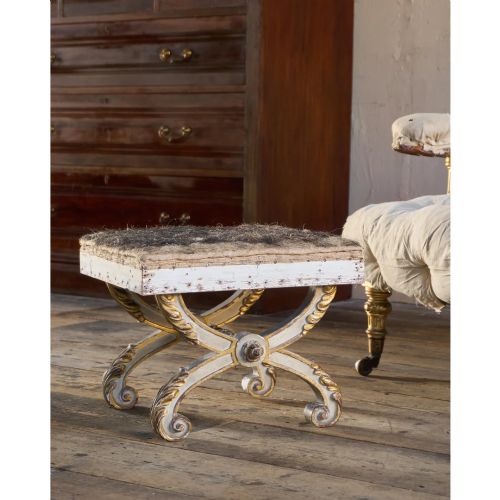
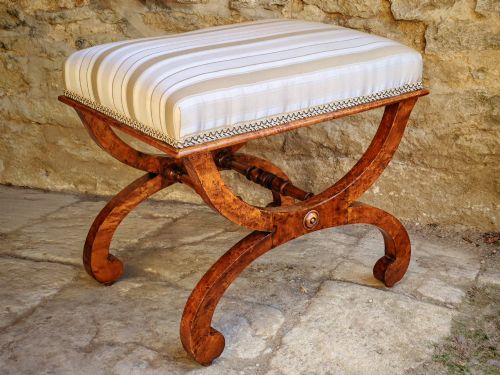
When you search for a regency style ottoman, you are looking at upholstered seating designed for comfort and classical symmetry. These pieces take various forms, including long benches, window seats, and X-frame curule stools.
You are most likely to meet mahogany or giltwood frames upholstered in leather, velvet, or fabric. The designs draw heavily upon neoclassical principles, French Empire tastes, and nineteenth-century Irish interpretations.
The selection ranges from compact footstools to large ottomans and window seats with fluted or cabriole legs. These items bridge the gap between decorative furniture and functional domestic seating.
How they were made
Makers shaped solid woods such as mahogany, sometimes embellishing surfaces with gesso and giltwood details or burr maple veneers. Frames were constructed to support buttoned leather or textile upholstery.
Structural elements include fluted legs, cabriole supports, and X-frame curule designs joined with traditional woodworking techniques. Details like caning and brass mounts appear across various pieces.
Current listings span the nineteenth century, featuring materials such as mahogany, leather, giltwood, and velvet in Regency and neoclassical styles.
What varies in quality
The standard of a piece rests upon the crispness of the timber carving and the architectural proportion of the frame. Finer examples display meticulous attention to detail in the fluting, joinery, and gilding.
Upholstery finish and the selection of primary materials, such as burr maple or giltwood, separate standard domestic furniture from exceptional workshop productions.
Miles & Edwards
The Regency Style Ottoman Glossary
- Curule
- An X-shaped frame structure derived from ancient Roman magistrate seats. This form provides both structural strength and classical visual balance.
- Giltwood
- Timber treated with gold leaf or gilt preparation. It creates a bright decorative surface often found on neoclassical frames.
- Mahogany
- A dense hardwood prized for stability and deep colour. It served as a primary material for high-end nineteenth-century seating.
- Gesso
- A plaster-like mixture applied to wood surfaces to prepare them for gilding. It allows for sharp, intricate decorative relief moulding.
Regency Style Ottoman: Frequently Asked Questions
Where were these ottomans used?
These pieces were placed in drawing rooms, long galleries, and bedrooms as window seats or footstools. They offered flexible seating options that complemented formal neoclassical interiors.
Larger benches and ottomans also functioned near fireplaces or at the foot of beds.
How do I identify nineteenth-century pieces?
Look for traditional timber construction methods, hand-carved details, and period upholstery styles such as buttoned leather or velvet. The presence of mahogany, gesso, and giltwood indicates standard materials of the era.
Proportions typically reflect neoclassical, Regency, or French Empire design influences.
Are these ottomans comfortable?
Many examples include padded upholstery covered in leather, fabric, or velvet designed for supportive seating. Window seats and long benches offer practical rest for domestic spaces.
Upholstery padding varies depending on the original function and subsequent restoration work.