


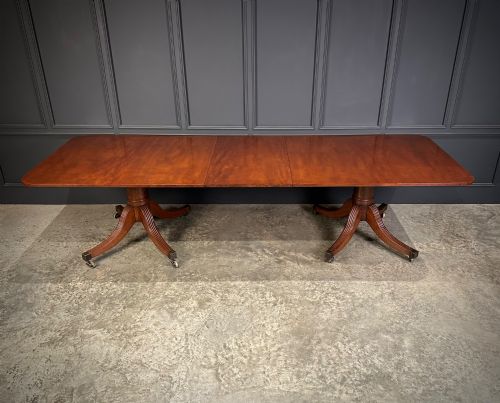
Regency Style Mahogany Table
A regency style mahogany table brings classical proportion and rich timber into a room, offering both formal dining capacity and versatile occasional use.
Regency Style Mahogany Table
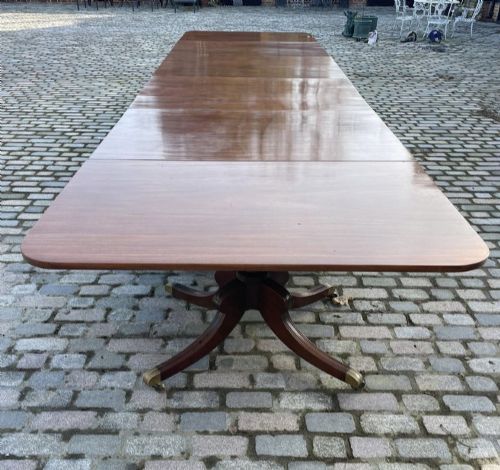
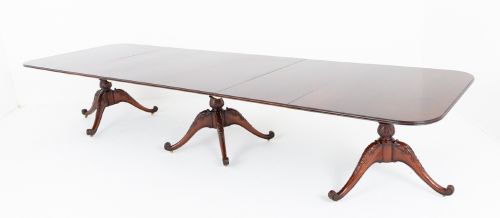
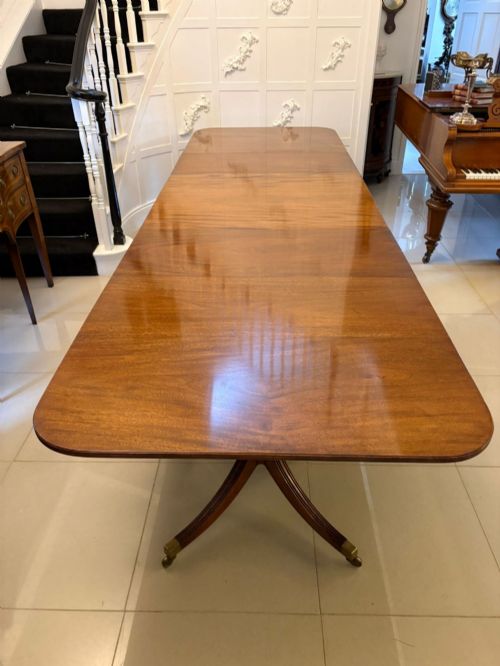
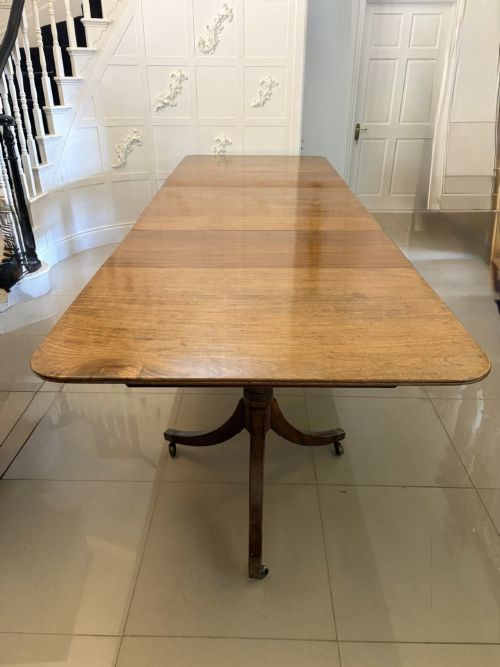
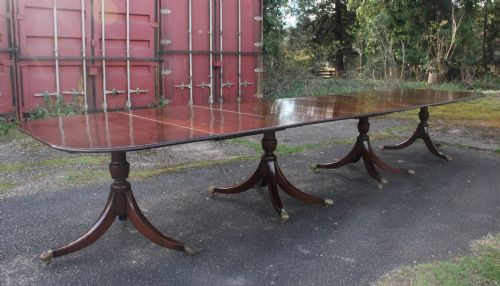
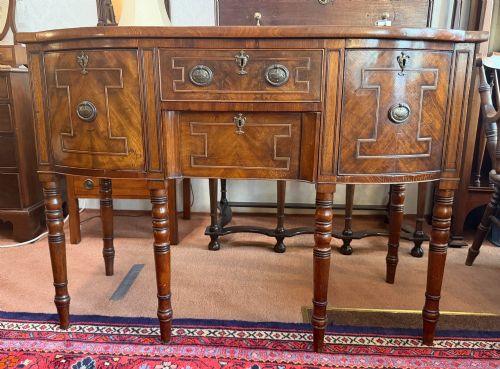
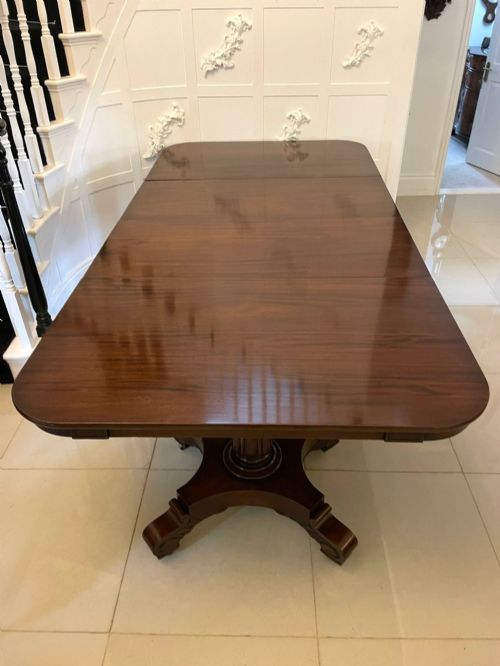
A regency style mahogany table encompasses a broad variety of forms designed to echo the classical lines of the early nineteenth century. Dining tables dominate the selection, ranging from compact twin-pillar versions to substantial multi-pedestal extending models capable of seating large parties.
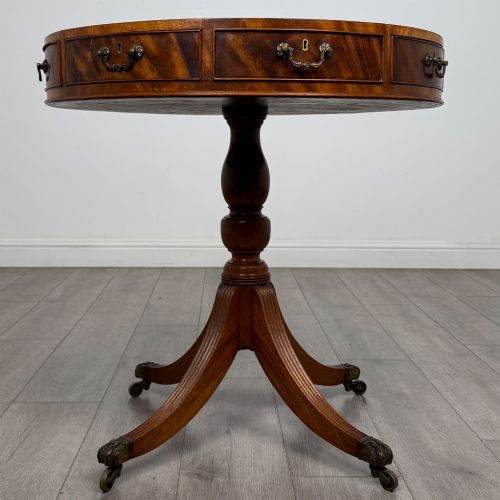
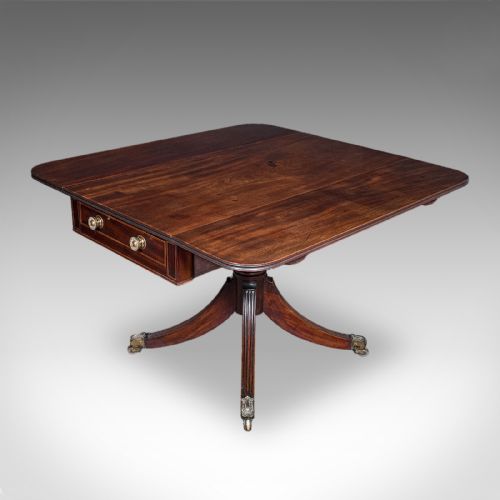
Beyond the dining room, the category includes occasional furniture such as drum tables, sofa tables, breakfast tables, and writing desks. Buyers frequently encounter pieces produced during later revivals in the Edwardian era and the early twentieth century, alongside items originating from the original Regency period and Georgian eras.
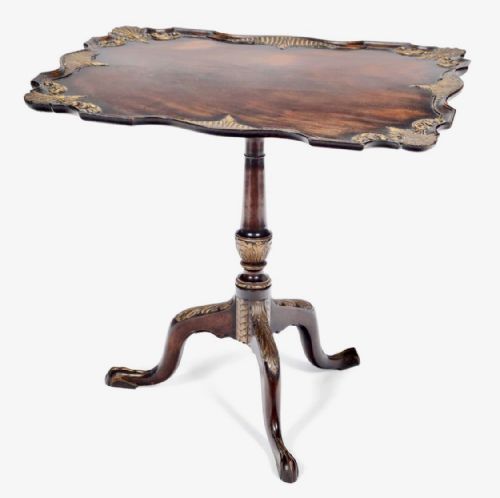
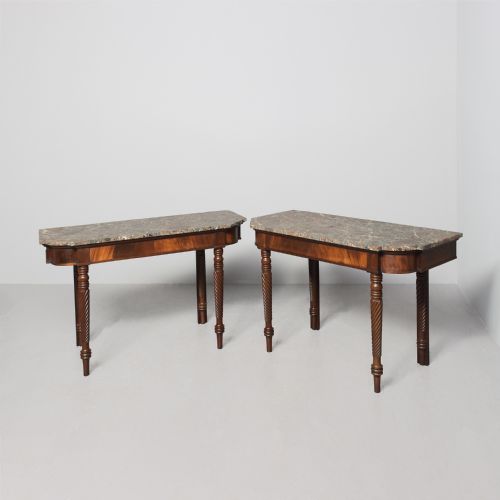
Forms span from D-end dining formats to clever nesting tables, tripod wine tables, and console tables designed to stand against a wall. The variety reflects changing domestic needs across different decades while maintaining a consistent design vocabulary rooted in classical antiquity.
How they were made
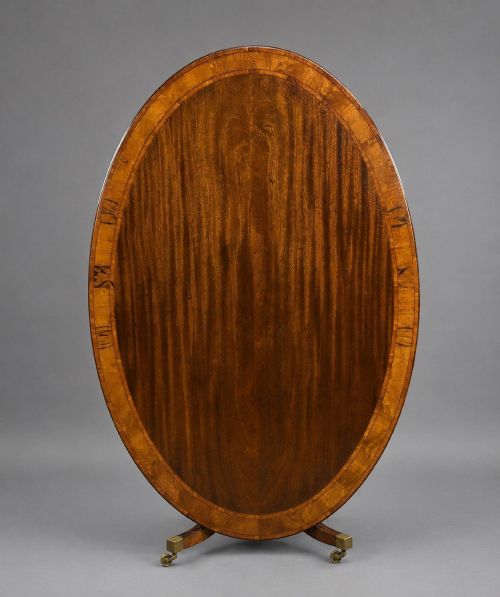
Makers relied primarily on solid and veneered mahogany, prized for its deep grain and stability, often enhanced with figured timber selections like flame mahogany. Details were frequently sharpened through contrasting stringing and inlay using lighter woods such as boxwood and satinwood.
Hardware and structural reinforcement incorporated brass accents, castors, and occasionally parcel gilt highlights. Writing and occasional surfaces frequently integrated inset leather panels, while larger dining tables utilised heavy pedestal bases with brass claw feet.
Construction techniques evolved from period cabinetmaking traditions to later twentieth-century workshop practices, employing extending mechanisms with removable leaves to accommodate varying spatial requirements.
Listings feature dining tables, occasional tables, and writing desks spanning the nineteenth and early twentieth centuries.
What varies in quality
The choice of timber underpins the visual weight of the piece, with highly figured mahogany and well-matched veneers marking out finer examples. Cabinetmaking skill shows in the crispness of the carved details, the neatness of boxwood inlay, and the seamless alignment of table leaves.
Structural integrity depends on the stability of the pillar supports and the smoothness of any extending mechanisms or drop-leaf hinges. Supplementary materials, such as finely tooled leather inserts and substantial brass castors, distinguish high-end production from simpler utility pieces.
The Regency Style Mahogany Table Glossary
- Drum table
- A circular library or occasional table with a deep top containing drawers, supported on a central pillar and tripod base.
- Twin pillar
- A dining table construction utilising two distinct pedestals to support an extending top, allowing for flexible seating arrangements.
- Sofa table
- A rectangular occasional table traditionally designed to stand in front of a sofa, featuring drop leaves on either side.
- Triform base
- A three-sided pedestal support typical of classical revival furniture, often terminating in scroll or claw feet.
- Stringing
- Thin lines of contrasting wood inlay used to outline the edges of tabletops, drawers, and legs.
Regency Style Mahogany Table: Frequently Asked Questions
How do I seat more guests at an extending table?
Extending tables usually incorporate removable centre leaves that slot into the framework when the pedestals are pulled apart. Extra leaves allow the table length to grow for larger gatherings and shorten for daily use.
Storing the leaves safely away from direct sunlight and humidity prevents warping so they fit the table alignment precisely when needed.
Where does a drum table work best?
A drum table suits a central position in a study, library, or sitting room, where its circular shape softens straight architectural lines. The deep skirt usually houses small drawers for stationery or everyday items.
Its compact footprint allows it to function as a centre table or a large lamp table without blocking room traffic.
How do I care for a leather top desk?
Leather writing surfaces require gentle dusting and occasional treatment with specialist leather balms to prevent drying and cracking. Avoiding direct sunlight preserves the original colour and gold tooling.
Using blotters or desk pads protects the soft surface from ink stains and sharp impressions when writing.
Can I use a breakfast table every day?
Breakfast tables feature a tilt mechanism or a fixed pedestal that easily accommodates daily dining or serving tasks. Their central pedestal design maximises legroom for chairs placed around the perimeter.
Routine maintenance involves wiping spills promptly with a dry or slightly damp cloth to protect the polished mahogany finish.