
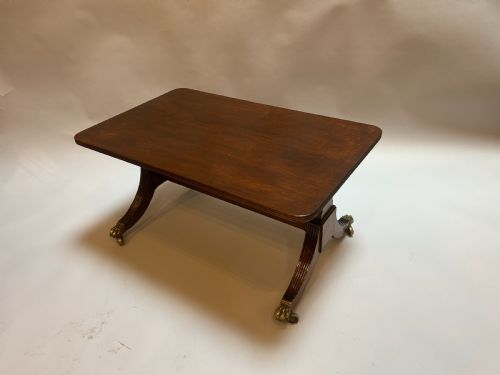
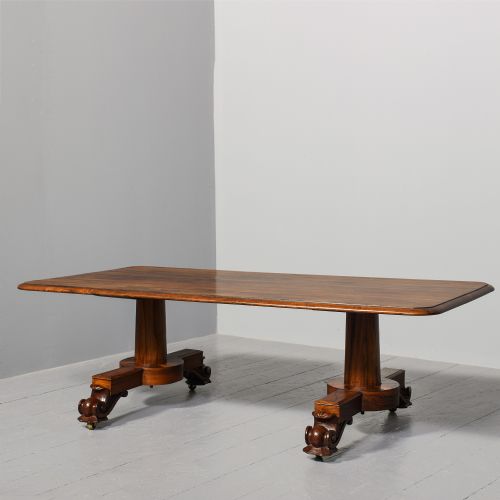
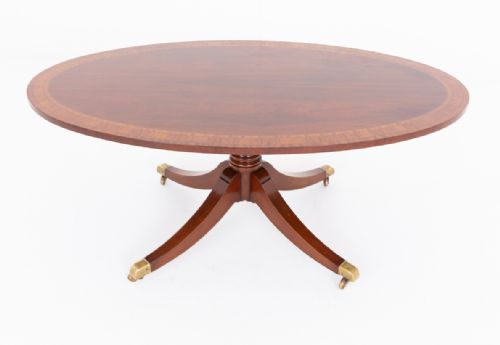
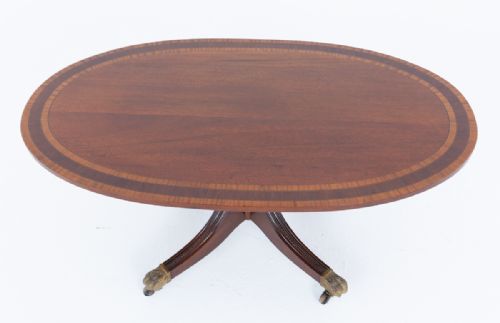
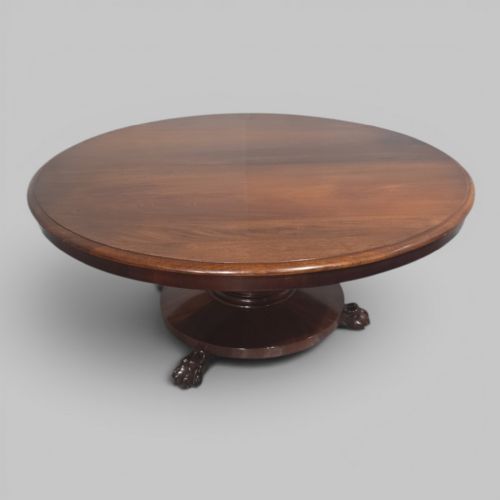


Regency Style Low Table
These pieces known as a regency style low table bring classical proportions and rich timbers to modern rooms as low coffee and occasional surfaces.
Regency Style Low Table
A regency style low table brings classical elegance to a room, appearing in forms such as coffee tables, occasional tables, and adapted tray tables. You will frequently find pieces produced during later revivals in the early twentieth century alongside genuine nineteenth-century examples.
The selection ranges from circular and oval formats to square tables with caned tops or drum designs. Makers often drew upon Georgian and Regency precedents, incorporating neoclassical motifs and balanced proportions adapted for lower surface heights.
How they were made
Cabinetmakers utilised dense timbers such as mahogany and rosewood, frequently enhanced by satinwood inlay or intricate veneer work. Structural elements often incorporate brass details, reeded legs, and occasionally marble tops paired with gilt metal mounts.
Joinery methods reflect traditional cabinetmaking standards, whether applied to an original nineteenth-century piece or a later revival item. Surface finishes range from polished mahogany to painted decorative schemes on tray tables.
Materials appearing across the inventory include marble, cane, leather, and brass alongside primary cabinet timbers.
What varies in quality
The distinction in quality rests upon the selection of timber figures, such as flame mahogany or oyster veneers, and the precision of inlaid details. Superior examples display crisp carving on reeded legs and refined proportions that echo original Regency design.
Construction methods also separate standard production items from finer workshop pieces, seen in the stability of the frame and the integration of secondary woods. The handling of brass mounts and the depth of the polish further define the tier of a table.
Waring and Gillow
The Regency Style Low Table Glossary
- Flame mahogany
- A distinct timber figure displaying a flickering, flame-like grain pattern. It is achieved by cutting across the branch forks of the tree.
- Reeded legs
- Cylindrical supports carved with parallel convex mouldings. They frequently appear on furniture influenced by classical architectural columns.
- Satinwood inlay
- Contrasting light-coloured wood inserted into a darker surface to create decorative borders. This technique highlights the geometric lines of the table top.
- Oyster veneer
- Circular slices cut transversely from small branches and arranged in patterns. This creates an appearance resembling clusters of oyster shells.
- Drum centre table
- A circular table featuring a deep frieze fitted with drawers around the circumference. These designs traditionally stood in the middle of a room.
Regency Style Low Table: Frequently Asked Questions
Are these low tables original period pieces?
The inventory includes items produced during the nineteenth century alongside later revival pieces made in the early and mid-twentieth century.
Revival pieces adopt the classical styles and timber choices of earlier eras while serving contemporary function as low tables.
What timbers are most common?
Mahogany is the predominant wood seen across the selection, appearing in plain, flame, and inlaid variations.
Other notable timbers include rosewood, yew wood with oyster veneer, and satinwood accents.
How do I style a low table?
These pieces function well as central coffee tables in living spaces or as occasional surfaces beside seating.
Their classical proportions allow them to complement both traditional interiors and modern minimalist rooms.
What is a tray table?
A tray table combines a removable or fixed tray top with a supporting stand, often featuring painted or decorated surfaces.
This form offers a lighter visual weight compared to solid timber coffee tables.