



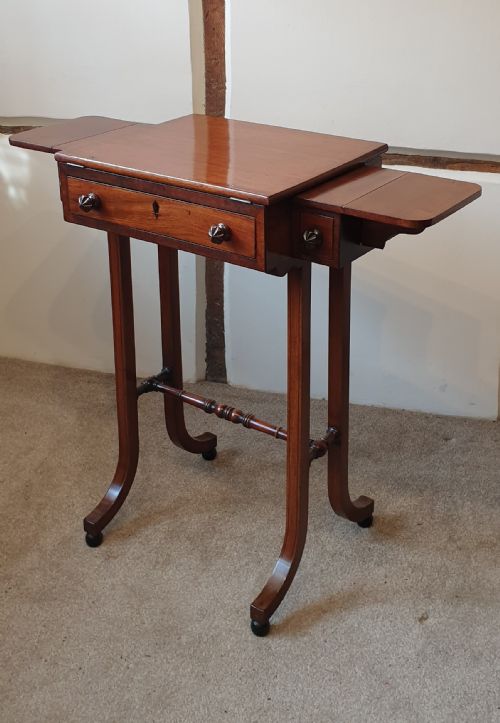
Regency Sliding Desk
These regency sliding desk pieces are compact writing tables featuring clever mechanisms and rich timber, built for serious correspondence.
Regency Sliding Desk
A regency sliding desk usually takes the form of a Davenport, featuring a sliding top that extends to create a writing surface. These pieces emerge primarily from the 19th Century, the Regency period, and the William IV era.
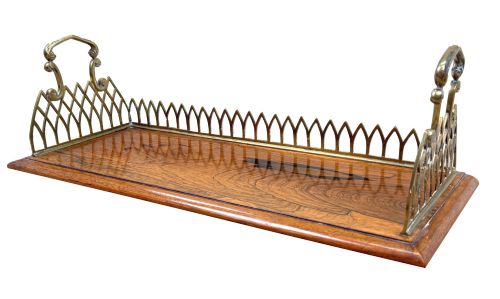
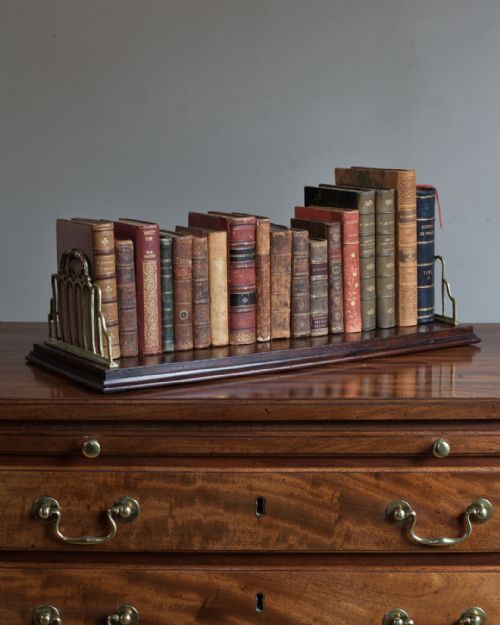
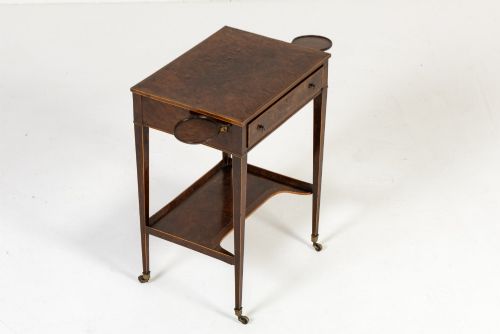
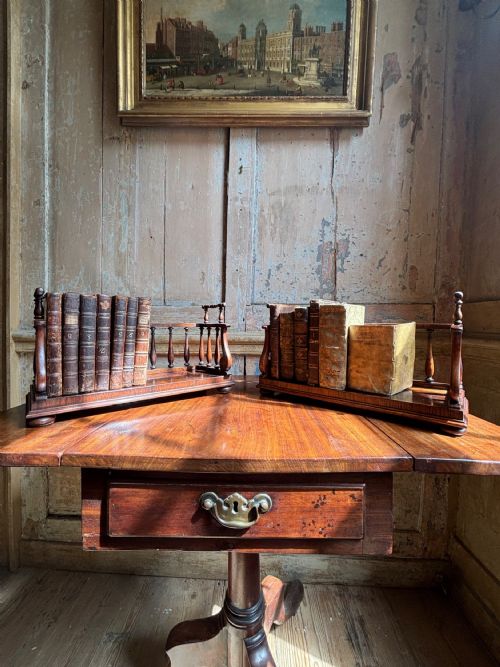
The inventory on this page also encompasses related forms such as writing tables, book stands, book slides, chiffoniers, and occasional tables with adjustable reading stands. Mahogany and rosewood dominate the material record, accompanied by burr yew, coromandel, and mother of pearl.
Makers and designers working in the manner of Gillows and John McClean shape the upper tiers of these forms, while standard pieces reflect the broader output of Georgian and Victorian workshops.
How they were made
Cabinetmakers relied on dense tropical hardwoods like rosewood and mahogany, frequently selecting burr yew and coromandel for decorative grain patterns. Boxwood inlay and brass hardware added contrasting detail to the primary timber.
Sliding mechanisms required precise joinery to ensure the top moved smoothly over the lower carcase without binding. Interiors typically housed writing surfaces lined in leather, alongside dedicated drawers for ink pens and stationery.
Regency Sliding Desk Retail Price Guide 2026
Typical asking prices for regency sliding desk among the pieces listed under this phrase on Sellingantiques today, from the lower quarter to the upper quarter. They describe what is for sale here now, not the wider market.
Listings span the Regency, William IV, and Victorian periods, featuring mahogany, rosewood, coromandel, and burr yew woods.
What varies in quality
Quality rests in the selection of timber figures, such as highly figured rosewood veneers and well-matched burr yew panels. The crispness of boxwood inlay and the weight of brass fittings distinguish finer workshop output from standard production.
Gillows·John McClean
The Regency Sliding Desk Glossary
- Davenport
- A compact desk featuring a sloping, often sliding top above a pedestal of drawers. This form became popular during the Regency period for boudoir and study use.
- Book slide
- An extending stand designed to hold volumes upright on a table or desk. These pieces often incorporate hinged ends and decorative fretwork in coromandel or rosewood.
- Chiffonier
- A low cabinet with doors or drawers, sometimes featuring shelves above. Regency examples frequently showcase fine rosewood veneers and inlaid boxwood stringing.
- Burr yew
- A timber taken from the growth excrescences of the yew tree, prized for its swirling, highly decorative grain pattern. Cabinetmakers used it selectively for drawer fronts and small panels.
- Coromandel
- A dense, dark wood with contrasting light streaks imported from Asia. It appeared on high-status nineteenth-century desk accessories and small furniture.
Regency Sliding Desk: Frequently Asked Questions
What is a regency sliding desk?
A regency sliding desk is a compact writing cabinet, typically known as a Davenport, where the desktop slides forward to reveal a writing surface and storage compartments.
These pieces date predominantly from the early nineteenth century and utilise dense timbers such as rosewood and mahogany.
How were these desks used?
Owners utilised these compact desks for personal correspondence, keeping stationery and ink within the pedestal drawers beneath the sliding top.
The integrated mechanisms allowed writers to pull the surface forward for a comfortable seating position without disturbing items placed on top.
Which woods appear most often?
Mahogany and rosewood form the primary structure for the majority of these nineteenth-century writing pieces and tables.
Cabinetmakers also employed exotic accents like coromandel, burr yew, and boxwood inlay to enhance the visual appeal of the cabinetry.
How do I distinguish between periods?
Regency and Georgian pieces rely on classical proportions and restrained mahogany or rosewood surfaces, while William IV examples often feature heavier, more robust turning and bolder grain.
Victorian variations introduce alternative manufacturing techniques and different proportions while retaining the core sliding desktop format.
Where should I place one?
These compact desks suit studies, libraries, or living rooms where floor space is limited yet a functional writing surface is required.
Because many feature finished backs, they can stand away from walls rather than needing placement strictly against a room perimeter.