





Regency Silver Box
These regency silver box items span snuff boxes, vinaigrettes, and tea caddies crafted during the Georgian and Regency eras.
Regency Silver Box
A regency silver box encompasses small pocket containers and larger tabletop pieces created during the Georgian and Regency periods. Buyers seeking these items encounter snuff boxes, vinaigrettes, tea caddies, and jewellery boxes.
The material combinations on this page frequently pair sterling silver and silver gilt with tortoiseshell, wood, glass, and horn. Forms range from pocket-sized snuff boxes to larger burr maple and mahogany tea caddies.
Materials and construction
Silversmiths utilised sterling silver and silver gilt, often combining the metal with tortoiseshell, glass, and various woods such as mahogany, burr maple, and kingwood. Many pieces feature interior gilding, velvet linings, or intricate tortoiseshell veneers applied to structural cores.
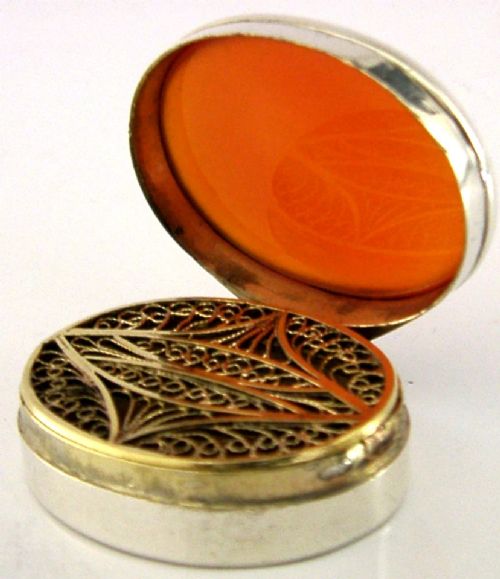
Makers employed specialist techniques including pierced silver grilles for vinaigrettes, detailed engraving for crests and scenes, and fine silver mounts secured to horn, turtle shell, and leather.
The object types span practical containers including snuff boxes, vinaigrettes, tea caddies, jewellery boxes, and scientific instruments.
Judging quality
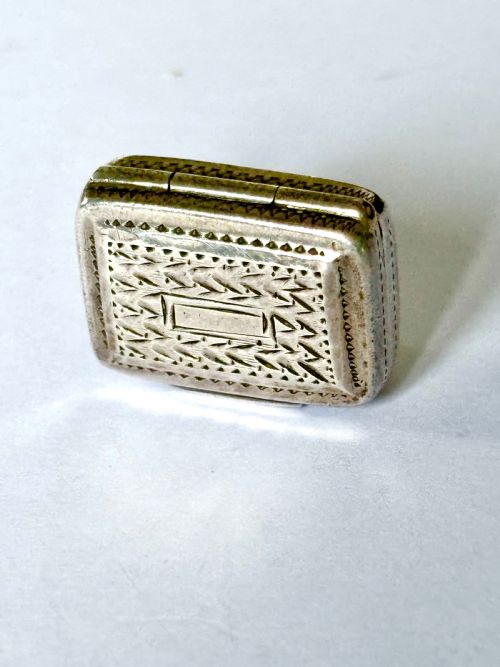
Quality in a regency silver box rests on the crispness of the chased or engraved detail on the silver surfaces, particularly on pocket snuff boxes and vinaigrette grilles. Superior pieces display sharp definition in decorative scenes and secure, well-fitted hinges.
The grade of secondary materials also dictates the standard of the piece, visible in the rich figuring of burr maple, kingwood, or mahogany cases, and the exactness of tortoiseshell panelling without warping.
FBS·John Bettridge·Joseph Wilmore·Nathaniel Mills
The Regency Silver Box Glossary
- Vinaigrette
- A small decorative silver box containing a sponge soaked in aromatic vinegar, featuring an internal pierced grille. These pocket items date predominantly to the Georgian and Regency periods.
- Snuff box
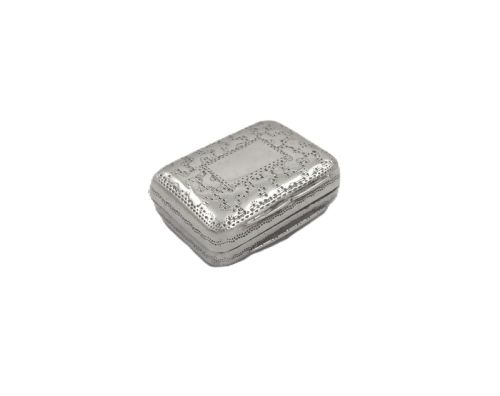
- A small hinged container designed to hold dry tobacco powder for inhalation. They appear in solid sterling silver, silver gilt, and tortoiseshell mounted with silver.
- Tea caddy
- A container designed to store tea leaves safely away from light and moisture. Listings here include examples fashioned from tortoiseshell, cut glass, and fine timbers.
- Silver gilt
- Silver that has been coated with a thin layer of gold on its interior or exterior surfaces. This technique provides a rich golden appearance while retaining a solid silver base.
- Pounce pot
- A small perforated shaker used to sprinkle resin powder onto rough paper to prepare it for ink. These form part of the broader assortment of desk and pocket boxes.
Regency Silver Box: Frequently Asked Questions
What is a regency silver box used for?
These boxes served various domestic and personal functions during the Georgian era, ranging from holding scented vinegar and tobacco to storing dried tea leaves and jewellery.
Smaller items like vinaigrettes and snuff boxes fitted easily into pockets or purses, whereas tea caddies and dressing cases remained stationary on tables or desks.
How do I identify a Regency period box?
Dating relies on stylistic markers associated with the Regency, George III, George IV, and William IV periods, alongside associated hallmarks stamped on the silver components.
Examining the construction methods, such as tortoiseshell veneering over wood cores and specific hinge styles, helps confirm the era of manufacture.
Are all tea caddies made entirely of silver?
The evidence shows that tea caddies from this era combined various materials, frequently pairing tortoiseshell, glass, or timber with silver mounts and escutcheons.
While some boxes are solid silver or silver gilt, others utilise wood or shell as the primary body with silver details.
How should I care for antique tortoiseshell and silver?
Tortoiseshell requires protection from extreme temperature fluctuations and direct sunlight to prevent warping and cracking of the organic material.
Silver components benefit from gentle cleaning to maintain the metal surfaces without harming adjacent wood, leather, or shell panels.