


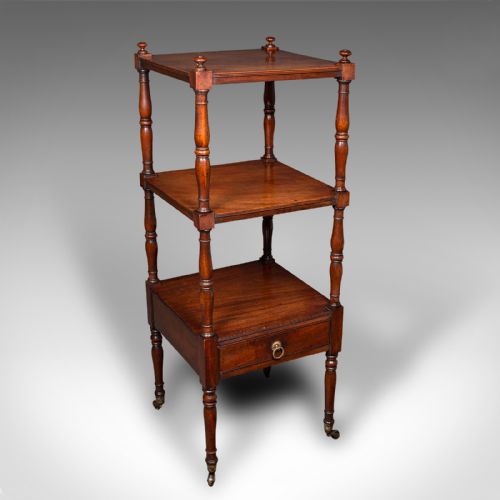

Regency Side Shelf Table
Regency side shelf table pieces are tiered open stands and reading tables designed for display and utility, bringing compact classical elegance to any room.
Regency Side Shelf Table
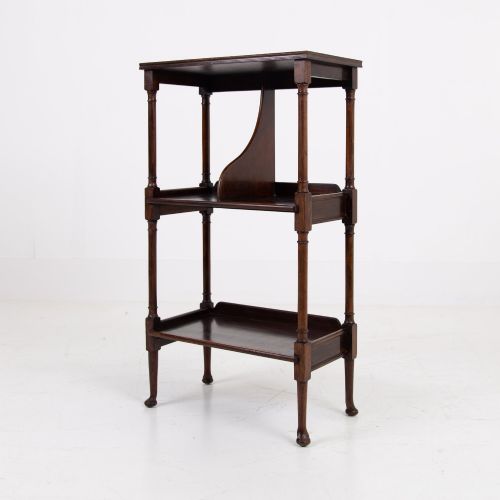
A regency side shelf table encompasses multi-tiered what-nots, étagères, open bookcases, and small reading or side tables originating from the early nineteenth century. These items serve multiple practical functions as display stands, serving surfaces, and compact storage furniture within domestic spaces.
The selection on this page centres heavily on pieces attributed to the Regency, George IV, and William IV periods, alongside later Victorian revivals. Typical configurations include tiered mahogany structures, oak octagonal designs, and occasional pieces featuring brass accents and glass components.
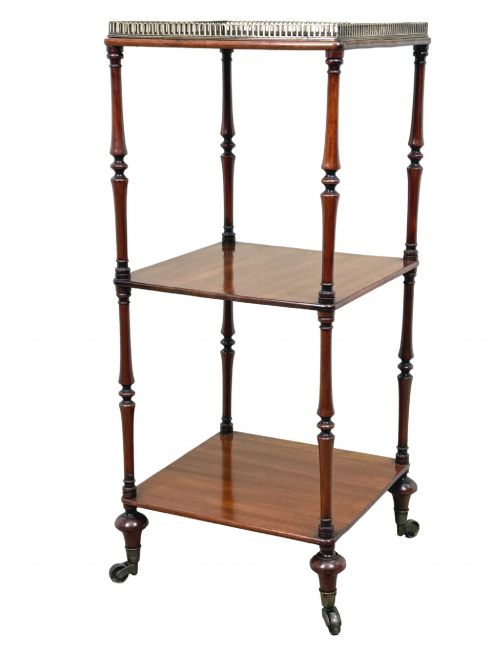
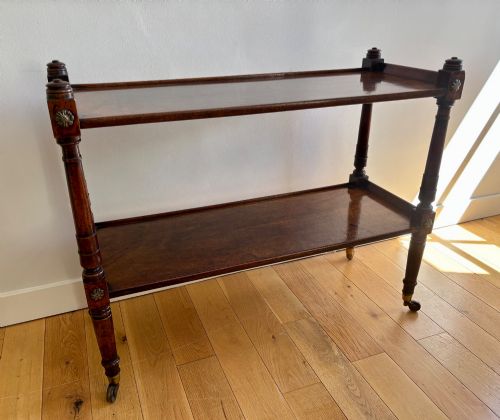
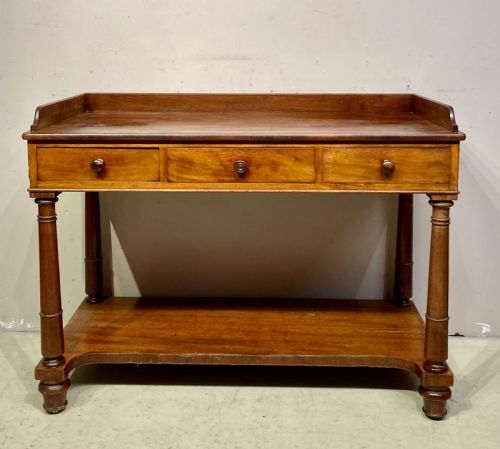
Formats vary from simple two-tier reading tables to elaborate three-tier étagères and chiffoniers fitted with marble tops or cellarettes. Buyers frequently encounter diverse geometric shapes, including round and octagonal tiers supported by slender uprights.
Materials and Construction Methods
Cabinet makers utilised dense imported hardwoods like mahogany and rosewood alongside native timbers such as oak and elm. Finer examples incorporate decorative veneers including birdseye maple and partridgewood to create visually striking table and shelf surfaces.
Metal elements such as brass castors, mounts, and gallery rails appear frequently on these tiered stands to provide mobility and edge protection. Joinery methods of the period rely on sturdy framing to support multiple open display shelves without losing structural integrity.
Formations range from simple two-tier reading stands to complex three-tier étagères incorporating marble tops and folding shelves.
Factors of Quality and Design
The distinction between standard utility items and the finest examples rests upon the choice of timber and the sophistication of the turning on the upright supports. Superior pieces demonstrate meticulous grain selection in veneers like birdseye maple or rosewood, coupled with well-proportioned tiered architecture.
Makers integrated functional elements such as folding shelves, cellarettes, or adjustable reading ratchets with varying degrees of mechanical precision. Workshop execution dictates whether a piece remains a simple functional stand or achieves the sculptural refinement associated with known makers.
Gillows
The Regency Side Shelf Table Glossary
- Étagère
- A set of open shelves for displaying small objects, ornaments, or books. This form became popular during the Regency period for domestic display.
- Whatnot
- A piece of furniture consisting of multiple open shelves placed one above the other for books or ornaments. It originated in the eighteenth century and remained common through the Victorian era.
- Chiffonier
- A low cabinet with doors or drawers, often topped with a shelf superstructure or marble slab. They typically functioned as sideboards or serving surfaces in dining and living rooms.
- Cellarette
- A lockable container or built-in compartment for holding bottles of wine or spirits. These frequently integrated into the lower sections of side tables and sideboards.
- Partridgewood
- A dense tropical timber valued for its distinctive speckled grain pattern resembling partridge feathers. Cabinet makers used it sparingly for decorative occasional tables.
Regency Side Shelf Table: Frequently Asked Questions
What is a regency side shelf table used for?
These pieces function primarily as open display stands and serving surfaces for books, ceramics, and decorative objects. Their multi-tiered design provides vertical storage while occupying minimal floor space in living areas.
Historically, specific variants accommodated reading materials or served as buffet stations in dining rooms. Today, they integrate easily into modern interiors as bedside stands, lamp tables, or hallway display units.
How do I identify a genuine period piece?
Authentic nineteenth-century examples display traditional timber shrinkage, hand-cut joinery, and patination consistent with age and use. Examining the secondary woods and fixing methods helps differentiate early production from later revival items.
Makers of the Regency and William IV eras employed specific turning styles and brass hardware that reflect the neoclassical design vocabulary of the time. Comparing the proportions and wood selection against documented examples offers further confirmation of origin.
What woods were used for these tables?
Mahogany served as the predominant primary timber for furniture of this era due to its strength and rich dark tone. Rosewood and oak appear regularly, alongside exotic decorative veneers like birdseye maple and partridgewood.
Cabinet makers matched these dense hardwoods with brass castors and fittings to complete the architectural aesthetic. The choice of timber often indicates the relative status and intended room placement of the original piece.
How do etageres and whatnots differ?
Etgères and whatnots both provide tiered open shelving, but the terms sometimes reflect subtle distinctions in French versus English cabinet making traditions. Étagère often describes lighter, more decorative French-influenced display stands, while whatnot is the traditional English term for multi-layered utility shelving.
In practice, makers and dealers used both labels interchangeably during the nineteenth century to describe similar open storage furniture. Both forms prioritize vertical display over enclosed cabinet space.