
Regency Sewing Work Table
A regency sewing work table is a nimble, multi-purpose piece designed for needlework and small domestic tasks, prized for its clever concealed storage and refined proportions.
Regency Sewing Work Table
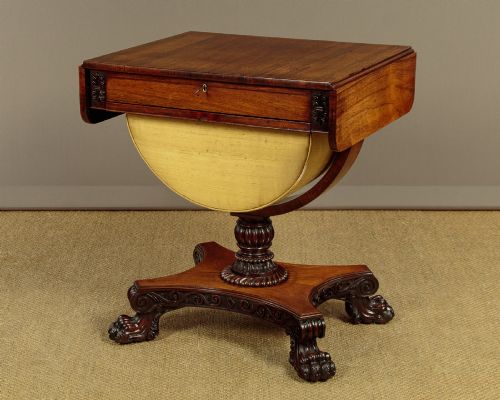
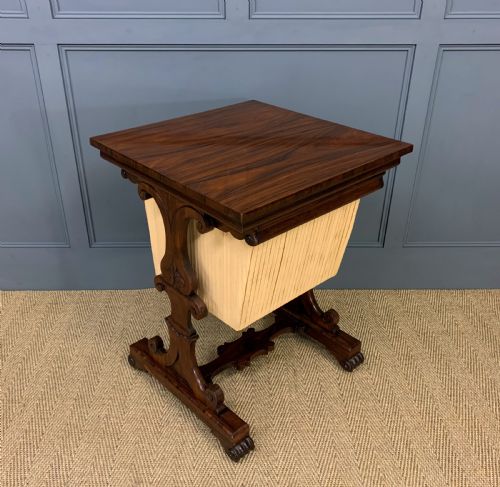
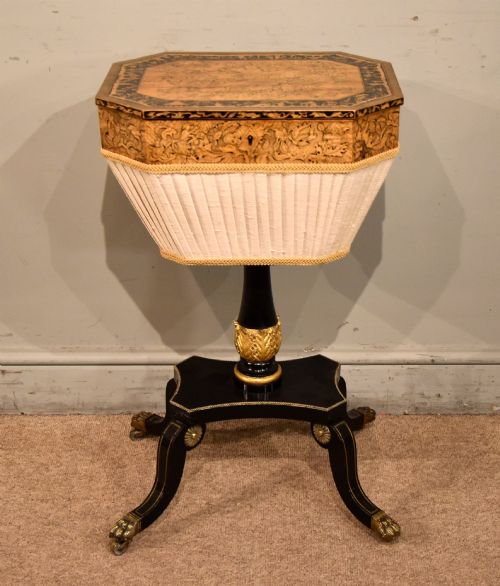
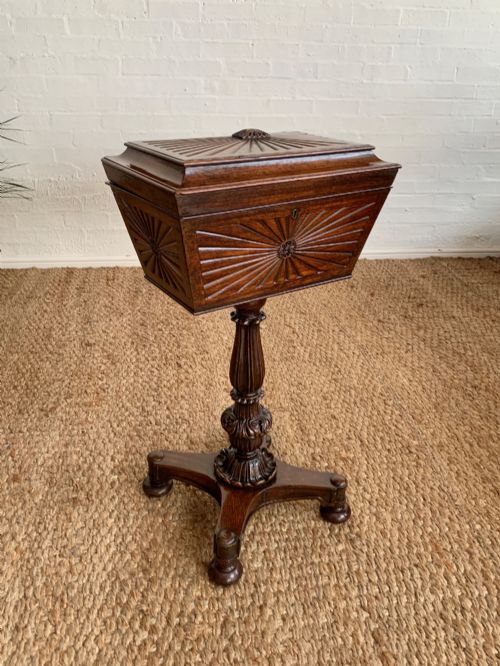
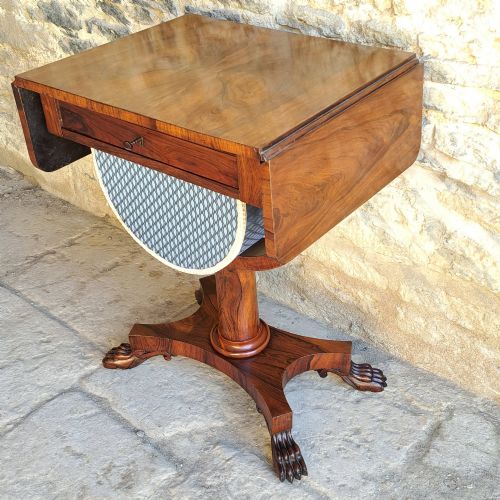
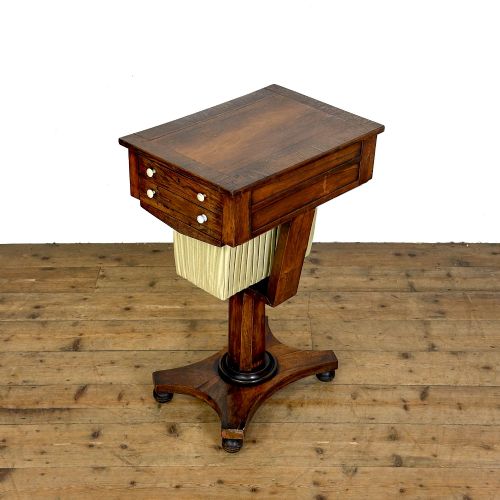
A regency sewing work table combines a compact table surface with a suspended fabric bag or timber box underneath to hold threads, needles, and textile projects. These pieces served as functional personal furniture for ladies in the drawing room or parlour.
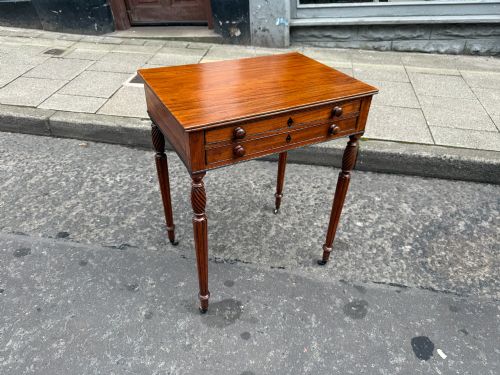
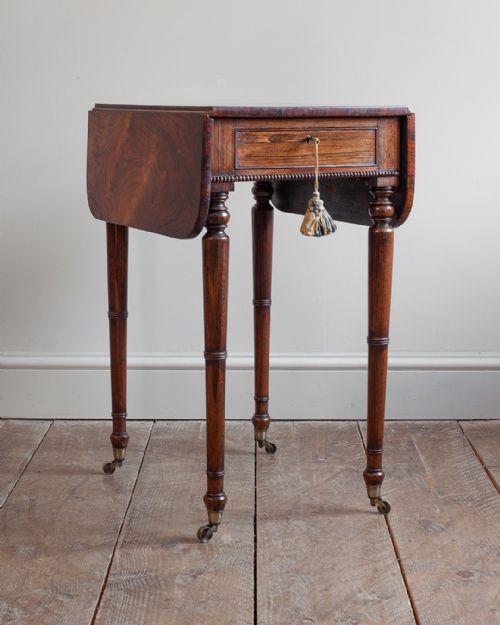
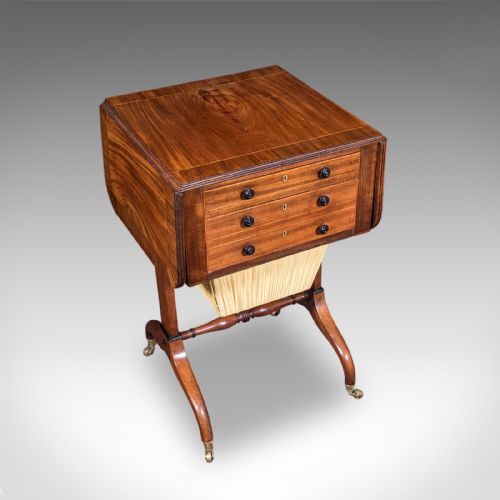
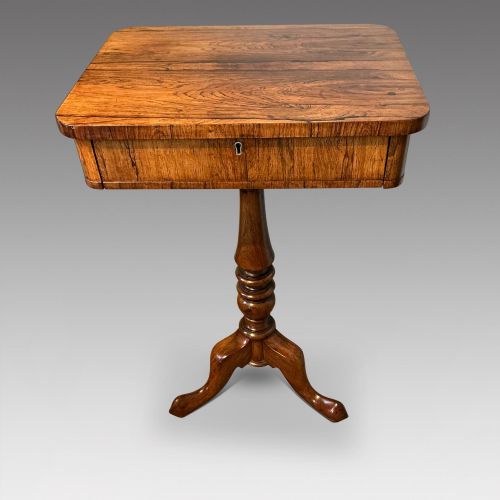
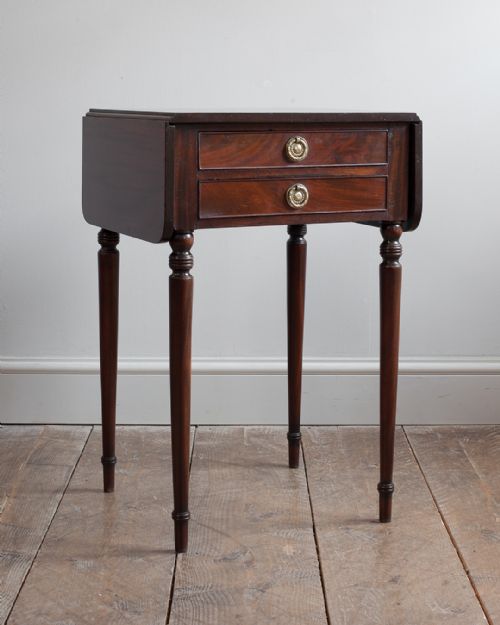
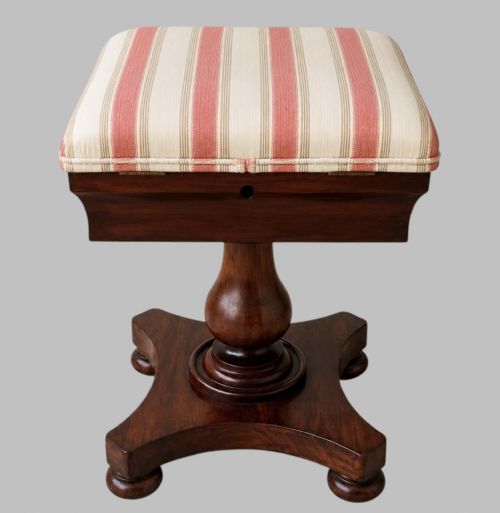
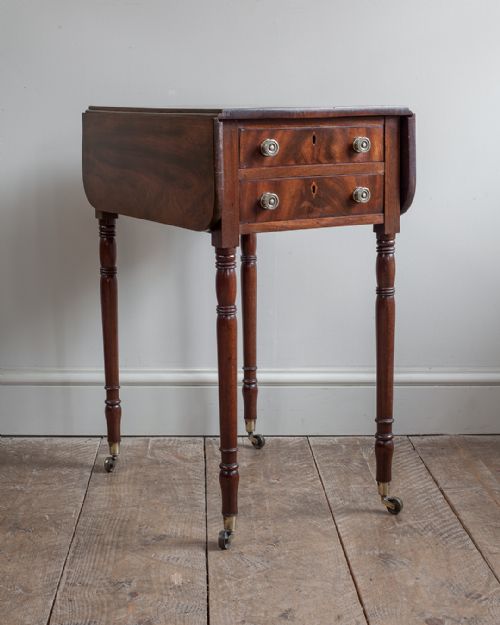
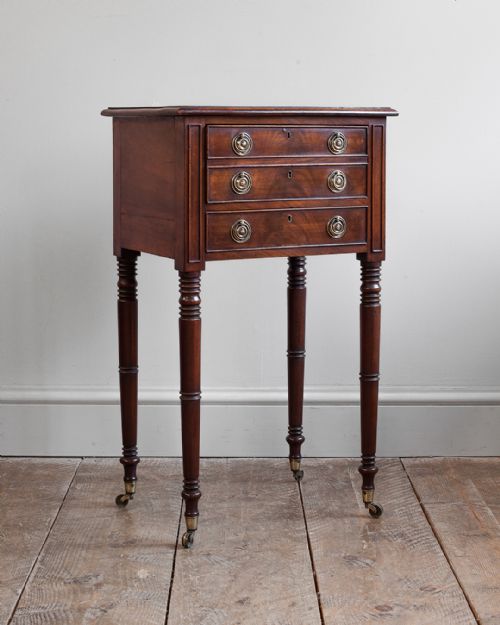
The versions most commonly met on this page span the Regency period through to the William IV and early Victorian eras, constructed primarily in mahogany or rosewood. They frequently appear as drop-leaf pembroke formats, pedestal designs, or tables incorporating games boards and writing surfaces.
How they were made
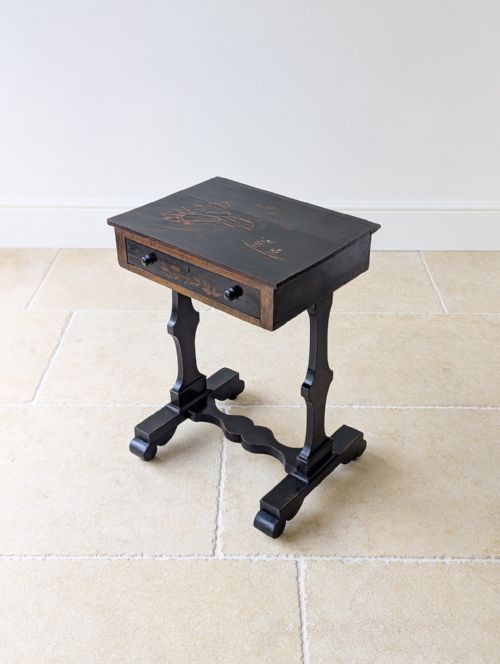
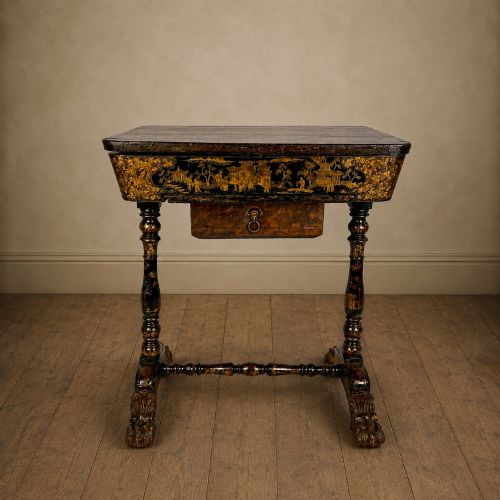
Cabinet makers utilised dense native and imported timbers, pairing solid mahogany and satinwood with figured rosewood veneers over firmer secondary woods. Surfaces were often enriched with fine ebony stringing, penwork decoration, or contrasting black and gilt lacquer finishes.
Structural ingenuity defined the construction, integrating drop-leaf flaps, pivoting work bags made from silk or fabric, and compartmented internal trays. Drawer frames were joined with neat dovetails, while pedestals rested on carved pillar supports and splayed legs fitted with brass castors.
Some tables hide tiny compartments meant for thimbles and pins.
What varies in quality
The choice of timber grain fundamentally divides standard examples from the finest pieces, with richly figured flame mahogany or book-matched rosewood marking out superior workshops. Finer execution shows in crisply carved pillar bases, delicate lyre ends, and intricate penwork or inlay.
Internal arrangement and mechanical smoothness separate the ordinary from the exceptional. Well-made pieces feature neatly fitted writing slides, smooth drawer actions, and intact original silk or fabric sewing bags rather than later replacements.
Gillows
The Regency Sewing Work Table Glossary
- Pembroke table
- A small occasional table featuring two hinged drop leaves on opposite sides, allowing the top surface to expand when needed. These tables often incorporated single drawers fitted for writing or sewing.
- Penwork
- A decorative technique using fine ink lines on light wood surfaces to create intricate geometric or Chinoiserie motifs. This delicate ornamentation mimics more costly inlay work through skilled manual drawing.
- Caddy top
- A raised, hinged lid resembling a tea caddy built into the top of the table. It provides secure enclosed storage for small implements and valuables.
- Strung
- Inlaid with narrow strips of contrasting timber, such as ebony set into mahogany, to create sharp linear borders. This detail outlines drawers and table edges for visual definition.
- Lyre-ended
- A base design featuring a support shaped like the classical musical instrument, carved from solid timber. It appears commonly on the central pedestals of tables from the Regency period.
Regency Sewing Work Table: Frequently Asked Questions
What is a regency sewing work table used for?
These tables served as versatile companions for women engaged in needlework, embroidery, and reading in the principal rooms of the house. The fitted drawers and suspended fabric bags kept materials close at hand while maintaining a tidy domestic appearance.
Beyond sewing, many versions doubled as writing desks, small lamp tables, or occasional games tables by incorporating fold-over tops and specialised compartments.
How can I tell a Regency period table from later copies?
Authentic period pieces display the characteristic proportions, timber choices, and construction methods of the early nineteenth century, utilising solid mahogany, rosewood, and subtle ebony stringing. The turning on pedestals and the style of brass castors match the aesthetic vocabulary of the era.
Examination of the internal secondary woods and drawer joints often reveals the hand of nineteenth-century cabinet makers rather than later revival manufacturing techniques.
Where should I place a work table in a modern room?
Because of their compact footprints and finished backs, these pieces work well as lamp tables beside a sofa or as occasional side tables in a hallway or study. Their drop leaves allow them to fit into narrow spaces while offering expandable surface area.
The enclosed storage makes them practical for keeping small everyday items out of sight while adding historical character to an interior.
What is the difference between a work table and a pembroke table?
While a standard pembroke table focuses on a drop-leaf surface for general occasional use, a work table specifically incorporates integrated storage for sewing materials beneath the top. This usually takes the form of a wooden box drawer or a suspended fabric bag.
Many examples on this page combine both forms, functioning as pembroke tables equipped with the specialised internal fittings of a sewing station.