

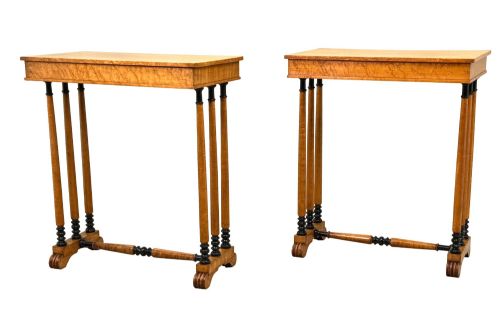
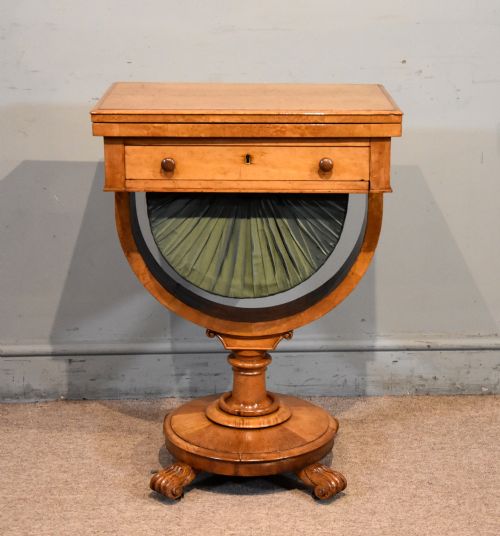

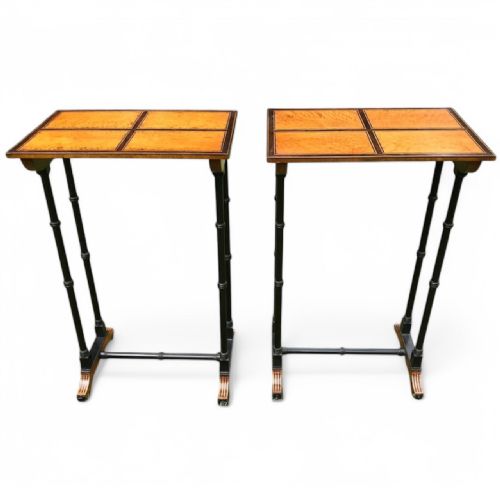


Regency Maple Furniture
Regency maple furniture brings together the striking visual grain of birdseye and burr maple with the refined cabinet-making of the early nineteenth century.
Regency Maple Furniture
Regency maple furniture encompasses a selection of occasional tables, work tables, tea tables, side tables, and desks dating from the late eighteenth century through the nineteenth century. Buyers searching for regency maple furniture will encounter forms such as drum tables, whatnots, sewing tables, and folio cabinets.
The aesthetic bridges the Georgian, George IV, and Victorian periods, alongside Scandinavian Neo-Classical influences. Pieces span the Regency period itself as well as items recorded from eighteen-fifty and nineteen-ten.
How they were made
Makers utilised woods such as birdseye maple, burr maple, burr root maple, mahogany, and ebonised wood to construct these items. The distinct figuring of the maple veneer forms the visual centrepiece of the construction.
Contrasting details are introduced through the integration of brass, ebony, and rosewood elements, alongside painted faux bamboo finishes. Cabinet-makers shaped these materials into functional forms including tables, cabinets, and small desks.
Regency Maple Furniture Retail Price Guide 2026
Typical asking prices for regency maple furniture among the pieces listed under this phrase on Sellingantiques today, from the lower quarter to the upper quarter. They describe what is for sale here now, not the wider market.
Listings feature woods including birdseye maple, burr maple, mahogany, and ebonised wood across the Regency and Victorian periods.
What varies in quality
Quality rests upon the selection and matching of the maple veneer, where tighter and more evenly distributed birdseye or burr patterns elevate the visual presence of the object. The subtlety of contrasting timbers, such as ebony stringing or rosewood crossbanding, dictates the refinement of the surface.
Construction integrity is demonstrated through the proportion of the form, whether in the turned supports of a occasional table or the fitted interior of a sewing and games table. Pieces attributed to specific workshops or echoing recognised makers show greater attention to architectural detail.
Gillows·Maples & Co
The Regency Maple Furniture Glossary
- Birdseye maple
- A figure in maple wood where the grain swirls in small circles resembling bird eyes. This growth pattern is highly prized for decorative veneer work on tabletops and cabinet fronts.
- Burr maple
- A growth distortion on a maple tree that produces intricate and swirling wood grain patterns. Cabinet-makers slice this timber into veneers to create rich surface decoration.
- Whatnot
- An open-shelved piece of freestanding furniture designed for displaying ornaments or holding books. These tiers are supported by slender uprights and date predominantly from the nineteenth century.
- Drum table
- A circular library table featuring a deep top that often houses drawers around the perimeter. It typically sits on a central pillar with splayed legs.
- Ebonised wood
- Timber treated with a dark stain or finish to imitate ebony. This technique provides sharp dark contrasts against lighter woods like maple.
Regency Maple Furniture: Frequently Asked Questions
What is regency maple furniture?
Regency maple furniture consists of tables, cabinets, and desks made from varieties of maple wood during the nineteenth century. These items highlight the natural figuring of birdseye and burr maple veneers.
They reflect styles from the Regency, Georgian, and Victorian eras, often incorporating contrasting timbers like ebony or rosewood for decorative effect.
How do I identify a Regency piece?
Identification relies on observing specific structural forms, such as occasional tables, tea tables, and drum tables, combined with period timber usage. Classical proportions and minimalist ornament typical of the early nineteenth century guide the attribution.
Makers of the era favoured striking wood grains over heavy carving, letting the natural pattern of the maple define the piece.
Where were these pieces used?
These items served functional roles in drawing rooms, parlours, and libraries as work tables, sewing desks, and folio cabinets. Their domestic utility matched their decorative appearance in fashionable homes.
Smaller forms like child dressing tables and occasional tables moved easily between rooms according to daily requirements.
How do I care for maple furniture?
Maple furniture requires stable indoor humidity levels and protection from direct sunlight to preserve the tone of the timber and veneer. Gentle cleaning with a soft cloth maintains the polished surface without damaging historical finishes.
Avoid placing pieces near direct heat sources to prevent the wood or veneer from warping over time.