


Regency Period Work Table
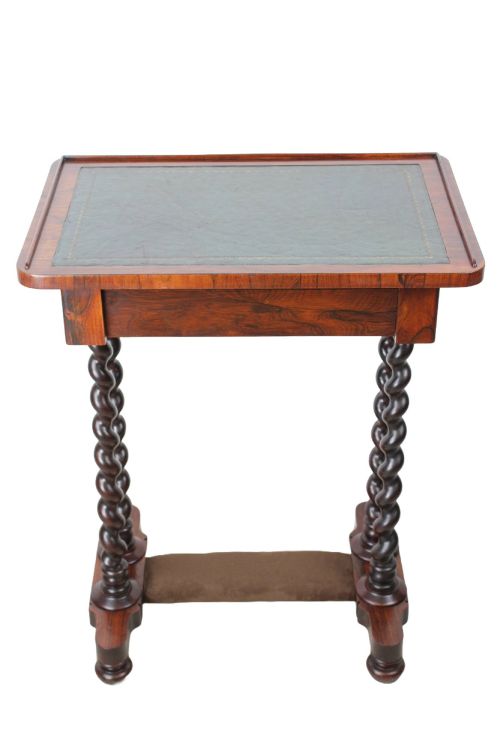
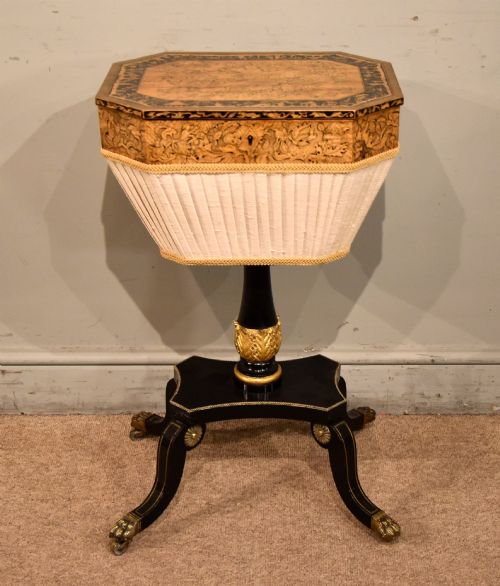
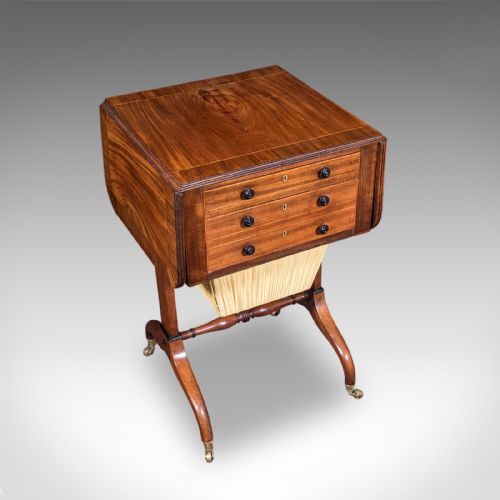
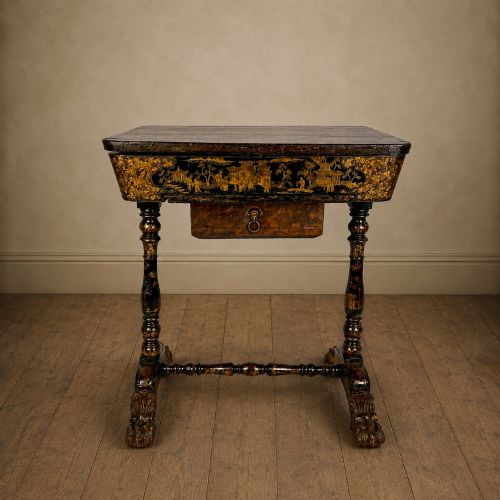
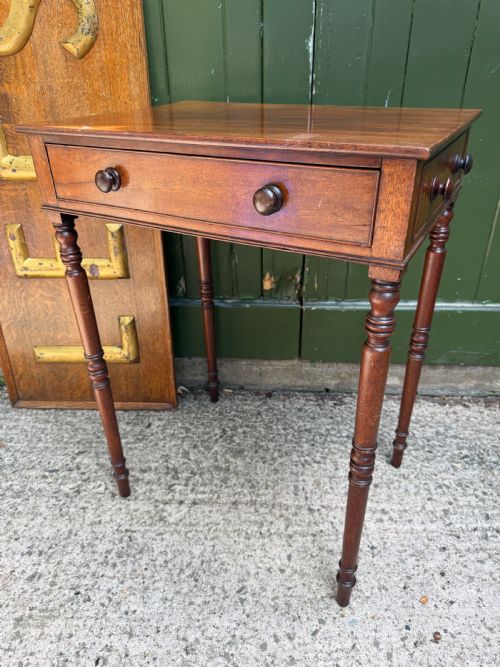
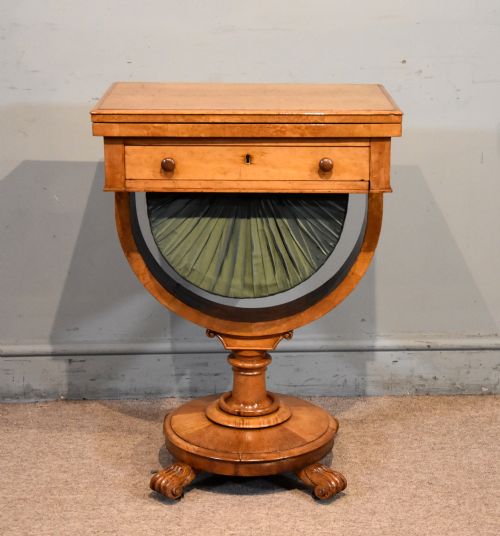
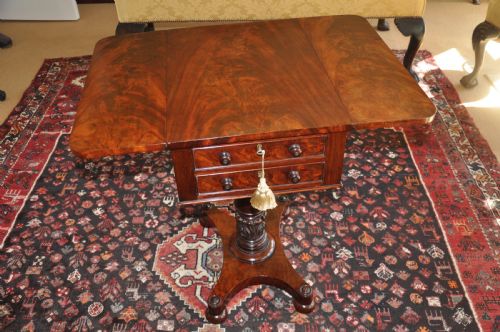
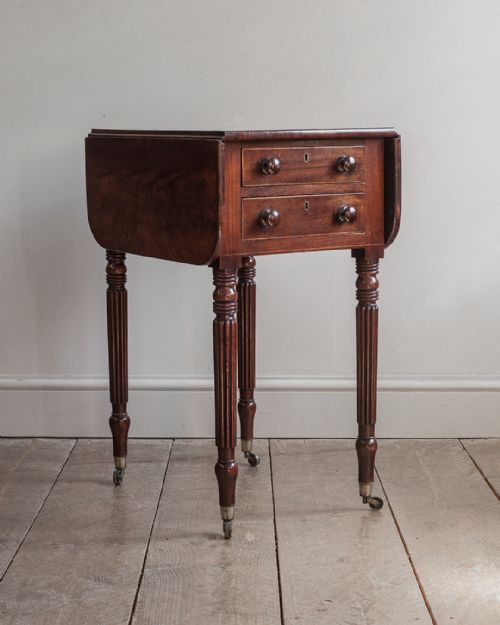
These pieces are a regency period work table, designed for needlework and writing, offering compact elegance for any room.
Regency Period Work Table
A regency period work table is a functional domestic item primarily intended for sewing, writing, and small household tasks. These pieces date principally from the early nineteenth century, spanning the Regency, George IV, and late George III periods. Buyers frequently encounter rectangular or octagonal forms incorporating drawers and hanging fabric bags for textiles.
The selections on this page encompass related designs including occasional tables, side tables, games tables, Pembroke tables, and sofa tables. Timber choices heavily favour rich native and exotic woods such as mahogany, rosewood, and pollard oak, often accented with contrasting veneers. Most examples are freestanding, suited for placement beside a chair or sofa in a drawing room.
Originating predominantly in English workshops, these items reflect the neoclassical tastes of the era. They combine utilitarian compartments with refined proportions, making them versatile furniture for modern interiors. The integration of drop leaves, chess boards, and penwork surfaces demonstrates their multi-purpose utility.
How they were made
Cabinetmakers utilised dense tropical hardwoods like rosewood and mahogany, alongside figured native timbers such as burr ash, birch, and pollard oak. These woods were frequently polished to highlight natural grain patterns or ebonised for stark visual contrast. Specimen wood veneers and detailed wood inlay added geometric and linear decoration to tabletops and friezes.
Metal and textile elements played a crucial functional and decorative role in construction. Brass mounts, stringing, and inlay work highlighted structural outlines and table edges. Interiors often concealed fitted compartments, while drop leaf sections relied on hinged wooden brackets, and sewing wells incorporated gathered silk or fabric bags.
Many a Victorian needlewoman would be scandalised to see her sewing box repurposed as a remote-control caddy.
What varies in quality
The standard of timber selection largely dictates the standing of a piece, separating common examples from exceptional ones. Figured veneers, perfectly matched grain, and intricate wood inlay or penwork demonstrate superior cabinetmaking skill. The precision of brass stringing and the crispness of turned pedestal mounts further distinguish finer workshop output.
Gillows of Lancaster·John MaClean
The Regency Period Work Table Glossary
- Work table
- A small domestic table designed for sewing and needlework, typically fitted with drawers and an attached fabric bag.
- Pembroke table
- A small rectangular table featuring two hinged drop leaves on opposing sides.
- Penwork
- A decorative technique using ink to draw fine, intricate motifs directly onto a prepared wooden surface.
- Pollard oak
- Timber taken from trees that have been pollarded, producing a highly figured and knotted grain pattern highly prized for cabinetwork.
- Sofa table
- A long, narrow freestanding table traditionally placed in front of or beside a sofa, often featuring drop leaves and end supports.
Regency Period Work Table: Frequently Asked Questions
What is a regency period work table used for?
These tables were originally created for domestic needlework, embroidery, and light writing tasks. They provided a tidy surface and storage for threads, needles, and documents.
In a modern interior, they function well as compact side tables, lamp stands, or bedside surfaces. Their small proportions allow them to fit easily beside seating while offering hidden storage.
How do I identify a genuine piece?
Look for authentic construction methods of the early nineteenth century, including hand-cut dovetails in the drawers and traditional timber shrinkage. Materials typically restricted to this era, such as solid rosewood or flame mahogany, support the period attribution.
Examine the secondary woods used inside the drawers, such as oak or pine, which should match Georgian and Regency workshop practices. Subtle signs of hand-tooling and period-appropriate hardware further confirm authenticity.
Are all these tables fitted with fabric bags?
Not every table includes a fabric bag, though it remains a defining characteristic of sewing and work tables. Many variants incorporate solid wooden drawers or drop leaves instead of textile pouches.
Tables without bags were often used more generally for writing or holding lamps. Where fabric bags are present, they are frequently modern replacements upholstered in silk or cotton to match the original style.
Can I use one as a bedside table?
Their compact dimensions and enclosed storage make them well-suited for use beside a bed. The top surface easily accommodates a reading lamp, while drawers keep small personal items out of sight.
Pendant drop leaves or narrow pedestals ensure they do not overwhelm smaller bedrooms. However, delicate rosewood or veneered surfaces require careful protection from moisture and direct heat.