
Regency Table on Castors
A regency table on castors combines mobility with formal elegance, offering flexible dining and serving surfaces set upon working wheels.
Regency Table on Castors
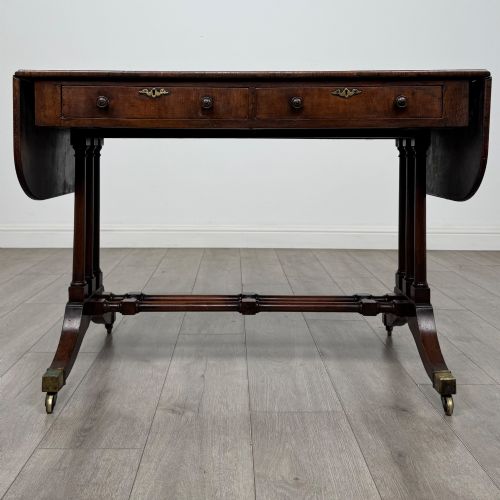
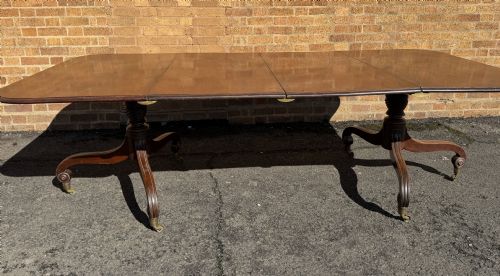
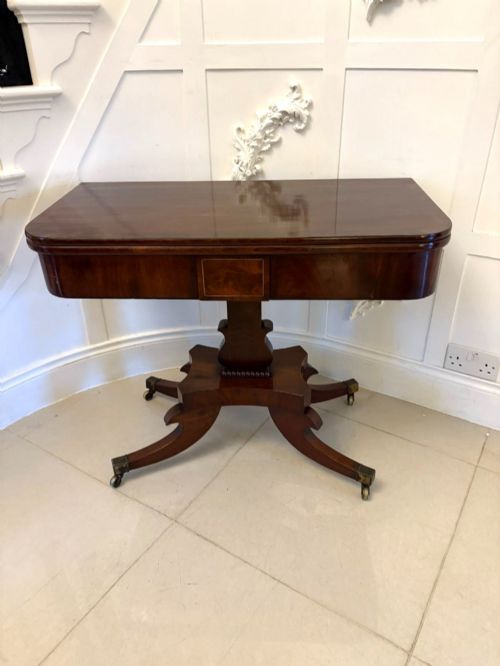
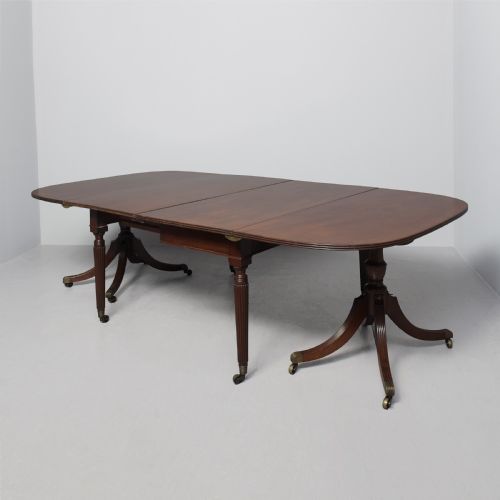
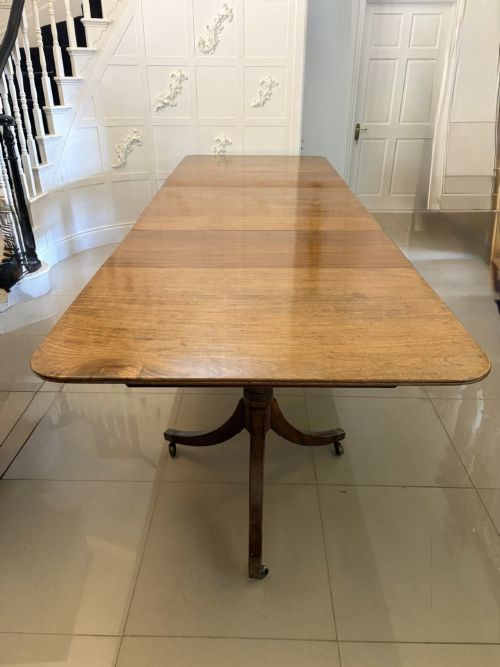
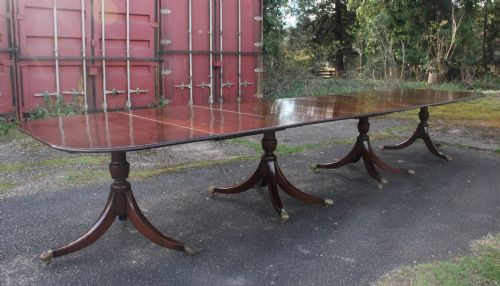
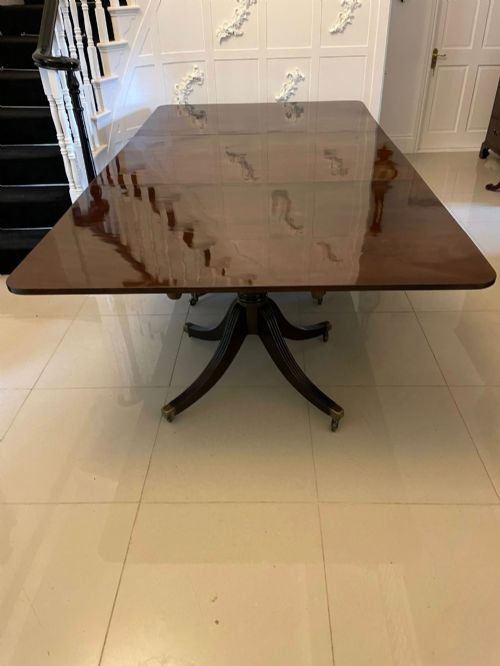
A regency table on castors spans several functional forms designed for domestic flexibility, most notably extending dining tables, sofa tables, tea tables, and card tables. These pieces date from the early nineteenth century alongside later revivals, reflecting a sustained demand for versatile furniture that moves easily across rooms.
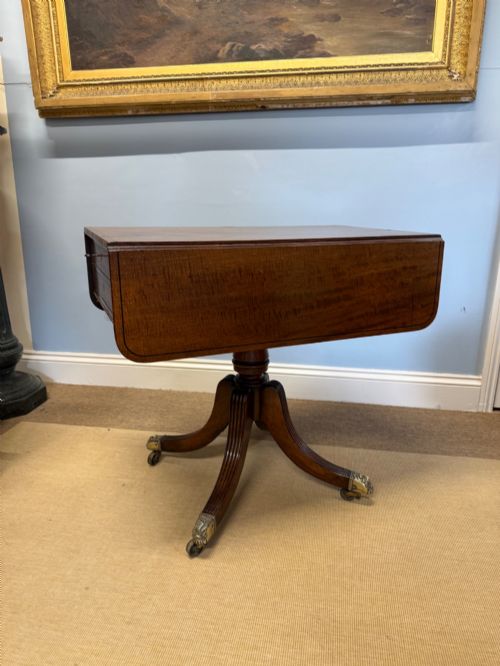
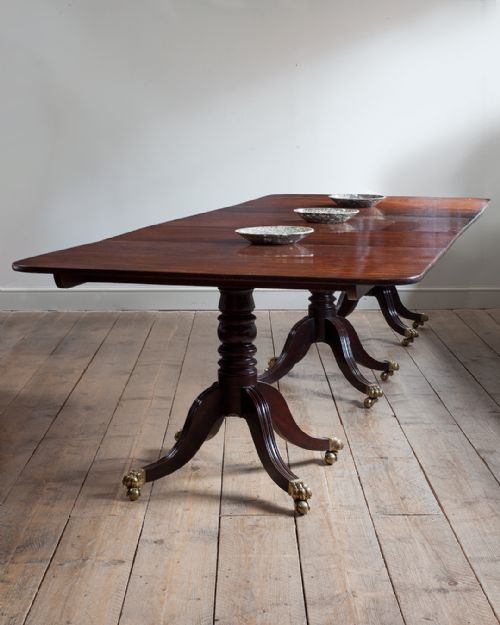
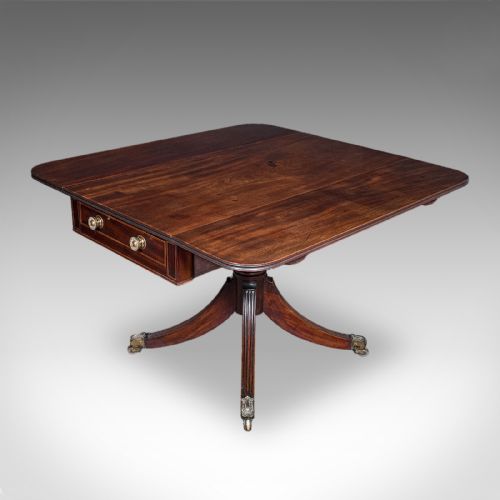
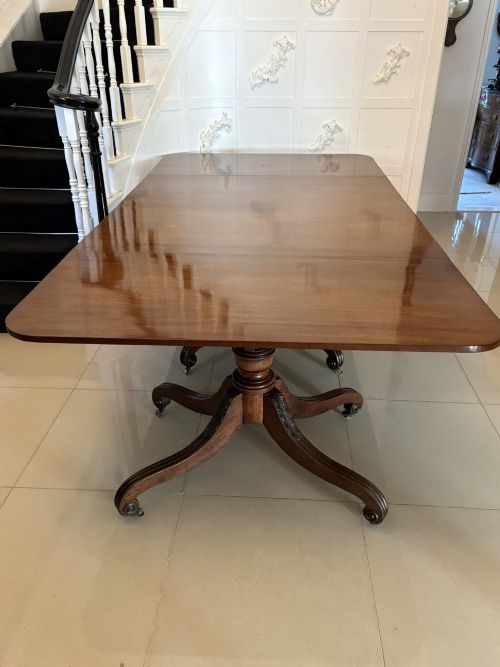
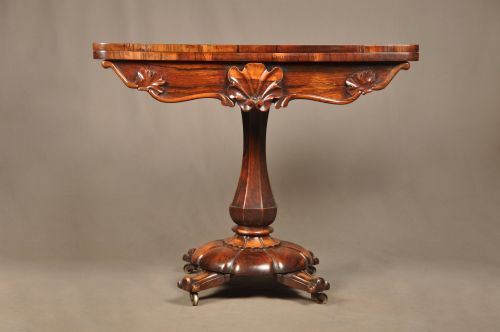
Dining variants often employ multiple pedestals to support additional leaves, while smaller occasional, drum, and pembroke forms utilise drop leaves or circular tops. Mahogany and rosewood dominate the selection, frequently enhanced by brass castors that allow heavy timber furniture to be repositioned without floor damage.
Materials and construction
Cabinet makers built these tables primarily using solid and veneered mahogany, alongside rosewood, pollard oak, and burr oak, often embellished with boxwood inlay and flame mahogany figure. Timber was selected for grain pattern and stability, then applied to secondary woods to construct robust friezes, pillars, and drop leaves.
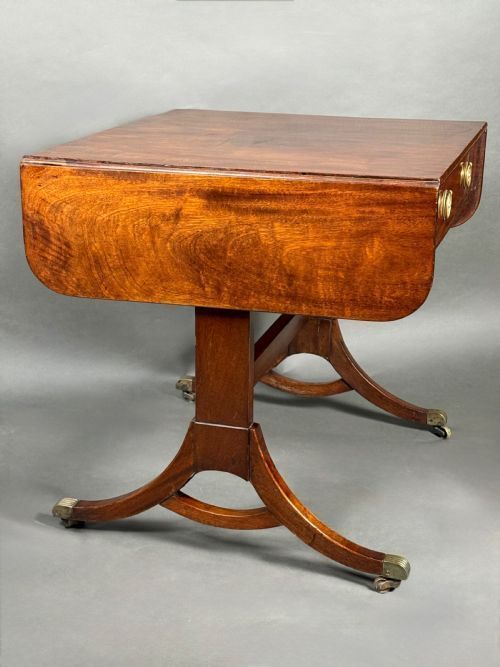
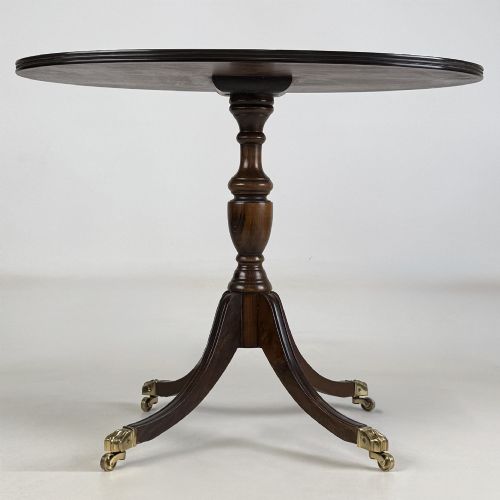
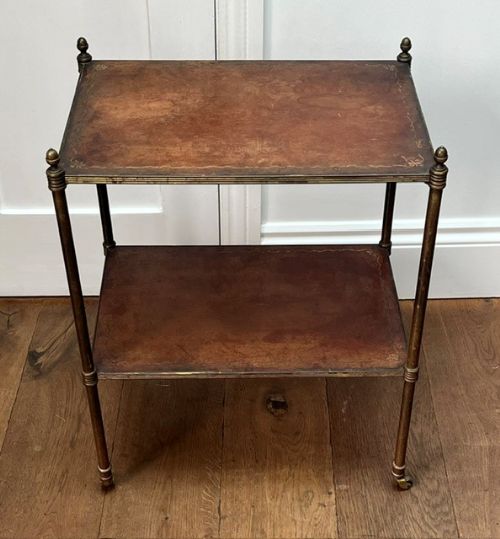
Metalwork played a functional structural role, incorporating cast brass terminals, lion paw feet, and working castors attached to pedestals, sabre legs, or pillar bases. Joinery methods relied on traditional techniques such as mortise and tenon joints, dovetailing for drawers, and tilt-top mechanisms.
Listings feature mahogany, rosewood, and oak timbers alongside brass hardware across both early nineteenth-century originals and twentieth-century revivals.
What separates the best from the rest
Quality rests in the selection of timber veneers and the crispness of cabinet work, visible in matched flame mahogany grains, fine boxwood stringing, and precise brass inlay. Superior examples display thoughtful proportions and harmonious scale, whether configured as a twin-pillar dining table or a compact sofa table.
Hardware integration distinguishes finer pieces, where original brass castors and paw feet fit securely into turned or reeded legs without compromising stability. The execution of mechanical elements, from smooth-running dining extensions to functional tilt-top actions, marks the distinction between standard workshop production and master craftsmanship.
Gillows of Lancaster·Mallett of London
The Regency Table on Castors Glossary
- Castor
- A small wheel mounted on a swivel assembly attached to the foot of a table leg, allowing the piece to be rolled across floors. Original brass examples add considerable merit to period pieces.
- Pedestal
- A central column supporting a table top, often resting on a platform base with spreading legs. Multiple pedestals are common in long dining tables.
- Pembroke table
- A small rectangular table featuring two hinged drop leaves on opposing sides and frequently containing one or two frieze drawers. They were designed for multipurpose domestic use.
- Sofa table
- A rectangular occasional table traditionally placed in front of a sofa, equipped with drop leaves at each end and usually fitted with drawers. They feature twin pillars or trestle supports.
- Drum table
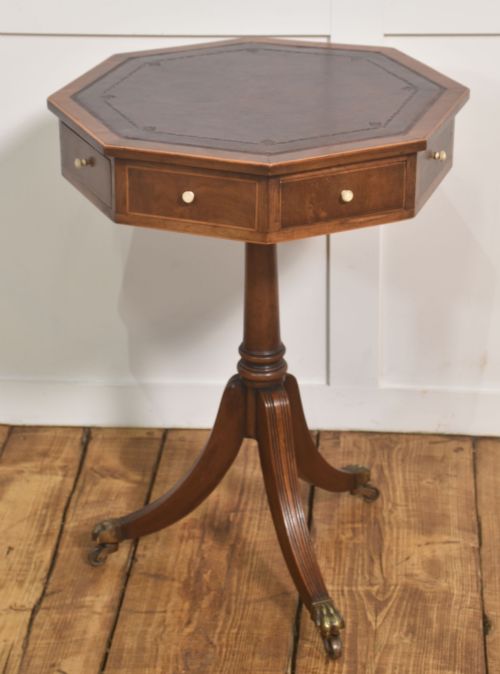
- A circular library or centre table with a deep frieze containing drawers, mounted on a central pillar and tripod base. The top is frequently lined with leather.
Regency Table on Castors: Frequently Asked Questions
How do I use a multi-pedestal dining table?
Multi-pedestal dining tables utilise removable leaves supported by central columns, allowing the surface length to expand or contract according to guest numbers.
When adjusting the size, ensure the brass castors align properly across the floorboards to maintain level seating and prevent strain on the timber pedestals.
Are these tables practical for daily dining?
These tables suit everyday dining and working use, provided the polished timber surfaces are protected from heat and moisture with appropriate mats.
The inclusion of castors makes repositioning straightforward when cleaning or rearranging a dining room.
How do I distinguish original Regency from later revival pieces?
Original pieces date from the early nineteenth century and exhibit period construction methods, timber ageing, and hand-cut joinery. Revival pieces from later eras often show standardised machine working and different secondary woods.
Examining the underside, block joints, and the wear patterns on the brass castors helps clarify the manufacturing date.
How do I care for mahogany and rosewood surfaces?
Maintain timber surfaces by dusting with a soft dry cloth and applying traditional beeswax sparingly to nourish the grain. Avoid placing furniture in direct sunlight or near heat sources to prevent veneer splitting.
Check the castor fixings periodically to ensure the metal components remain secure within the wooden legs.