




Regency Scroll Settee
A regency scroll settee brings architectural presence and fluid scrolling lines to a room, offering both seating and daybed comfort.
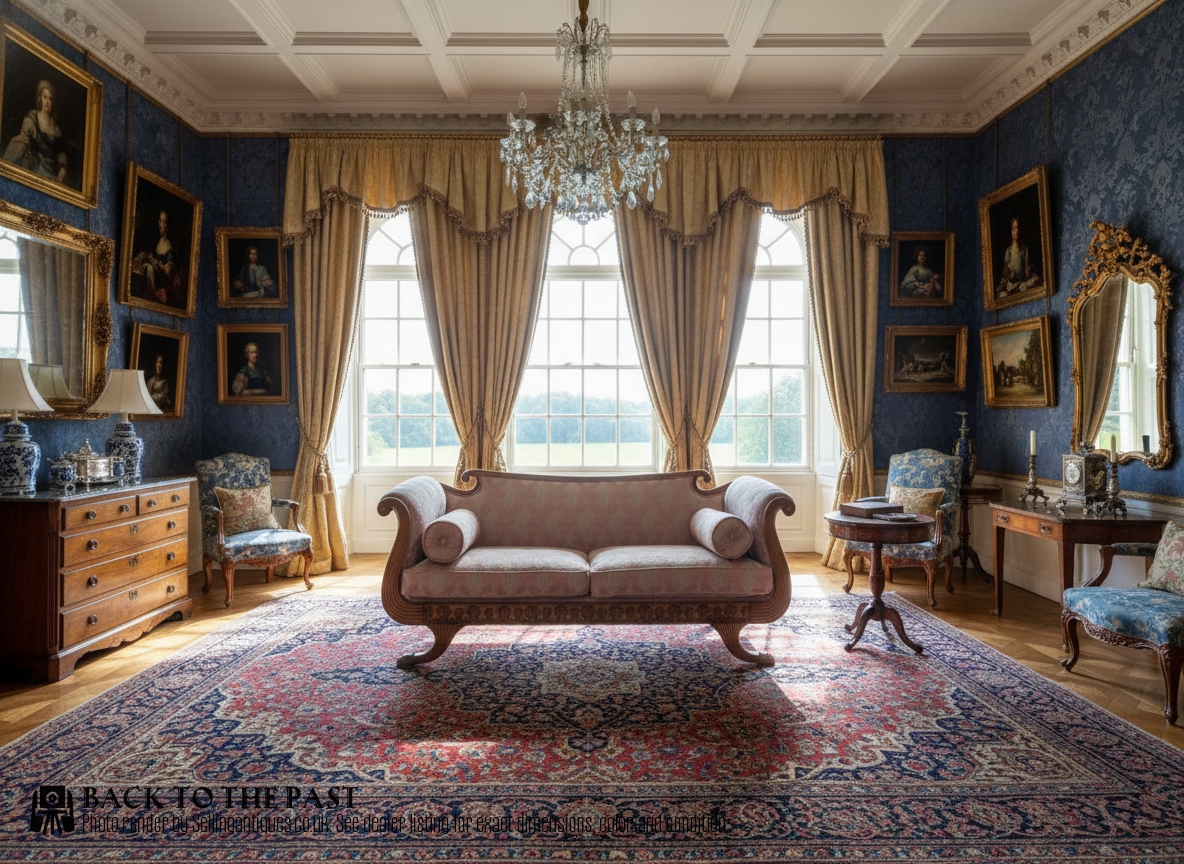
Regency Scroll Settee
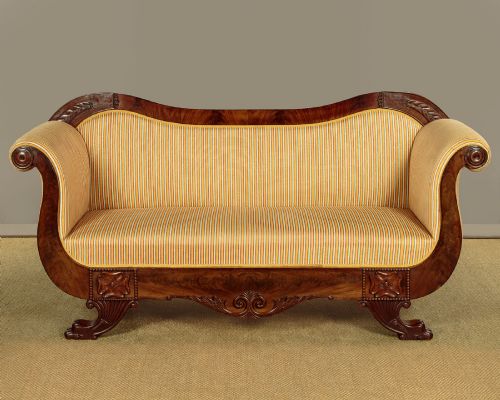
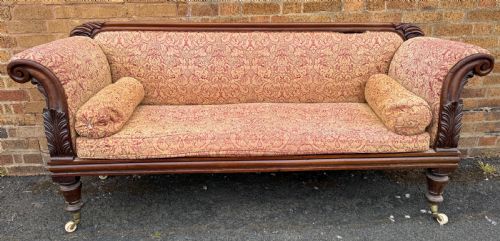
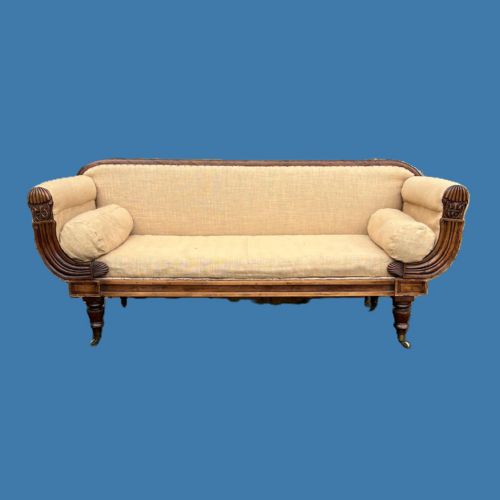
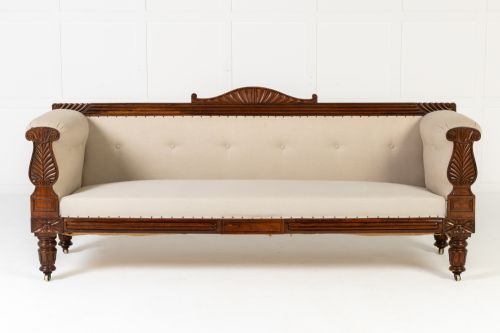
A regency scroll settee represents a distinct form of seating that spans the nineteenth century, encompassing double scroll-ended sofas, library couches, and daybeds. Most examples you meet on this page date from the regency and William IV periods, taking the shape of large country house sofas or intimate two-seat settees.
The objects combine classical architectural proportions with scrolling ends and show frames, appearing in forms such as the chaise longue, the Récamier, and the campaign sofa. While the majority of listings adhere to the broader nineteenth century and early Victorian eras, occasional later revivals from the twentieth century also emerge.
How they were made
Frames rely heavily on solid timber construction, predominantly utilising rich timbers like mahogany and rosewood, alongside simulated rosewood, walnut, ebony, and ebonised finishes. Carved mahogany show frames provide structural integrity while displaying intricate woodwork along the crest rails and scroll ends.
Detailing often incorporates brass inlay to accent the timber surfaces, while upholstery ranges from traditional hessian and fabric foundations to leather and modern upholstery fabric. Makers fashioned double scroll ends and lyre shapes through steam-bending and skilled joinery, creating the sweeping profiles characteristic of the period.
Some settees double as daybeds, proving that nineteenth-century nobility perfected the art of the afternoon nap.
What varies in quality
The calibre of timber selection and the crispness of carved detail set finer examples apart from simpler pieces, with choice figured mahogany or richly grained rosewood commanding attention. The depth and fluidity of the scroll ends, alongside the integration of brass inlay, distinguish master cabinet work from standard production.
Proportion and scale dictate the presence of a piece within a room, where larger country house settees and grand double-ended designs exhibit superior architectural balance. The retention of original show frames and harmonious timber patination further separate exceptional specimens from later or heavily altered equivalents.
Thomas Hope
The Regency Scroll Settee Glossary
- Scroll end
- A sweeping, curved terminal at one or both ends of a sofa or settee, defining the silhouette characteristic of the period. These scrolls often feature carved woodwork or polished timber veneers.
- Show frame
- The exposed wooden structural framework of a settee, typically carved from mahogany or rosewood, surrounding the upholstered sections. It highlights the craftsmanship of the cabinet maker.
- Chaise longue
- An upholstered couch shaped for reclining, combining a chair with an elongated seat. Many examples on this page integrate scroll ends with daybed functionality.
- Simulated rosewood
- A painted or grain-filled surface finish applied to a secondary timber to imitate the appearance of genuine rosewood. This technique provided a luxurious aesthetic at a more accessible cost during the nineteenth century.
- Campaign sofa
- A portable form of seating designed for travel, constructed to dismantle or fold efficiently. These pieces often feature robust timbers and functional brass hardware.
Regency Scroll Settee: Frequently Asked Questions
How do I date a scroll settee?
Dating relies on timber choices, carving styles, and structural characteristics recorded across the nineteenth century. Pieces range from early regency designs around eighteen ten to William IV and early Victorian variations.
Subtle shifts in wood preference, such as simulated rosewood versus solid mahogany, help pinpoint the era of manufacture.
Where were these settees placed?
Original placements included grand country house drawing rooms, libraries, and formal reception spaces. Their finished backs and sculptural profiles allowed them to sit away from walls.
Today, they suit similar principal rooms, serving as statement seating or functional daybeds.
Are these settees comfortable for daily use?
These pieces offer deep seating and supportive scrolling ends designed for reclining and relaxation. Many examples accommodate modern upholstery adjustments while preserving their antique frames.
Upholstery varies from exposed show frames with loose cushions to fully sprung leather surfaces.