
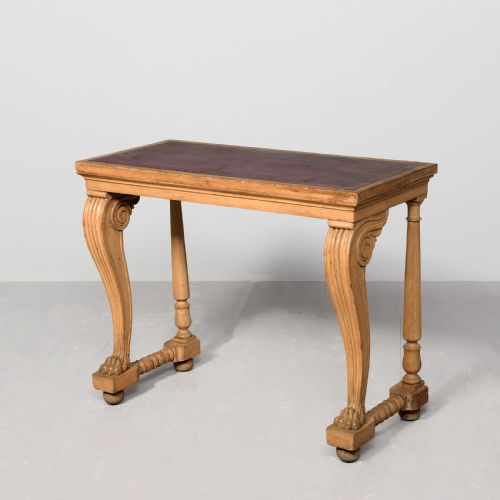
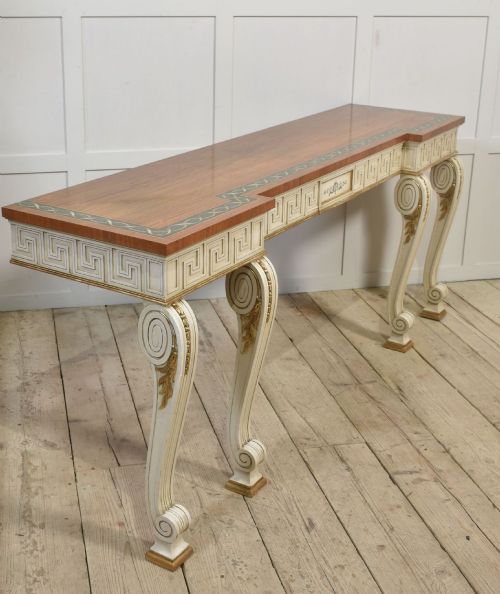
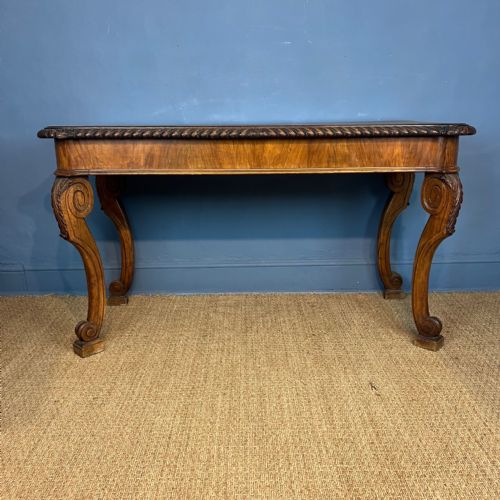


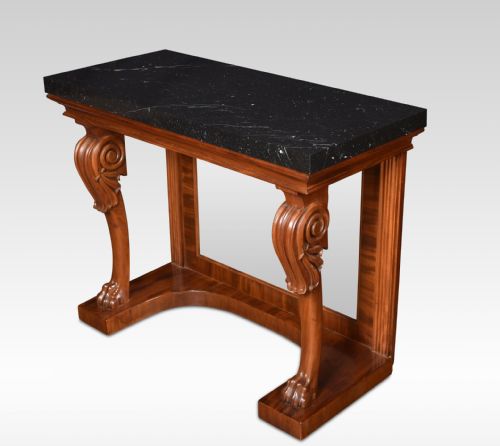


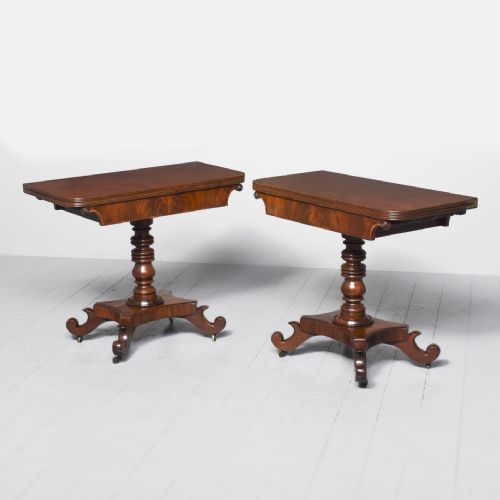


Regency Scroll Leg Table
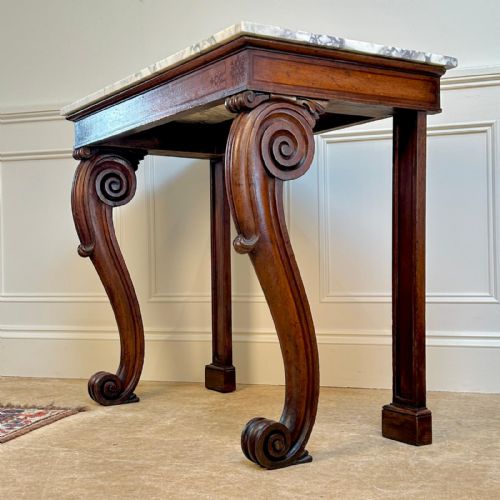
A regency scroll leg table brings architectural presence into a room, offering the unmistakable curved support and figured timber that defined early nineteenth century interiors.
Regency Scroll Leg Table
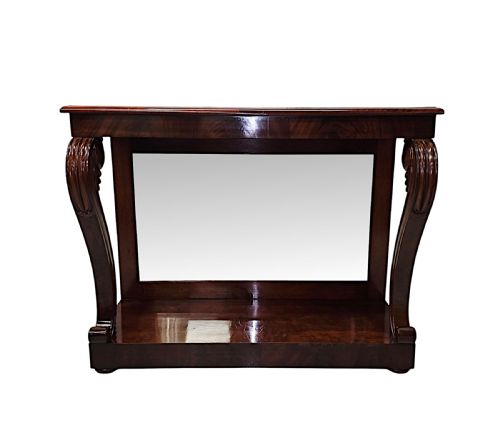
When you search for a regency scroll leg table, you encounter practical furniture designed for display and service, predominantly represented here by console tables and side tables from the nineteenth century. These pieces reflect the neoclassical taste of the period, often incorporating rich timbers like mahogany and rosewood.
The selections on this page span the Regency era alongside related Georgian and William IV periods, showing how cabinet makers adapted classical forms for British homes. Console and side tables dominate the available forms, standing against walls or serving as focal points in entrance halls and reception rooms.
How they were made
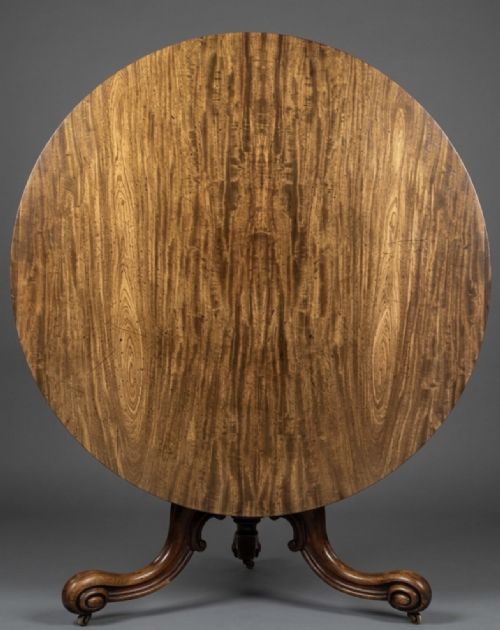
Cabinet makers relied heavily on solid and veneered mahogany, alongside rosewood and oak, selected for rich grain patterns and deep natural colour. Timber was chosen with care to ensure tabletops displayed striking figure, particularly on prominent surfaces.
Brass mounts and occasional marble tops provided contrasting textures, while structural integrity relied on traditional joinery methods. Turned and carved supports required skilled hand woodworking to achieve the characteristic scroll profile without compromising load bearing strength.
Oak and marble frequently appear together in the evidence, showcasing the diverse material combinations utilised by period cabinet makers.
What varies in quality
Quality rests upon the selection of timber veneers and the crispness of carved scrollwork on the legs and supports. Superior examples demonstrate precise joinery and balanced proportions that elevate a functional piece into a work of cabinet art.
The integration of secondary materials, such as heavy marble slabs or finely chased brass mounts, distinguishes standard production from exceptional workshop output. Patina accumulated through age further enhances the surface appeal of better preserved timber.
Gillingtons of Dublin·James Mein of Kelso·Gillows
The Regency Scroll Leg Table Glossary
- Console table
- A table designed to stand against a wall, frequently secured to the vertical surface for stability. These pieces often feature decorative front legs while relying on wall fixings or rear brackets.
- Neoclassical
- A style inspired by the classical art and architecture of ancient Greece and Rome. This aesthetic prioritises symmetry, restraint, and classical motifs such as acanthus leaves and scrolls.
- Rosewood
- A dense, heavily figured timber valued for its dark purple brown colour and contrasting black grain lines. It was frequently utilised for high status nineteenth century furniture.
- Veneer
- A thin layer of superior timber applied over a secondary wood base to provide a decorative surface. Skilled application ensures grain continuity across complex table tops.
Regency Scroll Leg Table: Frequently Asked Questions
How do I place a console table?
Console tables sit flat against a wall, frequently in hallways, drawing rooms, or dining spaces where floor space is limited. Their narrow depth allows them to function as display surfaces without obstructing pathways.
Many period examples were originally designed to stand beneath a matching wall mirror, creating a unified decorative arrangement within a formal interior.
What is the difference between Regency and William IV?
Regency furniture typically exhibits lighter, more refined neoclassical proportions influenced by French Empire and Greek revival styles. Timbers like mahogany and rosewood are often paired with delicate brass inlay.
William IV pieces, produced slightly later, tend toward heavier proportions and bolder, more robust carving. The architectural elements become more pronounced, reflecting a transition toward early Victorian tastes.
Are marble top tables original?
Marble tops on nineteenth century console and side tables were frequently specified by clients to provide a durable, cool surface for serving drinks or displaying decorative objects. These heavy stone slabs are often integral to the piece.
When examining a marble top, look for edge profiles and fitting that match the period construction of the wooden base beneath.
How do I care for rosewood surfaces?
Rosewood benefits from minimal intervention, requiring only a soft, dry cloth for regular dusting. Avoid placing these tables in direct sunlight or near heat sources to prevent the timber from drying out.
Applying a traditional beeswax polish sparingly helps maintain the natural sheen and depth of the wood grain over time.