
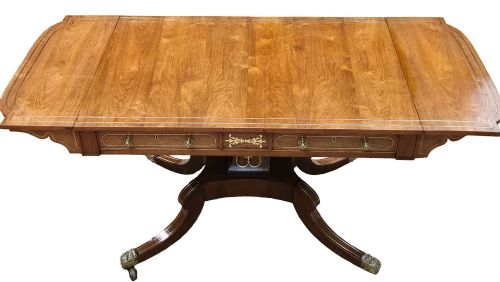


Regency Sabre Leg Sofa
These regency sabre leg sofa pieces combine striking classical lines with practical elegance, offering collectors a refined focal point for any classical interior.
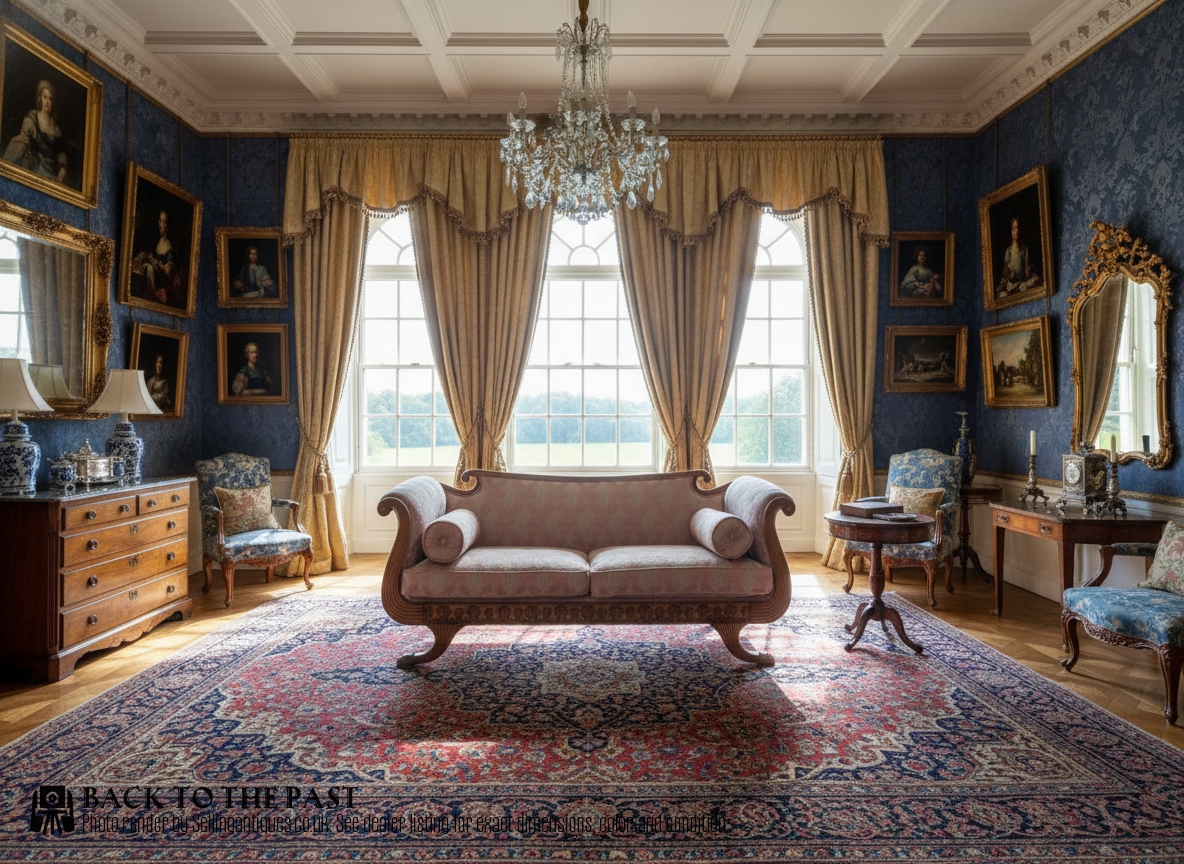
Regency Sabre Leg Sofa
When searching for a regency sabre leg sofa, buyers encounter a selection of seating and occasional tables spanning the Regency, 19th Century, and Georgian periods. The seating options include daybeds, chaise longues, and sofas, while the associated tables frequently share the distinctive leg styling.
The material palette of these pieces ranges from rich mahogany and rosewood to simulated rosewood, ebonised wood, and walnut, often reflecting the classical tastes of the early nineteenth century.
Origin variations include specific regional expressions such as Irish Regency, alongside grander interpretations featuring brass mounts, inlay, and drop-leaf mechanisms.
How They Were Made
Cabinet makers utilised dense native and imported timbers, notably mahogany and rosewood, chosen for their grain and stability. These woods were frequently polished to a high finish or treated to simulate exotic veneers.
Decorative detailing incorporated contrasting brass inlay and gilded brass mounts applied to structural timber components. Turning and reeding formed key elements of the leg and pillar construction.
Some tables feature secret drawers cunningly concealed beneath drop-leaf hinges for storing letters.
What Varies in Quality
The standard of timber selection and veneer matching largely dictates the visual depth of each piece, distinguishing plainer domestic items from more ambitious cabinet work. Figured mahogany and carefully laid rosewood command greater attention.
The crispness of carved elements and the precision of brass inlay work reveal the skill of the original workshop. Integrated mounts and turning demonstrate the maker's proficiency in handling classical motifs.
Gillingtons Dublin·Willian Trotter·Thomas Hope
The Regency Sabre Leg Sofa Glossary
- Sabre leg
- A curving, outward-flaring furniture leg shaped like a cavalry sabre, characteristic of the Regency period. This form provides both visual lightness and structural support.
- Drop leaf
- A hinged table flap that can be raised to extend the surface area or lowered when space is limited. It relies on pivoting wooden supports or fly brackets.
- Cross-banded
- A decorative technique where veneer is applied across the grain of the underlying timber around the perimeter of a tabletop or surface. This creates a contrasting border effect.
- Ebonised
- Wood treated to imitate the dark, dense appearance of ebony. Makers achieved this finish through staining and polishing cheaper timbers.
Regency Sabre Leg Sofa: Frequently Asked Questions
How do I identify a true Regency period daybed?
Look for distinctive classical proportions, characteristic sabre legs, and period timber choices such as mahogany or rosewood. Joinery methods and finish types further help separate early nineteenth-century work from later reproductions.
Examine the turning and any decorative brass inlay for the crisp execution typical of the Regency era.
Where were these sofas and tables placed historically?
These pieces sat principally in principal reception rooms, libraries, and drawing rooms of large townhouses and country estates. Daybeds offered a place for reclining during the day, while sofa tables stood freely in room centres or against walls.
Their finished backs allowed them to occupy central positions rather than remaining pushed against room perimeters.
What is the difference between a sofa table and a side table?
Sofa tables traditionally featured two drop leaves and were designed to stand directly behind a sofa. Side tables generally offered fixed rectangular tops without folding leaves.
Both forms shared similar leg configurations, including the characteristic sabre leg seen across this group.
How should I care for rosewood and mahogany surfaces?
Maintain these timbers by keeping them away from direct sunlight and sudden humidity shifts to prevent veneer lifting. Regular dusting with a soft, dry cloth preserves the polish without building up residue.
Avoid commercial silicone sprays in favour of traditional wax finishes appropriate for antique furniture.