
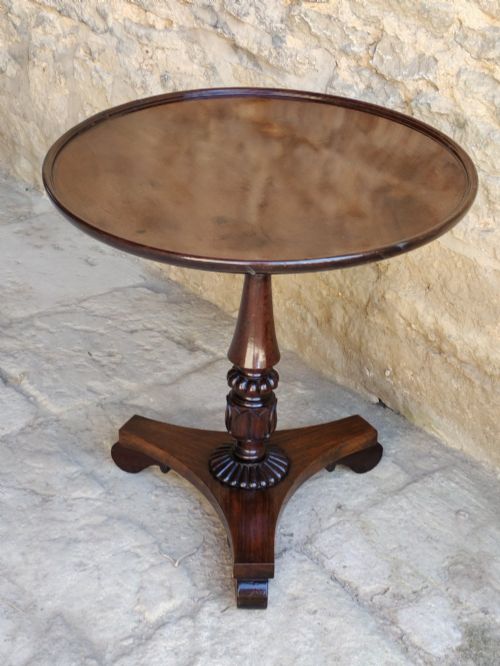
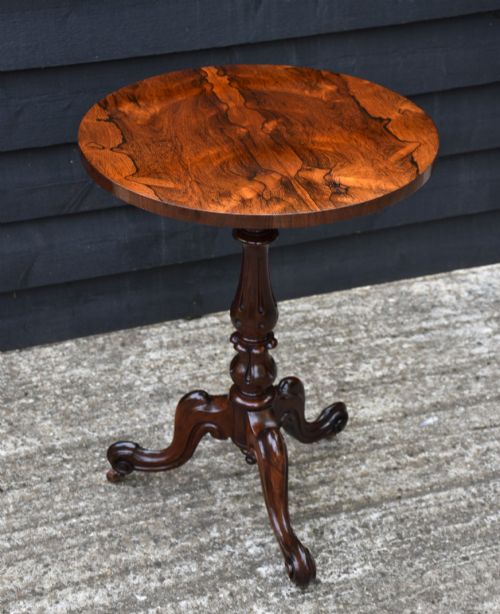
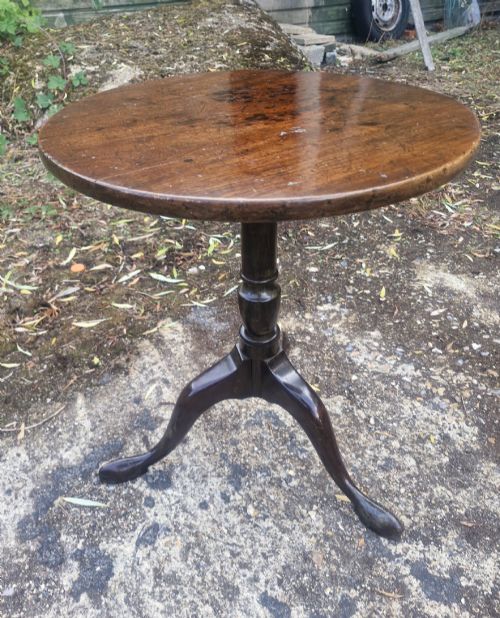
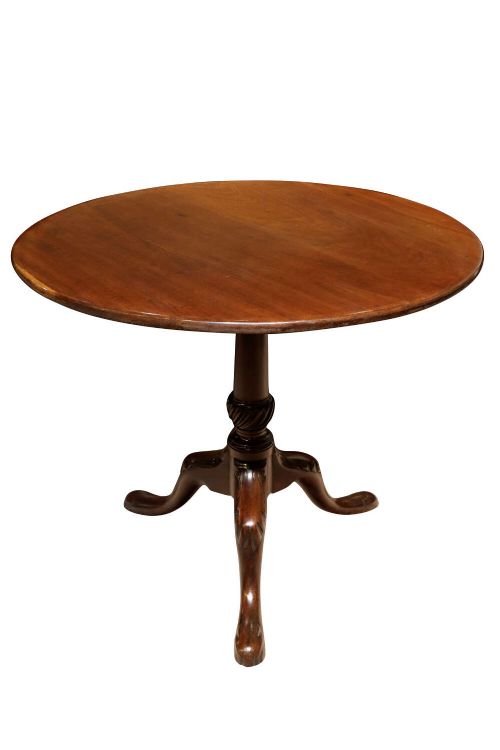


Regency Round Wine Table
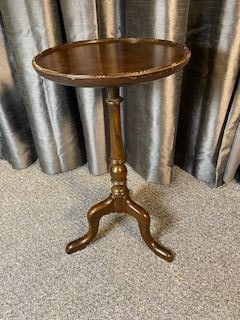
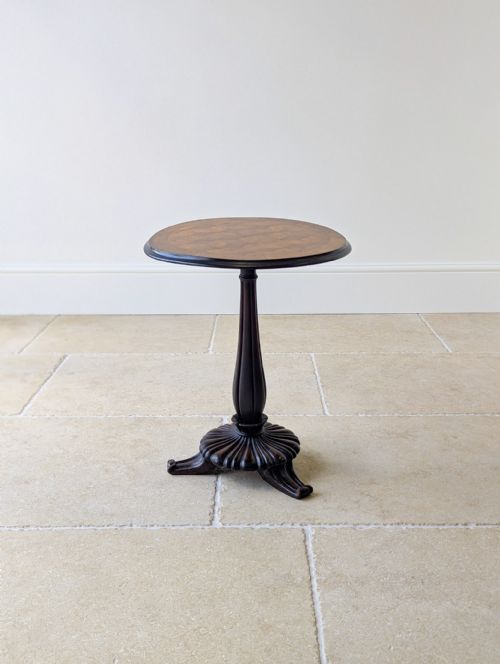
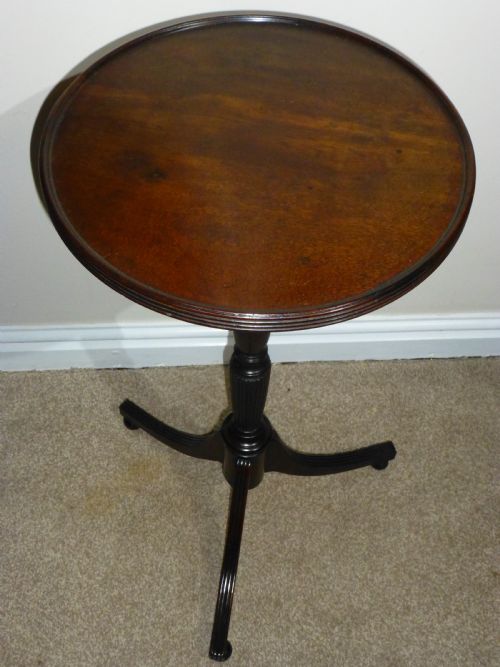
These regency round wine table examples are compact pedestal pieces built for holding bottles and glasses beside a chair.
Regency Round Wine Table
A regency round wine table sits on a central pillar supported by three feet, creating a stable freestanding platform for evening use. Most versions encountered here date from the nineteenth century, spanning the Regency, George IV, and William IV periods.
The timber tops are frequently circular and occasionally tilt on a brass or iron catch to stand flat against a wall when not in use. Makers also produced smaller variants often described as lamp tables, side tables, or occasional tables.
Makers utilised native and exotic hardwoods for these domestic items, including mahogany, rosewood, walnut, yew, and satinwood. Some examples incorporate elaborate specimen marble or burr wood veneers to create decorative patterned surfaces.
Materials and construction
Cabinet makers constructed the circular tops from solid timber or stable panels faced with figured mahogany, rosewood, burr elm, or satinwood veneers. These tops rest upon turned central pedestals that terminate in three curving tripod legs.
Joints typically rely on traditional tenons and iron or brass box fittings to secure the tilt mechanism. Metal accents, including brass castors and pivoting catches, appear frequently on nineteenth-century pieces.
The listings on this site feature nineteenth-century timber variants in mahogany, rosewood, walnut, yew, and satinwood alongside marble-topped designs.
Assessing the craftsmanship
Quality rests upon the selection of timber veneers and the sharpness of the turned pillar work. Richly figured mahogany or contrasting specimen woods indicate higher ambition in the workshop.
Stability and balance define a successful tripod table. The legs should meet the central column with tight joints so the top remains level without wobble.
Gillows
The Regency Round Wine Table Glossary
- Tilt-top table
- A table with a hinged top that pivots vertically to save floor space. This mechanism uses a brass catch beneath the surface.
- Tripod base
- A support structure featuring three radiating feet attached to a central column. This design ensures stability on uneven floors.
- Veneer
- A thin layer of decorative timber applied to a secondary wood base. Burr wood and rosewood are commonly treated this way.
- Occasional table
- A small, movable piece designed for specific domestic tasks rather than central room use. These serve easily beside seating.
Regency Round Wine Table: Frequently Asked Questions
What was a wine table used for?
These small stands held decanters, glasses, and bottles near seating areas during evening gatherings in nineteenth-century parlours.
Their compact size allowed servants to move them easily around the room as needed.
How do I identify a Regency table?
Look for classical proportions, turned pedestal columns, and tripod bases executed in dark timbers like mahogany or rosewood.
Details such as brass paw feet or reeded pillars point directly to the early nineteenth-century aesthetic.
Can I use a wine table for a lamp?
Yes, their sturdy circular tops and compact footprints suit modern table lamps and decorative objects.
Many period pieces served multiple domestic functions, including lamp or side table duties.
What is a tilt-top mechanism?
A pivoting hinge beneath the tabletop allows the surface to lock horizontally or flip vertically.
This historical feature enabled owners to store tables flat against walls when rooms required extra floor space.