

Regency Round Pedestal Table
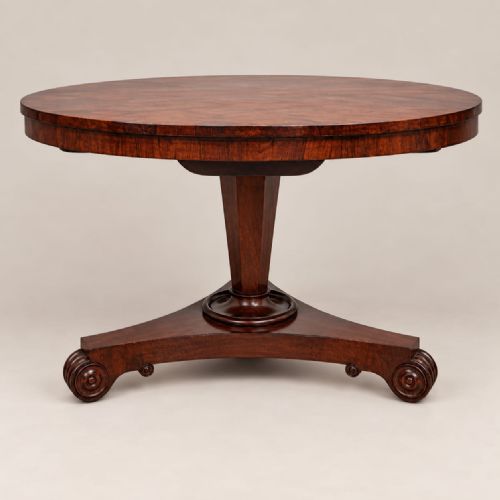
A regency round pedestal table brings sculptural timber and steady pillar support to a room, offering a circular surface ideal for central placement.
Regency Round Pedestal Table
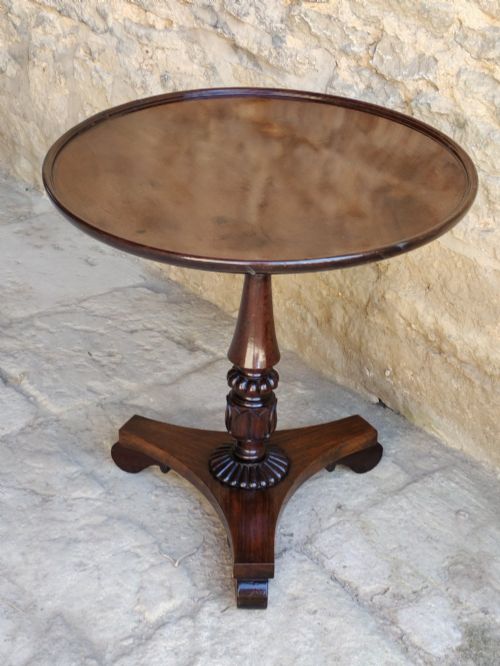
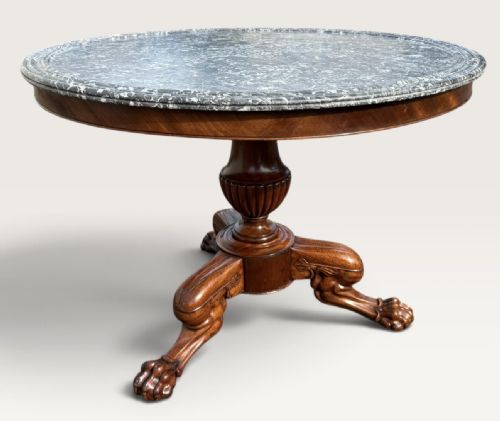
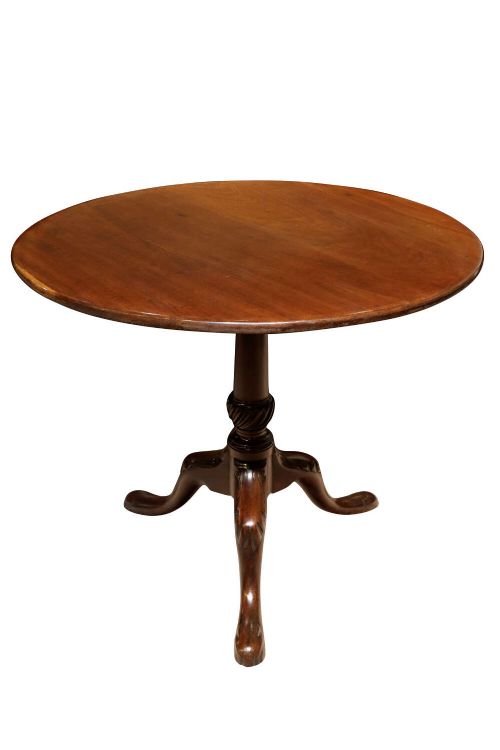
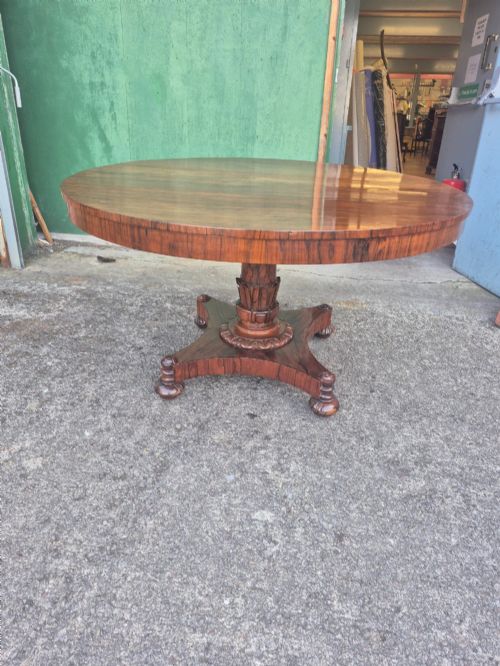
A regency round pedestal table typically appears as a breakfast table, centre table, or dining table resting on a central column and base. These circular tables span the Georgian, Regency, and William IV periods into the nineteenth century.
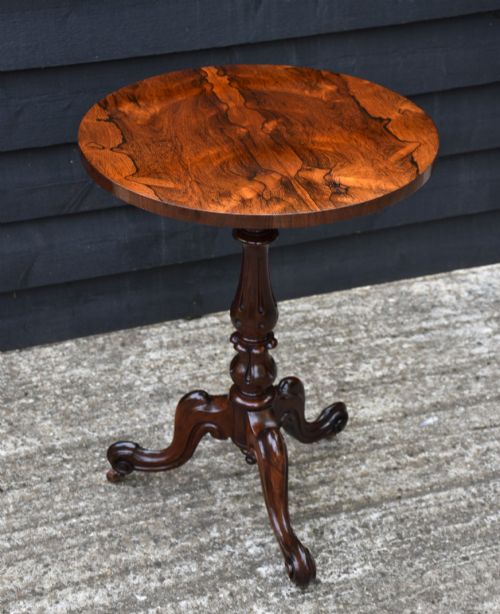
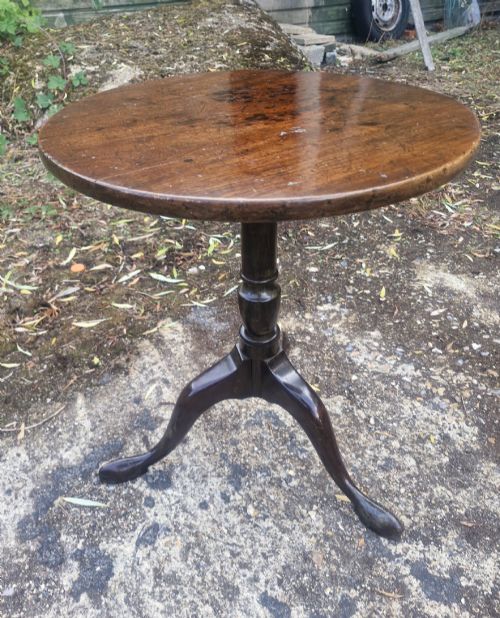
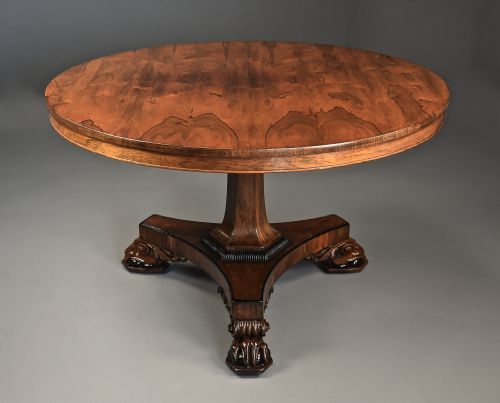
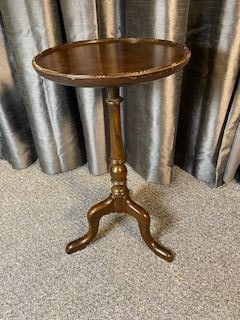
The most common examples on this page are mahogany and rosewood breakfast or centre tables, often featuring tilt-top mechanisms and triform or pillar pedestals. They serve varied domestic roles, from small wine and occasional tables to large six-seater dining pieces.
Materials and Construction
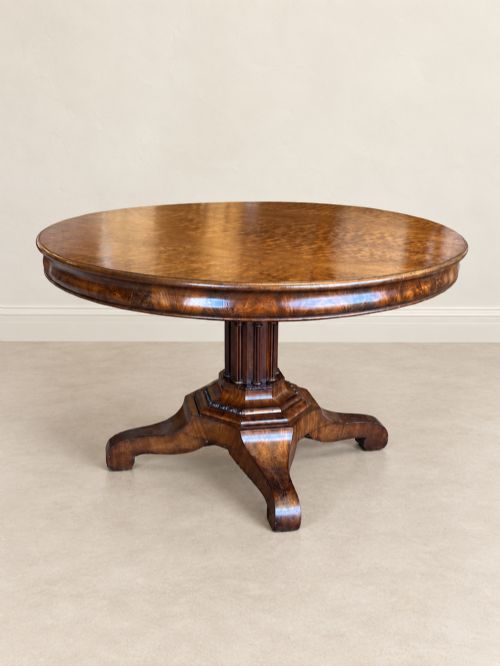
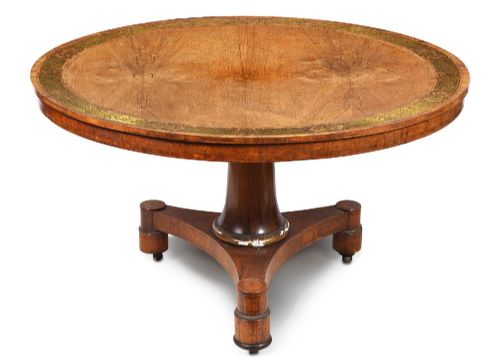
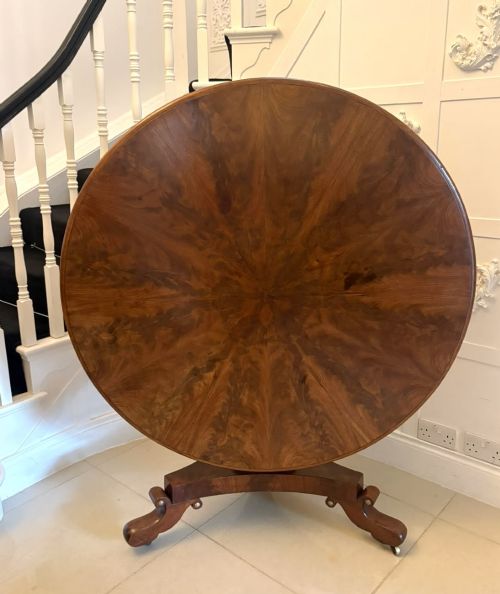
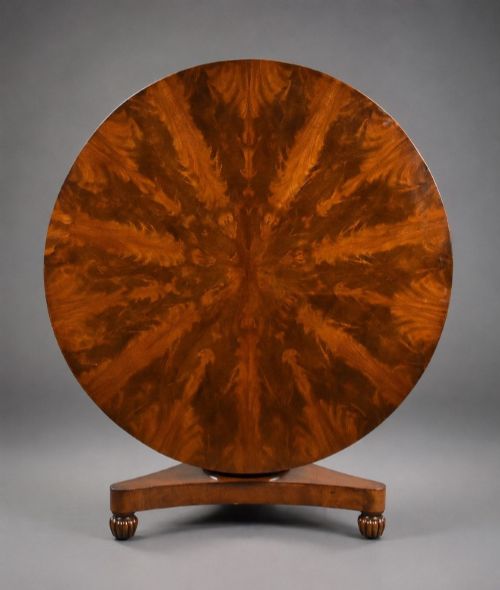
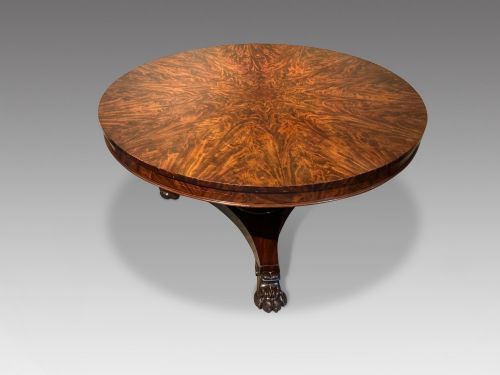
Cabinetmakers constructed these tables using solid timbers and decorative veneers such as flame mahogany, burr elm, pollard oak, and rosewood over secondary woods. Brass castors frequently finish the feet of heavier pedestal bases.
Tilt-top mechanisms utilise heavy brass catches and pivot blocks to allow the circular surface to fold vertically when not in use. Pedestals often incorporate carved central pillars supported by tripartite or quadrupartite platform bases.
Some tables feature secret drawers hidden within the frieze, perfect for concealing midnight snacks or stolen letters.
Character and Craft
Quality reveals itself in the selection of timber figures, where symmetrical flame mahogany veneers or richly grained rosewood elevate the visual impact of the circular top. The crispness of carved details on the central pedestal and pillar collars further distinguishes finer examples.
Structural integrity in the pillar-to-base joint determines the longevity of a pedestal table. Better workshops engineered robust internal blocking and substantial weight distribution to prevent wobble on large circular tops.
Gillows·Walker-Lancaster·Peters of Genoa
The Regency Round Pedestal Table Glossary
- Tilt-top
- A hinged tabletop mechanism that allows the circular surface to pivot ninety degrees for storage against a wall. This feature is common on breakfast and occasional tables from the period.
- Triform base
- A three-sided support structure radiating from the central pillar, frequently resting on paw feet or brass castors. It provides stability for heavy circular dining and centre tables.
- Flame mahogany
- A veneer cut from the fork of a mahogany tree to produce a distinctive flame-like pattern. Makers prized this timber for prominent surfaces like breakfast table tops.
- Drum table
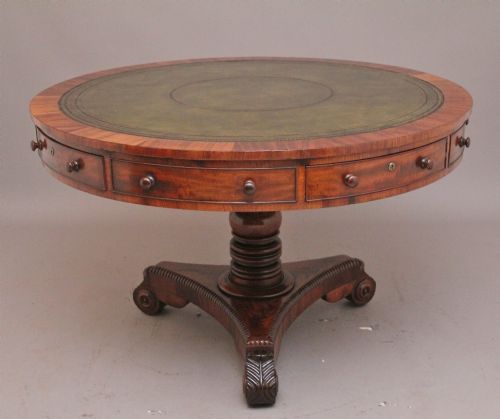
- A circular library or centre table with a deep top containing drawers around the perimeter. These pieces rotate on a central pillar base.
- Gueridon
- A small ornamental circular table supported by a single central column or figural standard. Originating in France, the form was widely adopted by British makers during the Regency.
Regency Round Pedestal Table: Frequently Asked Questions
What is a regency round pedestal table used for?
These tables served various domestic functions depending on their scale, acting as breakfast tables, library pieces, or central dining surfaces.
Smaller versions functioned as wine, lamp, or occasional tables placed beside seating in reception rooms.
What woods were used for these tables?
Makers utilised dense native and imported timbers, notably mahogany and rosewood, often enhanced with figured veneers.
Alternative woods appearing in the evidence include burr elm, pollard oak, satinwood, coromandel, and goncalo alves.
How do I tell Regency from William IV styles?
Regency pieces often display restrained classical influence with delicate reeding, brass inlay, and slender pillars.
William IV examples typically exhibit heavier proportions, bolder carved scrollwork, and more robust plinth bases.