

Regency Rosewood Writing Desk
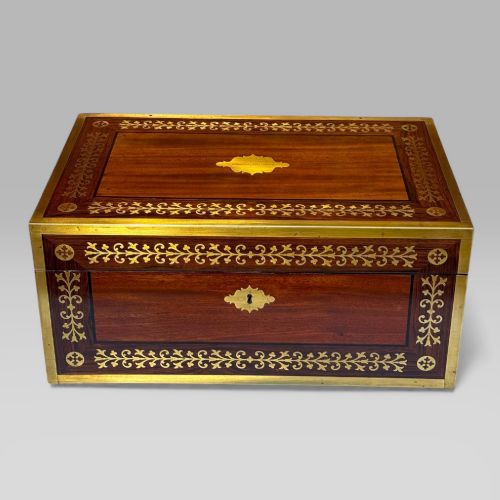
A regency rosewood writing desk brings together rich tropical timber, precise brass inlay and formal elegance for daily correspondence.
Regency Rosewood Writing Desk
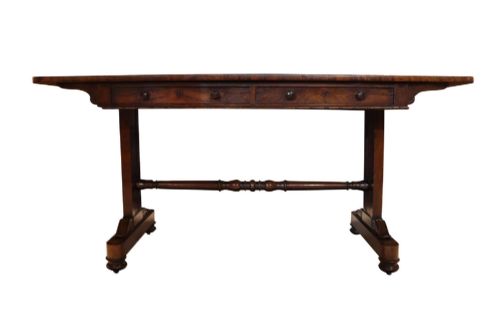
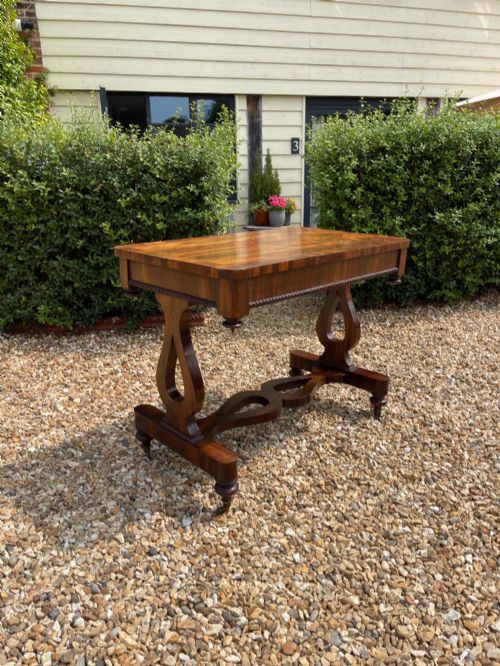
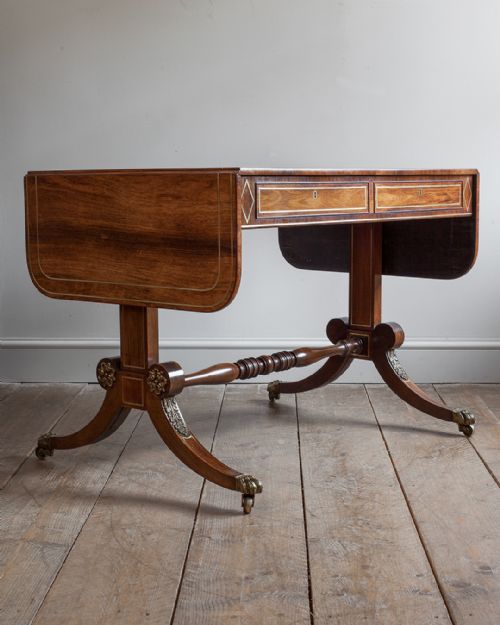
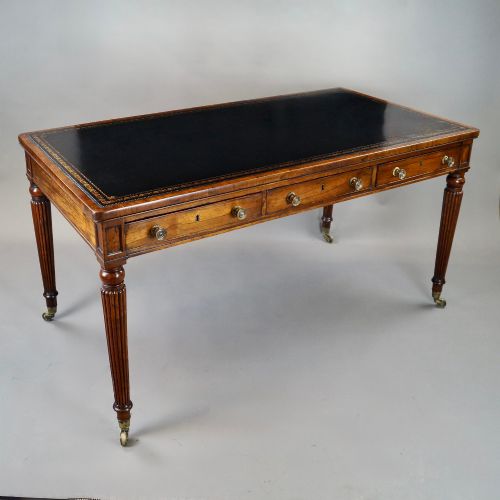
When you search for a regency rosewood writing desk, you encounter pieces spanning the Regency, George IV, William IV and early Victorian eras, alongside later nineteenth-century interpretations. These range from compact davenports and portable writing slopes to large freestanding library tables and sofa tables adapted for study.
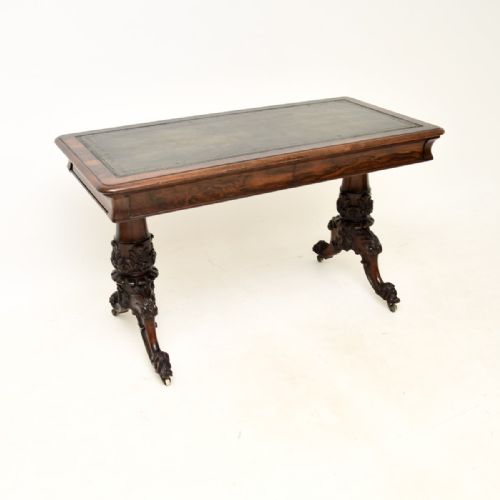
The evidence shows that makers during these periods utilised dense exotic hardwoods to create functional furniture for the parlour, library and boudoir. Freestanding library tables and Davenport desks dominate the forms found here, often featuring fitted interiors and leather writing surfaces.
Many examples date from the early nineteenth century, displaying the characteristic restraint and classical proportions associated with the Regency and subsequent William IV styles. Pieces may also appear under related descriptions such as writing cabinets, partners desks or campaign boxes.
Materials and Construction
Rosewood provides the primary dense, dark substrate for these desks, often contrasted with secondary timbers like mahogany or complemented by figured veneers and alternate exotic woods such as goncalo alves. Cabinetmakers selected these dense timbers for their stability and deep natural grain pattern.
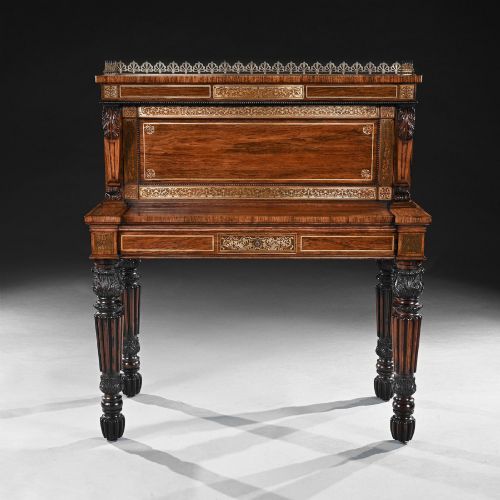
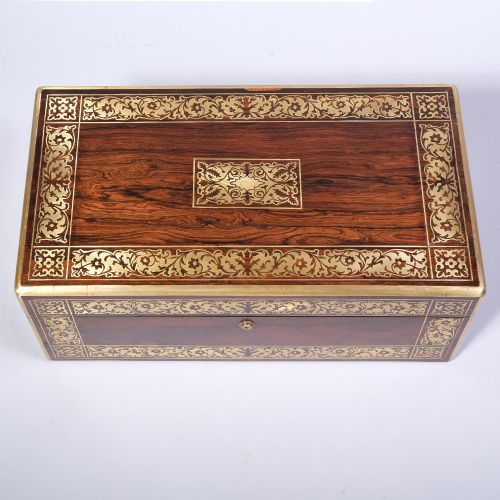
Brass inlay and brass mounts appear frequently across the surface, requiring precise channel cutting into the hard rosewood ground to secure geometric or foliate motifs. Leather inserts, glass inkwells and fabric linings complete the functional writing compartments within slopes and cabinets.
Listings feature rosewood, mahogany and goncalo alves timbers alongside brass inlay and leather writing surfaces across the nineteenth century.
Evaluating the Pieces
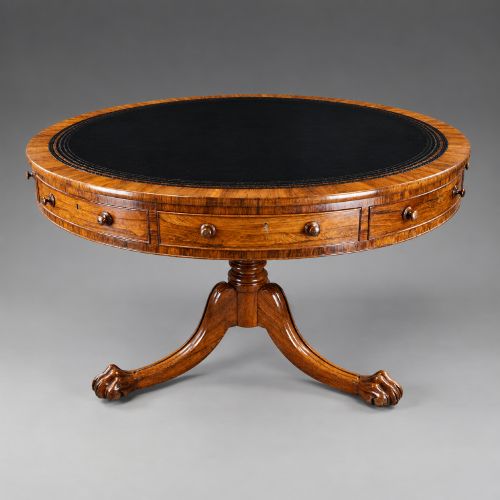
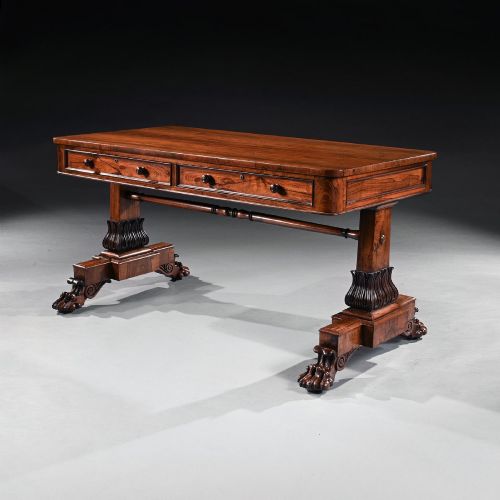
The standard of a regency rosewood writing desk rests upon the selection of timber grain, the precision of the brass inlay and the integrity of the structural joinery. Finer examples display carefully matched veneer figures across large expanses and crisply carved details such as lions paw feet.
Attribution to documented workshops like Gillows or makers following John McLean indicates a higher tier of cabinetmaking skill. The sophistication of internal mechanisms, secret drawers and original fitted interiors further separates standard production pieces from exceptional works.
Gillows Oxford Street Workshop·John MaClean
The Regency Rosewood Writing Desk Glossary
- Rosewood
- A dense, heavily grained tropical timber prized for its deep colour and smooth finish when polished. It forms the primary exterior surface for much Regency library furniture.
- Davenport Desk
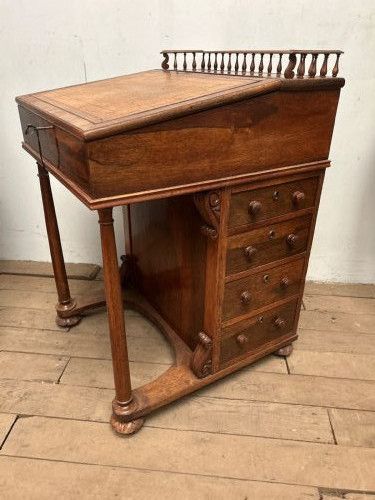
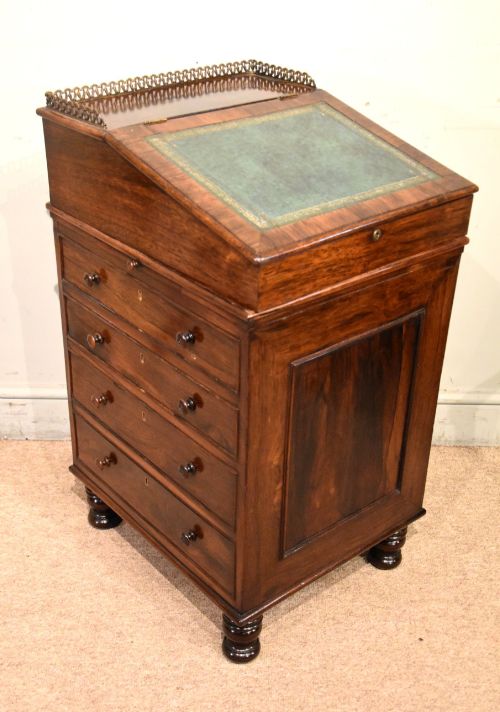
- A compact writing desk featuring a sloping top above a pedestal of drawers, often with a sliding top or side compartments. It gained popularity during the early nineteenth century for domestic study.
- Writing Slope
- A portable box that opens to reveal a slanted writing surface and partitioned storage for ink, pens and paper. These pieces often feature brass binding and flush carrying handles.
- Sofa Table
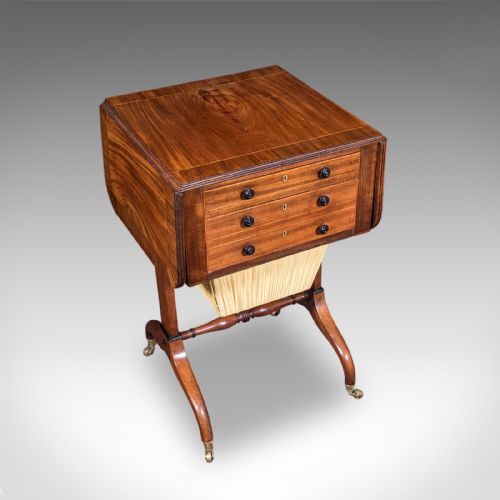
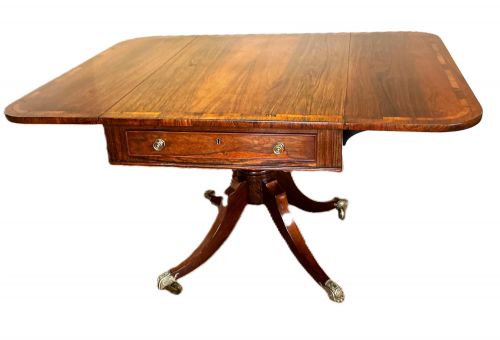
- A rectangular table designed to stand in front of a sofa, fitted with drop leaves on either side and small drawers beneath the top. Many examples from the Regency period doubled as writing tables.
- Goncalo Alves
- An exotic dense hardwood similar in appearance to rosewood, sometimes utilised for nineteenth-century library tables and study furniture. It offers distinct figuring and colour variation.
Regency Rosewood Writing Desk: Frequently Asked Questions
What is a Davenport desk?
A Davenport desk is a compact writing cabinet featuring a slanted writing surface above a pedestal of drawers. It was designed for domestic study where space was limited.
These pieces often include internal compartments and side drawers for stationery storage.
How do I tell Regency from William IV?
Regency furniture typically displays restrained classical proportions, fine brass inlay and delicate reeded or sabre legs. William IV pieces generally feature heavier proportions, bolder veneers and more robust carved details.
Both styles utilise dark rosewood timber and appear frequently in nineteenth-century studies.
Were writing slopes meant for travel?
Writing slopes served as portable desks for letter writing while away from home. They contained folding writing surfaces, inkwells and secret compartments for correspondence.
Owners carried them on coaches or ships during the Georgian and Regency periods.
What is a library drum table?
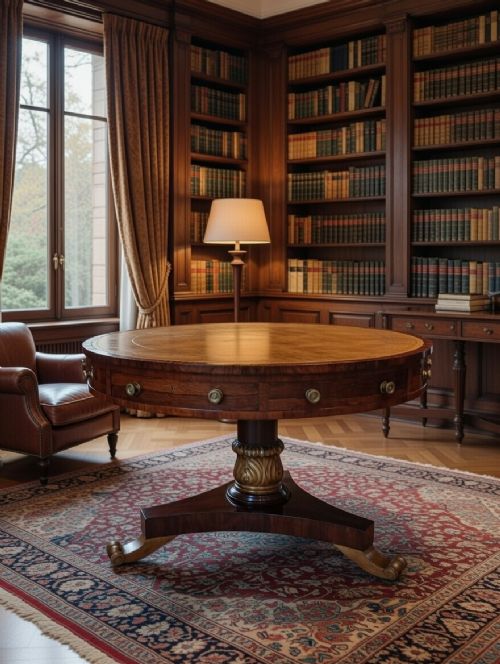
A library drum table is a circular freestanding table with a rotating or stationary top surrounded by small drawers. It stood in the centre of a room to hold books and writing materials.
The large top provided ample workspace for reading and administration.