



Regency Rosewood Work Table
When you search for a regency rosewood work table, you enter a refined world of multifunctional furniture designed for the polite pursuits of the nineteenth century.
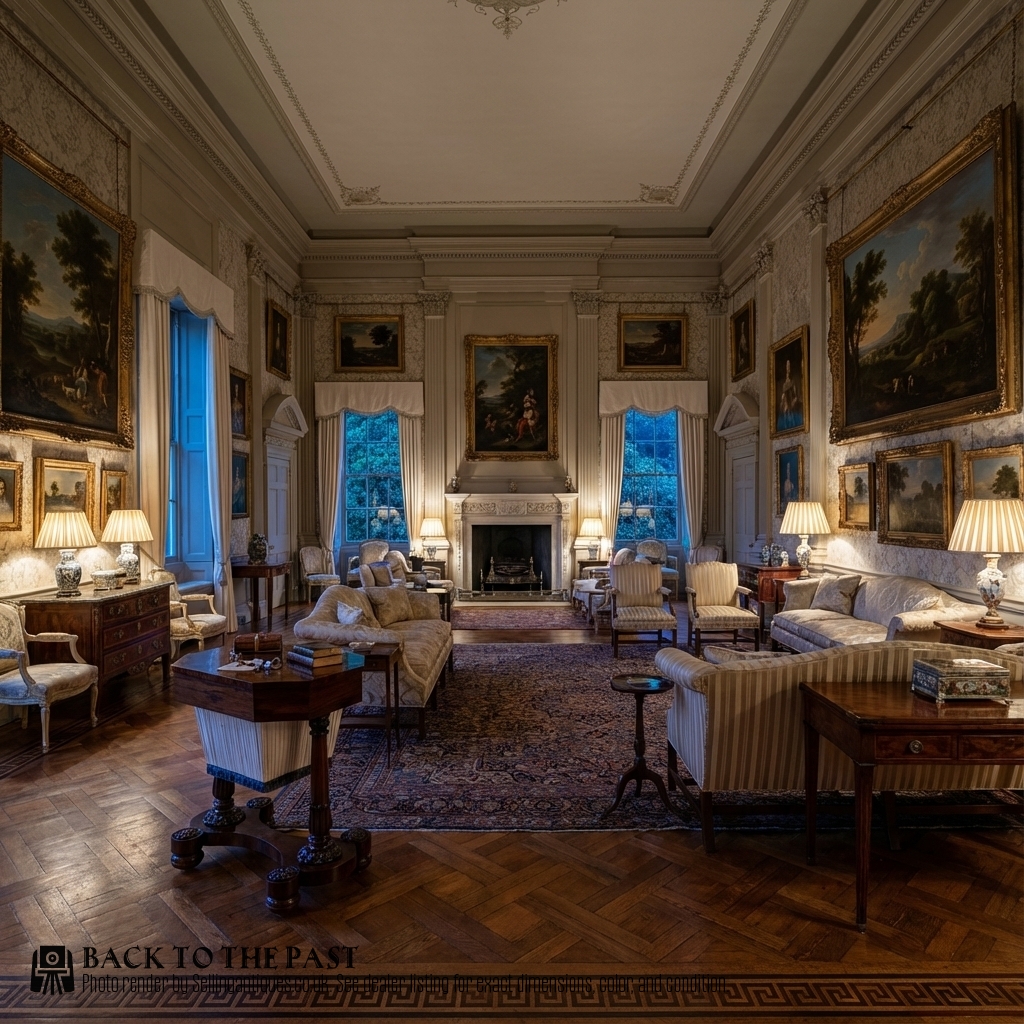
Regency Rosewood Work Table
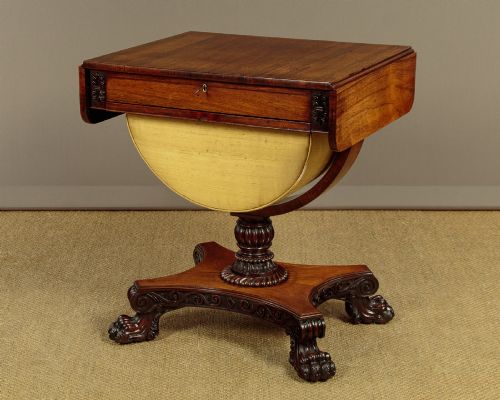
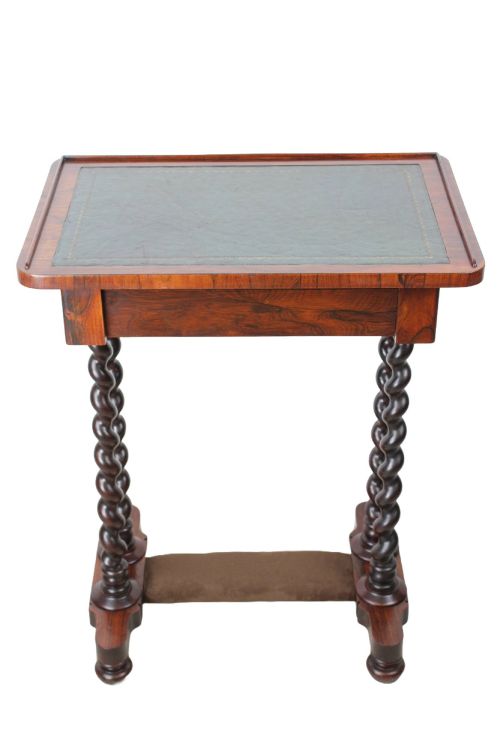
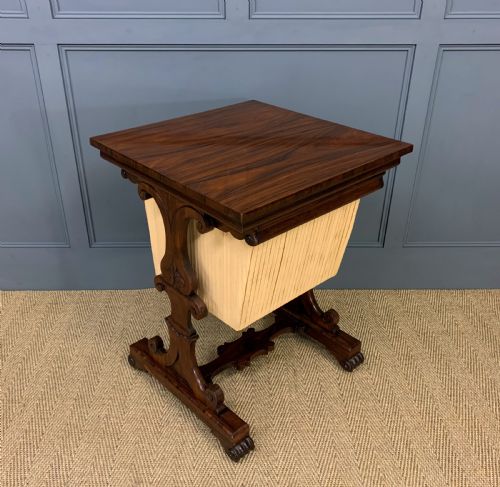
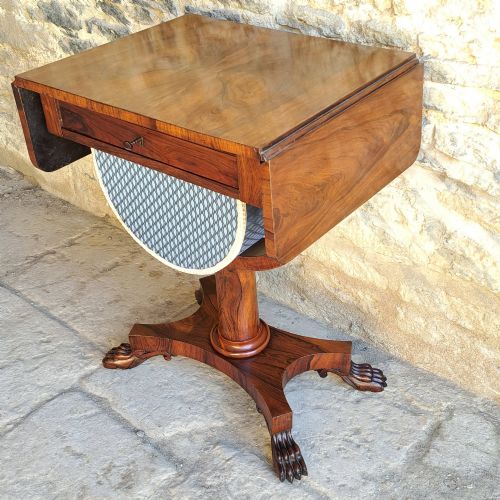
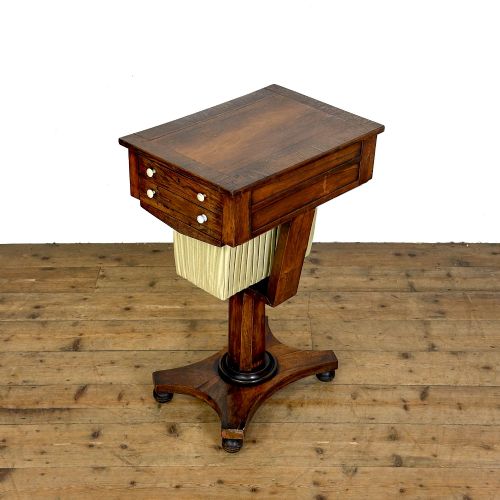
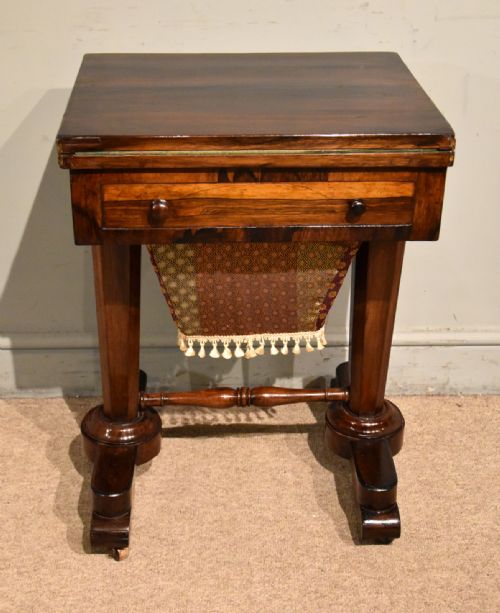
A regency rosewood work table is a versatile domestic piece designed primarily for needlework, writing, and gaming during the early nineteenth century. These tables combine utilitarian compartments with elegant proportions, making them adaptable for use as sewing tables, writing desks, or occasional lamp tables.
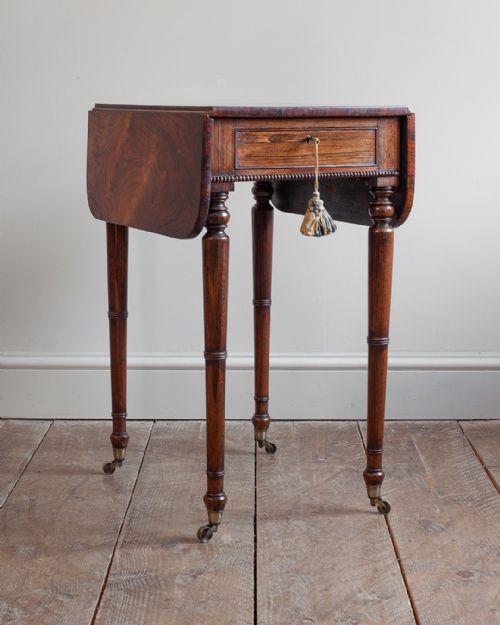
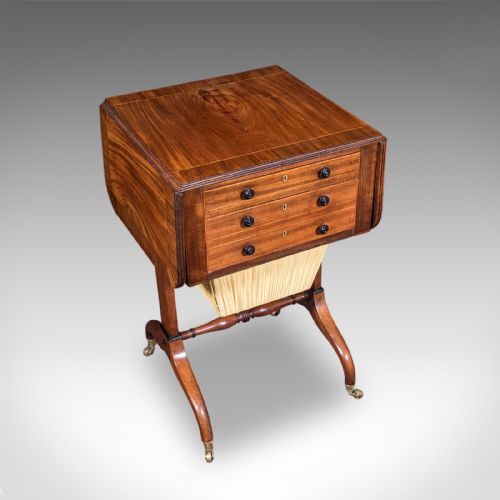
The pieces appearing most frequently on this page hail from the Regency, George IV, and William IV periods, alongside the broader nineteenth century and Victorian eras. They often feature drop leaves, single drawers, or fitted interiors complete with fabric bags for sewing materials.
Makers of the period utilised rich timber to create compact forms suited to withdrawing rooms and parlours. While some examples function strictly as side or Pembroke tables, the defining characteristic remains their association with domestic crafts and leisure.
Materials and construction
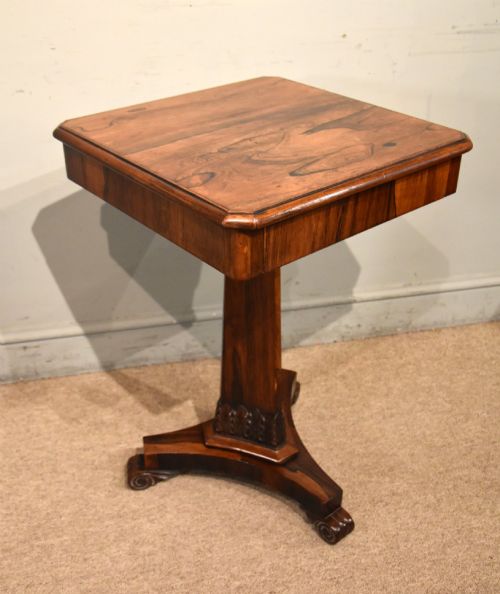
Craftsmen built these tables using dense rosewood veneers applied to solid secondary timbers, frequently enhanced by figuration in the grain. This exotic hardwood provided a dark, lustrous surface that took a high polish.
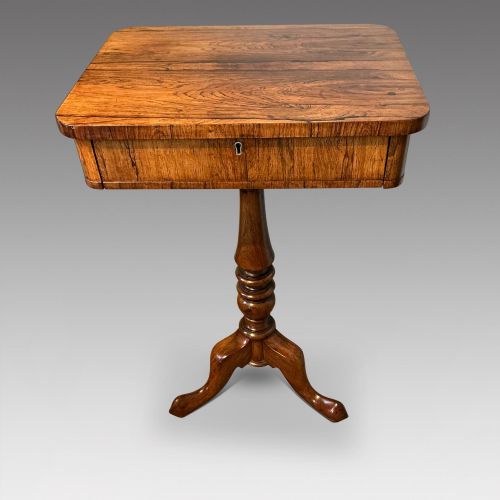
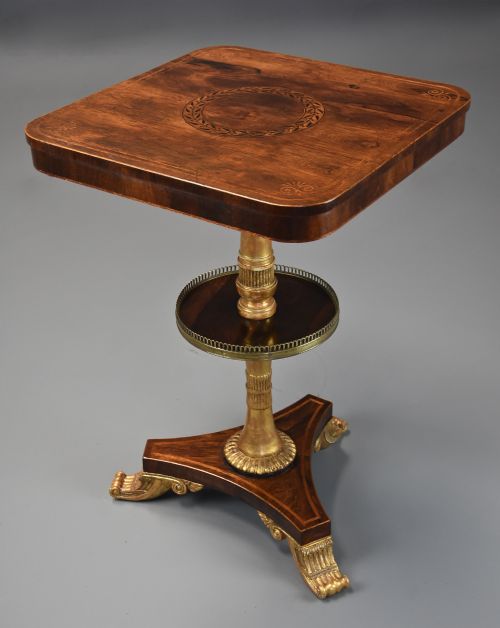
Decoration relied on contrasting details such as brass inlay, satinwood stringing, ebony accents, and intricate penwork. Structural stability came from pedestal supports, end frames, or tripod legs, often incorporating brass mounts and castors for mobility.
Listings demonstrate a strong presence of the Regency and William IV periods, constructed primarily from rosewood with brass and mahogany accents.
Factors of quality
Quality in a regency rosewood work table rests on the selection of figured timber and the precision of decorative inlays like brass or parquetry. Superior examples exhibit seamless veneering around curved edges and complex joints.
Internal engineering also separates standard pieces from the finest works, particularly in metamorphic designs where games boards, writing slides, and sewing bags operate smoothly. Finer items often show attribution to prominent workshops through exceptional carving and hardware.
Gillows of Lancaster·George Bullock
The Regency Rosewood Work Table Glossary
- Rosewood
- A dense, heavily grained tropical timber prized for its dark purple-brown colour and contrasting black markings, widely utilised in elite nineteenth-century cabinet making.
- Pembroke table
- A small occasional table featuring two hinged drop leaves on opposing sides, often fitted with a single drawer.
- Teapoy
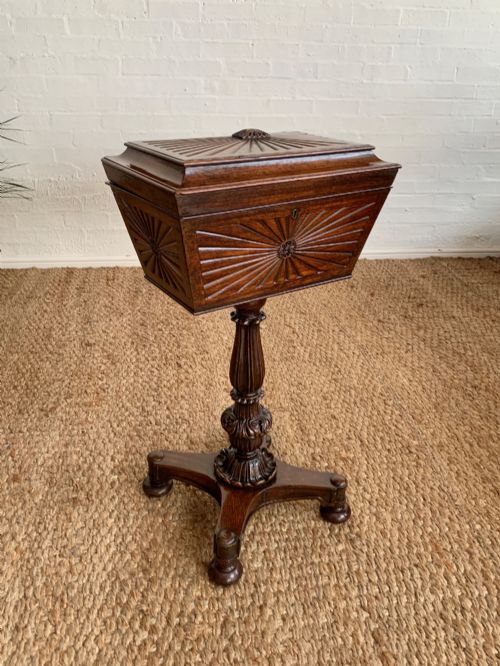
- A small decorative chest or table designed to hold tea canisters, occasionally found sharing the multifunctional form of sewing and work tables.
- Parquetry
- Geometric mosaic woodwork formed by small pieces of veneer arranged in repeating patterns such as chequer-boards.
- Caddy top
- A raised, hinged lid configuration resembling a tea caddy, commonly found enclosing the storage compartments of sewing tables.
Regency Rosewood Work Table: Frequently Asked Questions
What is a regency rosewood work table used for?
These pieces served multiple domestic functions, primarily housing sewing equipment, threads, and needlework within integrated fabric bags or internal compartments. Many also incorporated foldover tops for playing cards or writing surfaces.
Their compact size allowed them to be moved easily around the parlour or drawing room as needs changed throughout the day.
How can I tell a Regency period table from a Victorian one?
Regency and George IV examples generally display crisper classical proportions, lighter sabre legs, or refined brass inlay typical of the early nineteenth century. Victorian pieces from later decades tend towards heavier proportions, darker finishes, and different carving motifs.
Construction methods and secondary woods also shift as cabinet making industrialised later in the century.
Were these tables made for games as well as sewing?
Many work tables doubled as games tables, featuring reversible or foldover tops inlaid with chess or backgammon boards. Compartments beneath the top often stored playing pieces alongside sewing accessories.
This multifunctional design reflects the sociable nature of nineteenth-century drawing room entertainment.
How do I care for rosewood furniture at home?
Rosewood benefits from being kept away from direct sunlight and steady heat sources to prevent the timber and veneer from drying out. Occasional dusting with a soft, dry cloth helps maintain the polished surface without damaging historical finishes.
Applying specialised waxes sparingly can preserve the natural lustre of the wood over time.