

Regency Rosewood Tilt Top Table
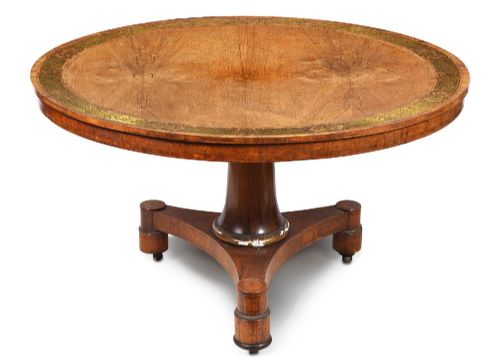
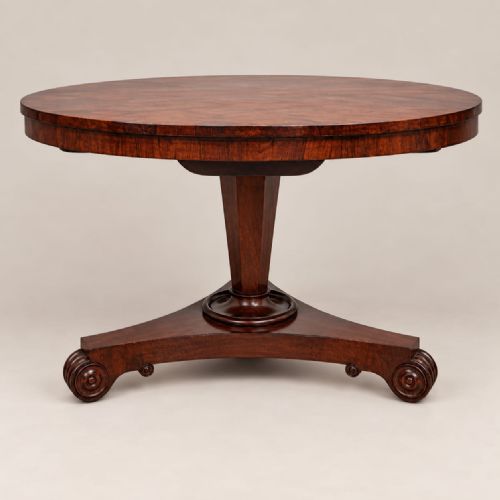
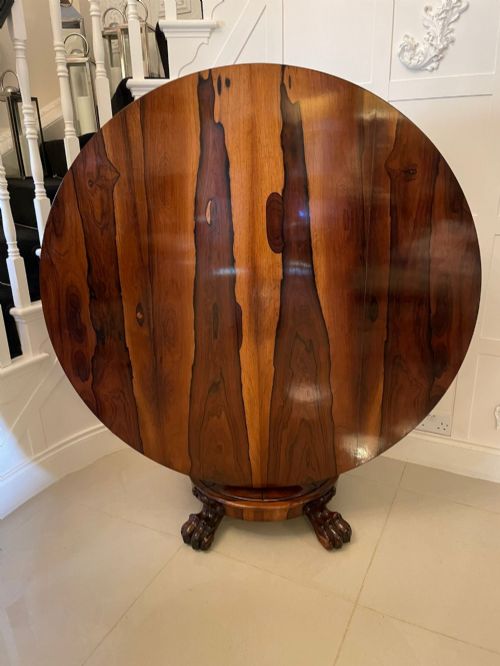
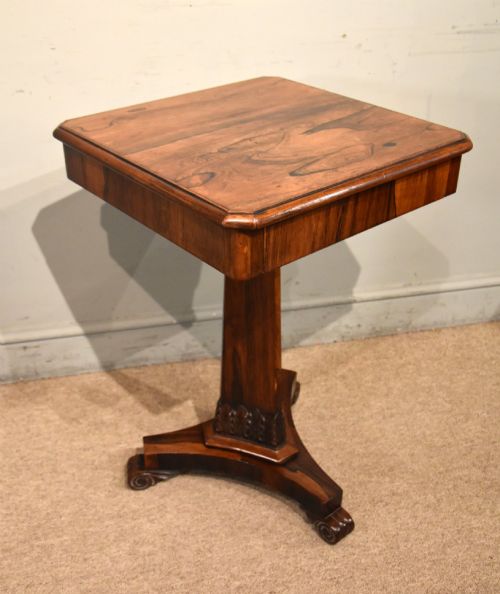
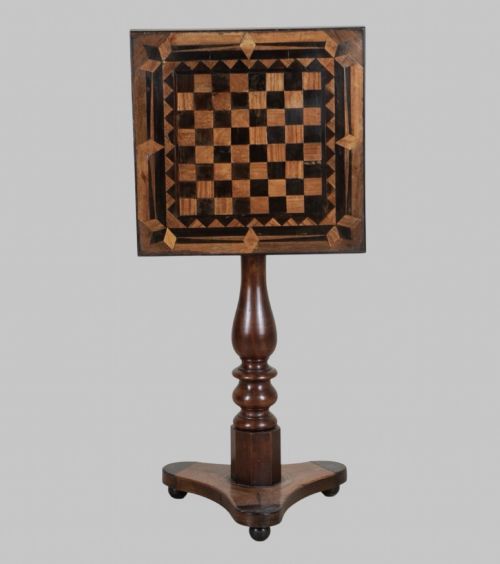
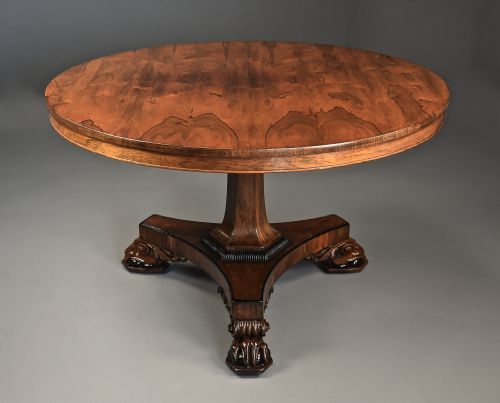
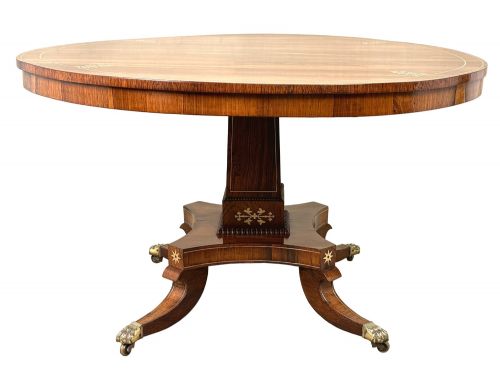
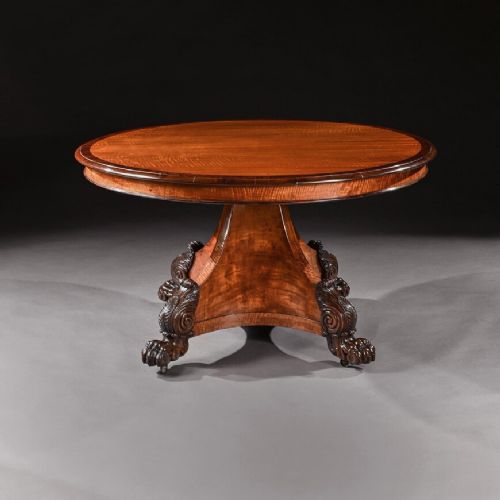
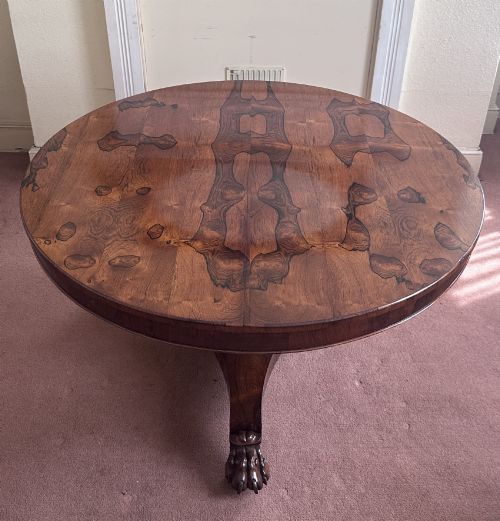
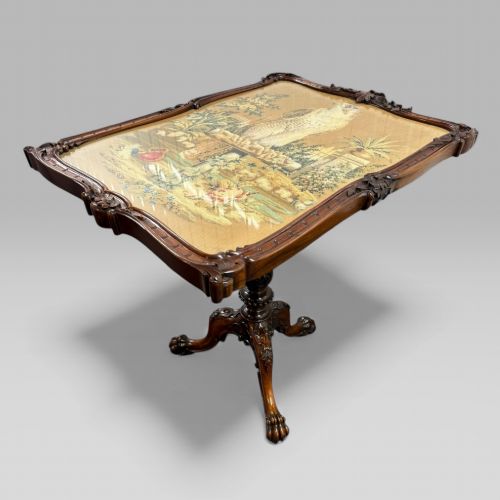
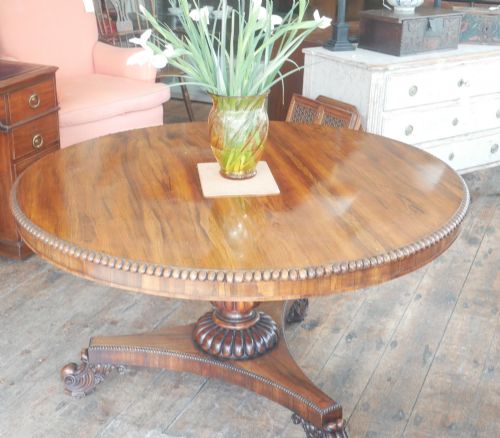
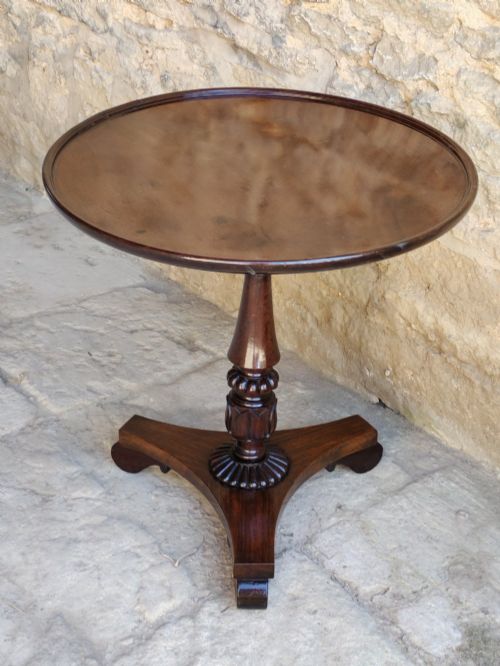
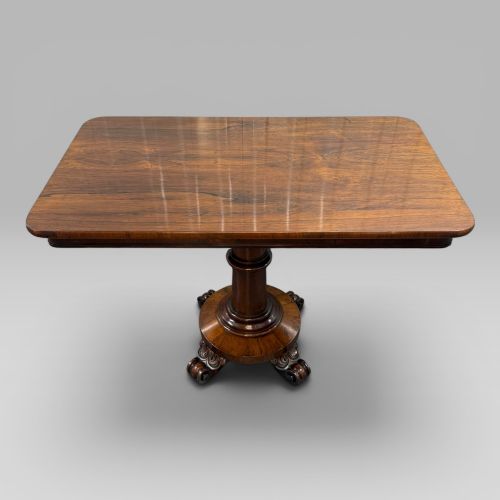
These pieces are a regency rosewood tilt top table, designed to serve a dining or breakfast function by day and tilt flat to clear the room by night.
Regency Rosewood Tilt Top Table
When you search for a regency rosewood tilt top table, you encounter circular, square, and ovular forms originating primarily from the nineteenth century. These tables span Regency, George IV, and William IV periods, often functioning as breakfast, dining, or occasional tables.
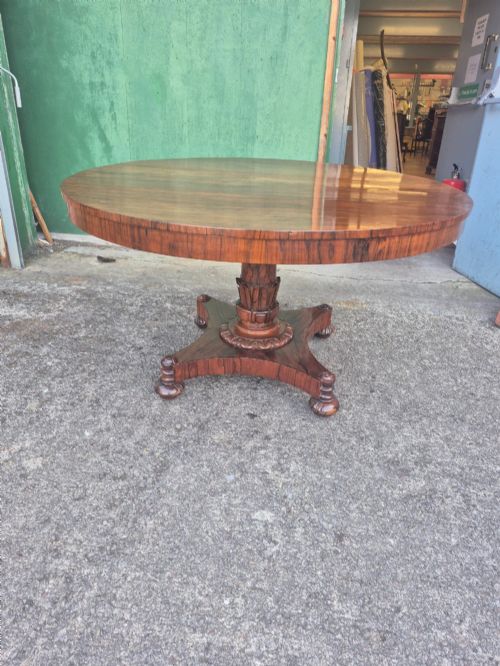
The version you are most likely to meet on this page is a circular breakfast or centre table supported by a central pillar and a tripod or platform base. Many examples from this selection incorporate mechanisms that allow the top to pivot vertically when not in use.
How they were made
Cabinet makers utilised dense timbers such as rosewood, mahogany, and goncalo alves, frequently applying fine veneer over secondary woods. Surfaces often display brass inlay or parcel gilt details set into the wood.
The structural integrity relies on sturdy central pedestals, sometimes carved, paired with tilting mechanisms built from iron and brass components to support heavy wooden tops.
Listings feature rosewood, mahogany, satinwood, and goncalo alves combined with brass inlay across nineteenth-century periods.
What varies in quality
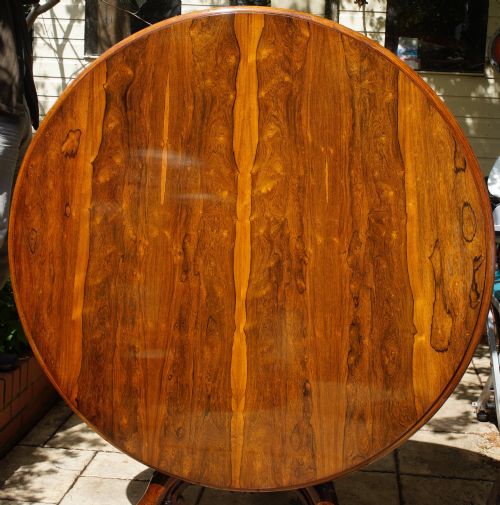
The distinction between tiers rests upon the choice of timber and the precision of the cabinet work. Rich grain patterns in the rosewood veneer and careful matching across the top elevate an example significantly.
Sculptural carving on the pillar base and the refinement of brass inlay orOrmolu mounts separate standard production items from pieces bearing attribution to notable makers.
Gillows·Peters of Genoa
The Regency Rosewood Tilt Top Table Glossary
- Tilt top
- A table mechanism allowing the surface to pivot to a vertical position. This saved valuable floor space in nineteenth-century interiors.
- Breakfast table
- A multipurpose round or ovular table used for morning meals and general daytime activities. These typically measure smaller than grand dining tables.
- Veneer
- A thin layer of figured wood applied over a stable core timber. Cabinet makers selected rosewood veneers for dramatic dark grain patterns.
- Tripod base
- A support structure featuring three feet radiating from a central pillar. This design provided stable footing on uneven period floorboards.
- Brass inlay
- Metal strips set flush into the wooden surface to create geometric or floral patterns. This decorative technique often defines Regency pieces.
Regency Rosewood Tilt Top Table: Frequently Asked Questions
What is a tilt top table used for?
These tables served as functional dining or breakfast surfaces during morning and afternoon hours. When meals concluded, the mechanism allowed the heavy top to tilt vertically.
This clever design meant servants or residents could push the furniture against the perimeter wall. The room then cleared completely for evening entertaining or dancing.
How do I identify a Regency period table?
Regency pieces date from the early nineteenth century and frequently display classical restraint alongside bold materials. Look for dark rosewood timbers complemented by precise brass inlay or carved pillar supports.
Proportions remain balanced, drawing inspiration from classical antiquity. Cabinet makers during this era prioritized architectural lines and figured wood grain over excessive ornamentation.
Are these tables suitable for modern dining?
These pieces adapt readily to contemporary dining spaces due to their compact central pillar design. Chairs tuck neatly around the circular tops without interference from corner legs.
The tilting mechanism remains fully operational on many examples, offering a practical way to reclaim floor space when dining is finished.
What is the difference between a breakfast table and a loo table?
Breakfast tables and loo tables share similar circular or ovular forms with central pillar supports. Breakfast tables typically hosted morning meals and general household tasks.
Loo tables derived their name from the card game popular in the nineteenth century. Both terms often describe the same large tilt top table format.