



Regency Rosewood Slope
A regency rosewood slope is a portable writing desk or box fashioned from dense dark timber, designed for travel and home correspondence.
Regency Rosewood Slope
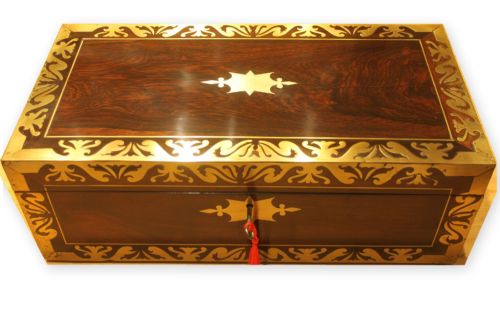
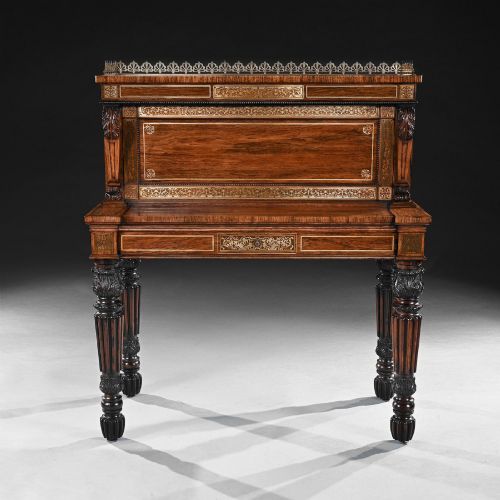
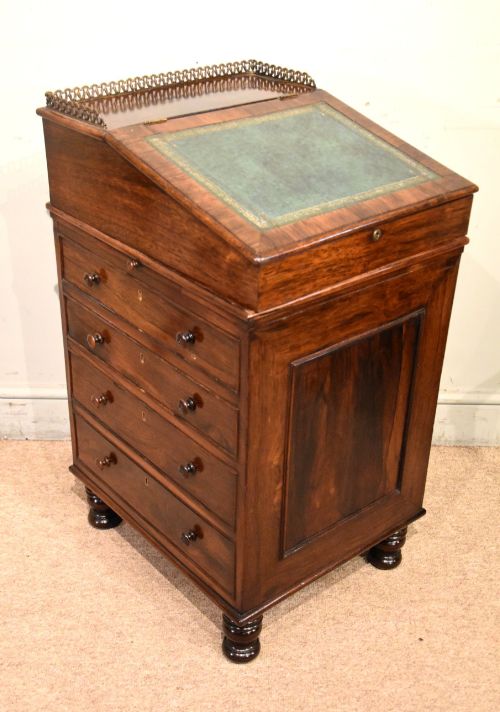
A regency rosewood slope brings together portable writing boxes and davenport desks originating from the nineteenth century, including Georgian and William IV periods. These pieces serve as functional writing surfaces that fold compactly or incorporate stationary storage.
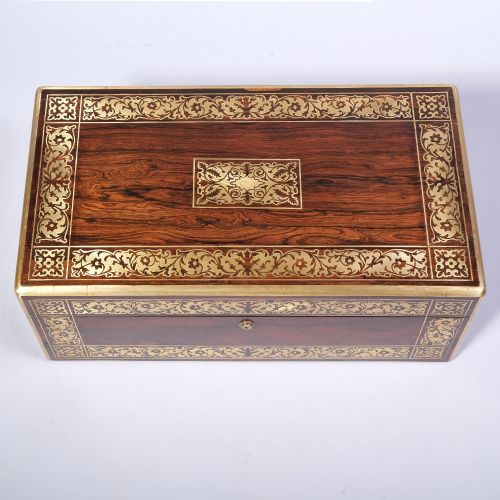
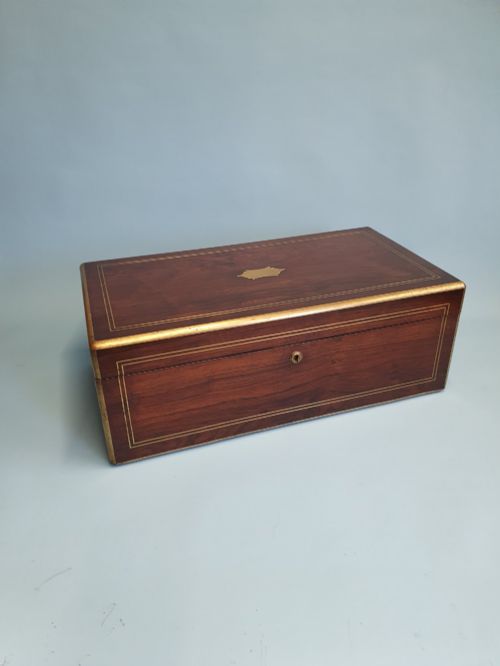
The most common formats on this page are brass bound writing boxes, bi-fold slopes with secret drawers, and davenport desks featuring multiple internal compartments. Such items reflect the portable writing habits of the period, often fitted with inkwells and keys.
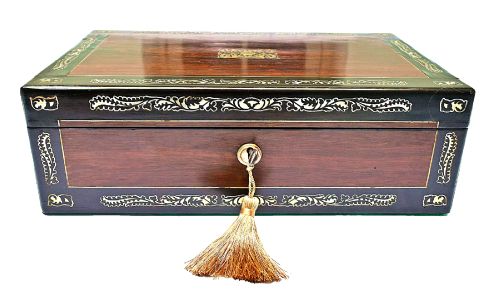
Variations extend to larger campaign boxes, document boxes, and writing tables constructed from rosewood or palisander. Certain examples include slide tops, reading ledges, or mother of pearl decoration alongside the primary timber.
Materials and Construction
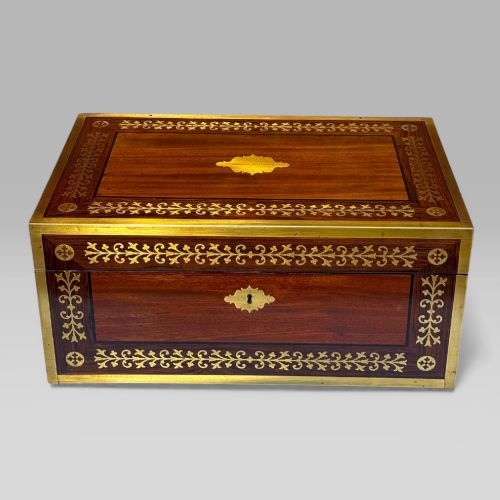
Makers built these pieces primarily using rosewood and palisander veneers over secondary timbers, selected for rich dark grain patterns and durability. Surfaces frequently incorporate brass inlay, brass binding, or brass mounts to reinforce corners and edges.
Interiors utilise fitted writing surfaces lined with leather or velvet, alongside compartments for pens and inkwells. Hidden elements such as secret drawers concealed behind sliding panels demonstrate the complex joinery employed by period cabinet makers.
Regency Rosewood Slope Retail Price Guide 2026
Typical asking prices for regency rosewood slope among the pieces listed under this phrase on Sellingantiques today, from the lower quarter to the upper quarter. They describe what is for sale here now, not the wider market.
Listings feature nineteenth century forms spanning the Georgian, Regency, and William IV eras, constructed primarily in rosewood, mahogany, and palisander.
Assessing Quality and Execution
Quality rests upon the precision of the brass inlay and the alignment of the mitred joints on the box carcass. Superior examples maintain crisp geometric brass work that sits flush with the surrounding timber grain without gaps.
Internal arrangement dictates overall standard, separating standard boxes from those containing clever secret drawers, fitted pen trays, and original glass inkwells. The depth of colour in the rosewood grain and the crispness of any mother of pearl or brass decoration further distinguish finer workshop output.
Gillows Oxford Street Workshop·George Austin Dublin·Gillows of Lancaster
The Regency Rosewood Slope Glossary
- Writing slope
- A portable box with a hinged sloping lid designed to hold paper and provide an angled surface for writing. These units fold flat when closed for transport.
- Davenport desk
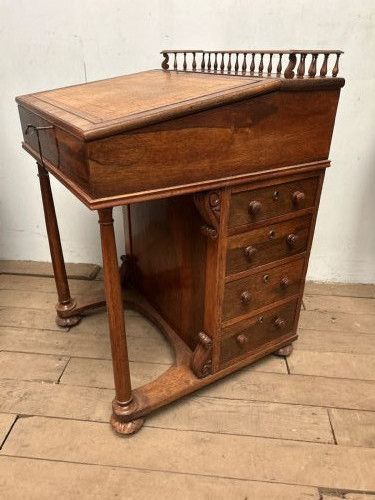
- A compact pedestal desk featuring a sloped writing surface above a bank of small drawers. The form gained popularity during the Regency and William IV periods.
- Campaign box
- A sturdy portable chest or writing slope fitted with brass mounts and recessed carrying handles, made for officers on military campaigns. Such items prioritise robust construction and secure storage.
- Palisander
- A dense tropical hardwood related to rosewood, frequently used interchangeably in nineteenth century cabinet making. The timber exhibits striking dark figure lines.
- Secret drawers
- Concealed compartments hidden behind false partitions or released by spring mechanisms within writing boxes. These spaces kept private papers secure.
Regency Rosewood Slope: Frequently Asked Questions
What is a regency rosewood slope?
A regency rosewood slope is a portable nineteenth century box designed with a hinged, slanted lid for writing letters while travelling or at home. These items typically feature internal partitions for stationery and ink.
Cabinet makers utilised rich rosewood timber, often enhancing the exterior with brass banding, stringing, or inlay to protect the corners and add decoration.
How do you use a slope desk?
To use a slope desk, the hinged lid opens downward to reveal a slanted writing surface often covered in leather or velvet. This angle provides a comfortable position for handwriting.
Inside the box, specialised compartments hold inkwells, blotters, and pens, while secret drawers conceal private papers away from the main compartment.
Where were davenport desks placed?
Davenport desks served as compact writing stations positioned in sitting rooms or bedrooms where full sized tables took up too much space. Their small footprint allowed them to sit near windows for natural light.
The sloping top combined with side drawers to keep writing materials close at hand without cluttering the room.
How do I spot secret drawers?
Secret drawers in writing slopes are typically hidden behind false partitions inside stationary compartments or beneath removable pen trays. Sliding panels and spring loaded catches often secure these hidden spaces.
Cabinet makers designed them to blend seamlessly into the interior woodwork so casual observers would not notice the extra storage.