

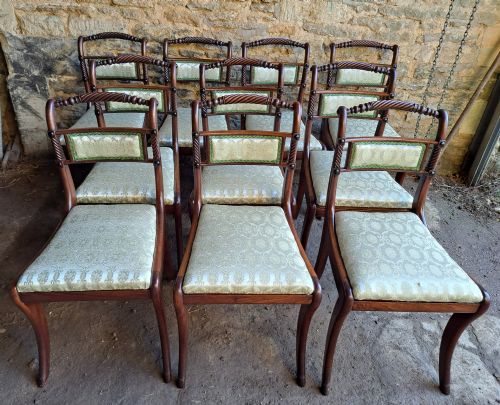
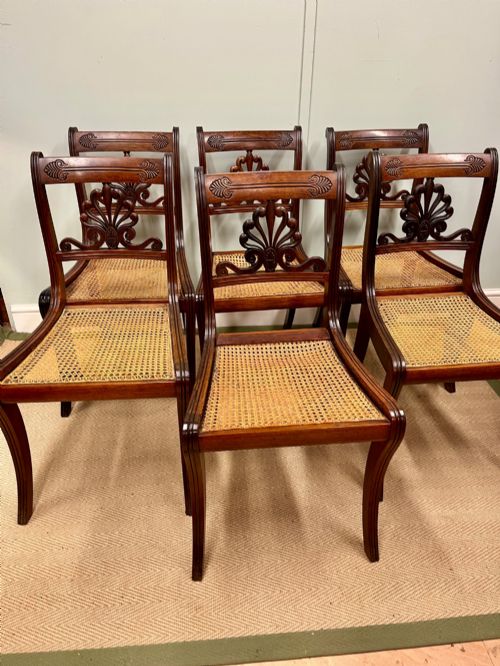
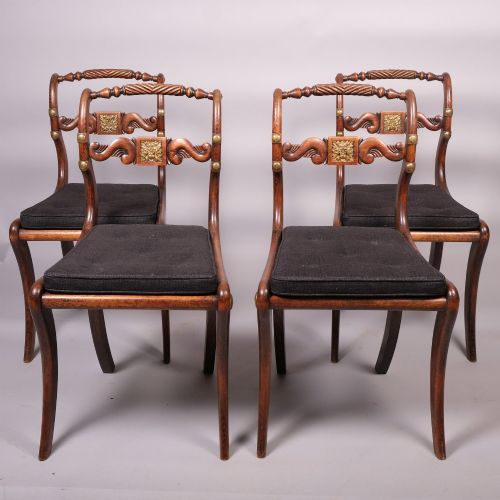
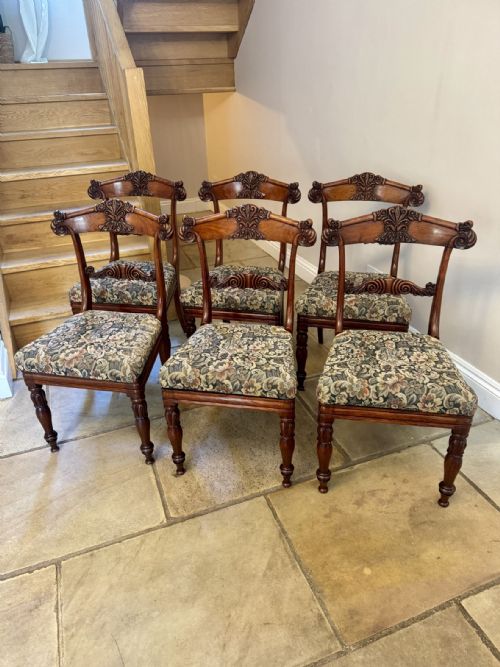
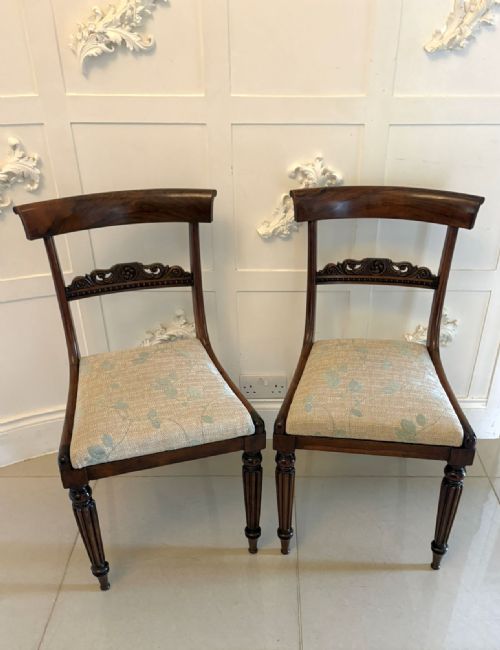
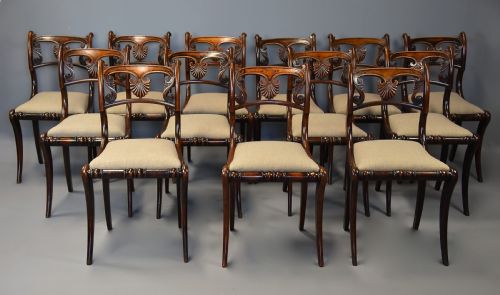
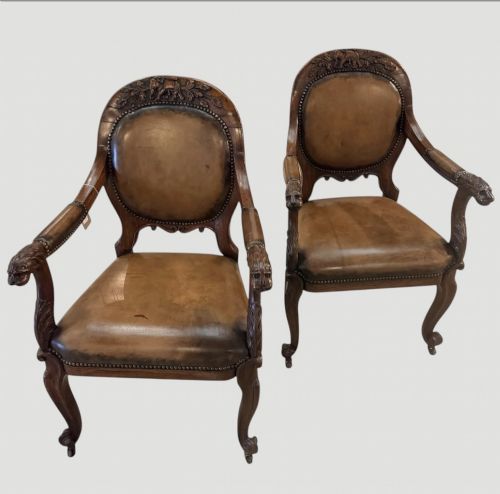
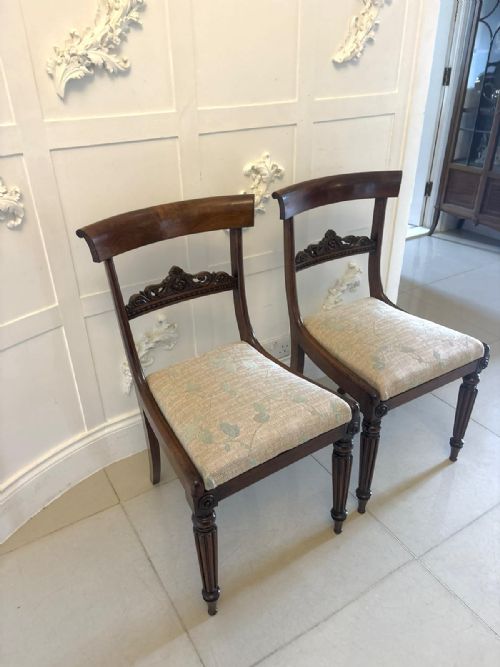
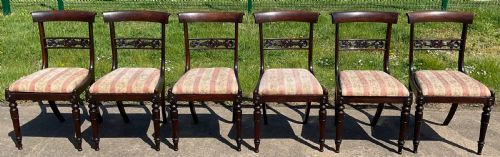


Regency Rosewood Side Chairs
Regency rosewood side chairs bring architectural lines and dense tropical timber into the principal rooms of the house.
Regency Rosewood Side Chairs
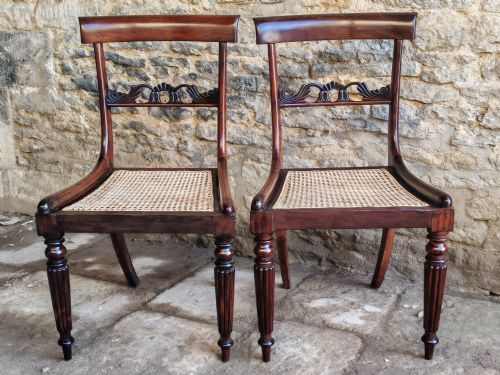
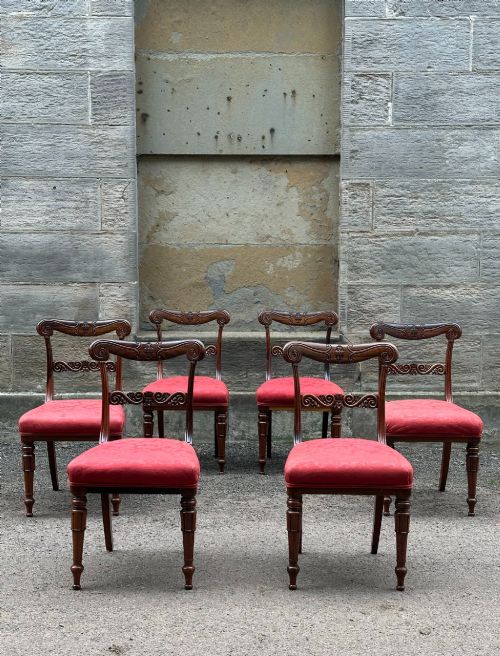
Regency rosewood side chairs are formal seating pieces produced during the early nineteenth century, spanning the Regency, Georgian, and William IV periods. They frequently appear in matched sets of four, six, or eight, alongside pairs intended for specific reception rooms.
The primary forms include dining chairs and smaller side chairs, with occasional variations such as library chairs, music chairs, and harpists' chairs. Makers drew upon classical Grecian inspiration, Gothic revival motifs, and Anglo-Indian design traditions.
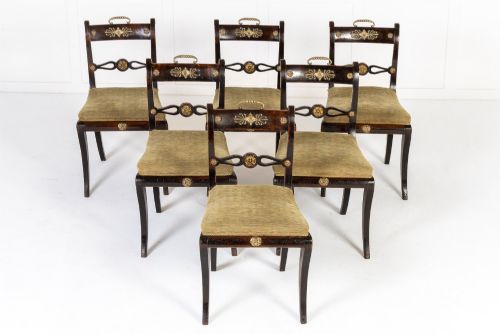
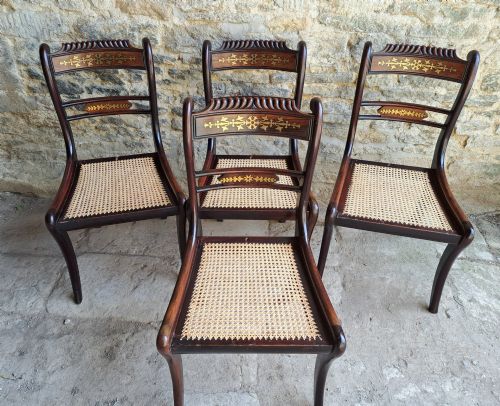
Solid rosewood construction sits alongside simulated rosewood finishes where timber grain is painted onto a secondary wood base. Brass inlay and gilt metal mounts appear regularly across the surviving examples from this era.
Materials and construction
Cabinetmakers utilised dense, dark rosewood alongside native timbers painted to imitate the distinctive grain of the exotic hardwood. Solid timber frames were joined using traditional woodworking joints capable of withstanding daily use.
Brass inlay and gilt metal mounts were embedded directly into the wooden rails and top rails to create sharp linear decoration. Upholstery fabric, velvet, and woven cane provided the seating surfaces, supported by internal webbing and traditional stuffing materials.
Evaluating quality and execution
Quality rests upon the crispness of carved details such as rope twist rails and classical scrollwork. Hand-cut brass inlay demonstrates superior workshop execution compared to simpler surface applications.
The weight and selection of the rosewood timber define the upper tier of production, while simulated finishes vary according to the skill of the painter executing the grain effect. Surviving sets that retain their original frames and uniform colour command greater interest.
Gillows·Munro
The Regency Rosewood Side Chairs Glossary
- Simulated rosewood
- Paintwork applied to a domestic timber base to imitate the appearance of true rosewood grain. This technique was common during the Regency period.
- Grecian inspiration
- A design movement drawing directly from classical Greek architecture and pottery forms. It heavily influenced chair backs and leg profiles.
- Brass inlay
- Thin strips of brass fitted into routed channels within the wooden surface. It creates geometric or floral patterns across the crest rails.
- Rope twist
- A carved wooden moulding resembling twisted rope. It frequently decorates the horizontal cross rails of dining chairs.
- Anglo-Indian
- Furniture made in India for British residents or imported for the home market. It often combines traditional British forms with intricate carving.
Regency Rosewood Side Chairs: Frequently Asked Questions
How do I distinguish genuine rosewood from simulated rosewood?
Close inspection under good light reveals the depth of the grain and the presence of natural pores within the timber. Simulated versions display brush marks or repeated painted patterns beneath a clear finish.
Weight also offers a clue, as solid rosewood pieces feel considerably heavier than the lighter secondary woods used for painted alternatives.
Were these chairs originally used only for dining?
While the majority served around dining tables, many examples functioned as reception room seating or library chairs. Specific variants like music chairs and harpists' chairs fulfilled seating needs in drawing rooms.
Side chairs moved easily between rooms depending on the social requirements of the household.
How should I care for cane seats on antique chairs?
Woven cane requires moderate humidity to prevent the natural fibres from becoming brittle and snapping. Avoid placing these chairs near direct heat sources or in overly dry environments.
Occasional gentle cleaning with a damp cloth maintains the flexibility of the material without saturating the wood.
What defines the transition from Regency to William IV style?
Regency designs lean towards slender proportions, classical restraint, and delicate brass detailing. William IV pieces generally feature heavier, more robust proportions with bolder carved elements.
Both periods overlap in their use of rosewood and traditional joinery methods.