



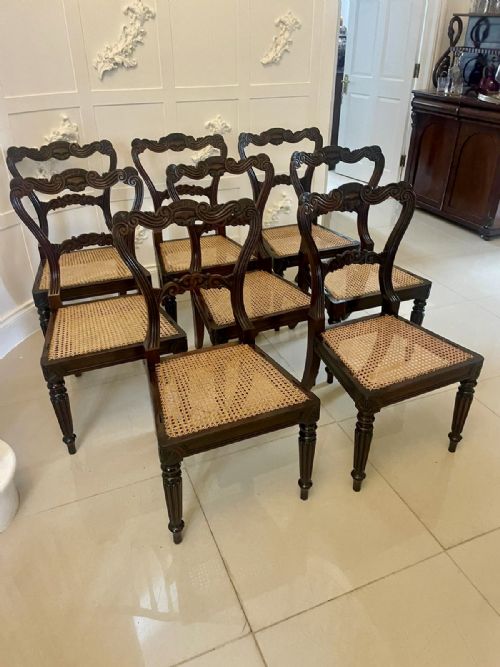


Rosewood Cane Side Chairs
Rosewood cane side chairs bring rich timber grain and woven texture into a room, offering enduring seating with crisp Regency and Georgian lines.
Rosewood Cane Side Chairs
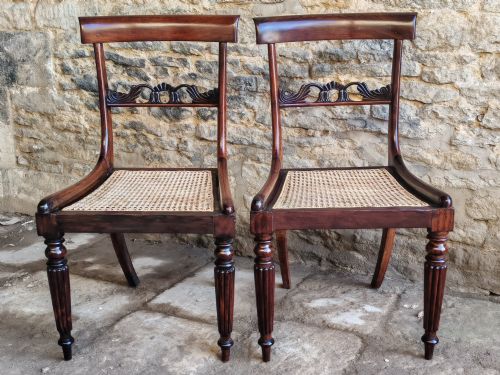
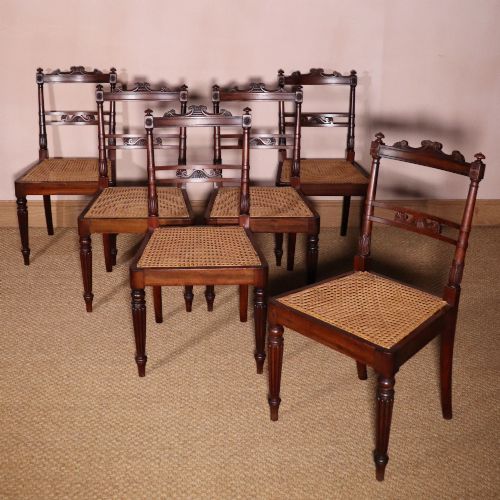
When you search for rosewood cane side chairs, you are looking at formal seating designed for dining rooms and parlours during the Georgian, Regency, and wider nineteenth-century periods. These chairs combine rich tropical timbers with woven plant fibre seats to create light yet sturdy frames.
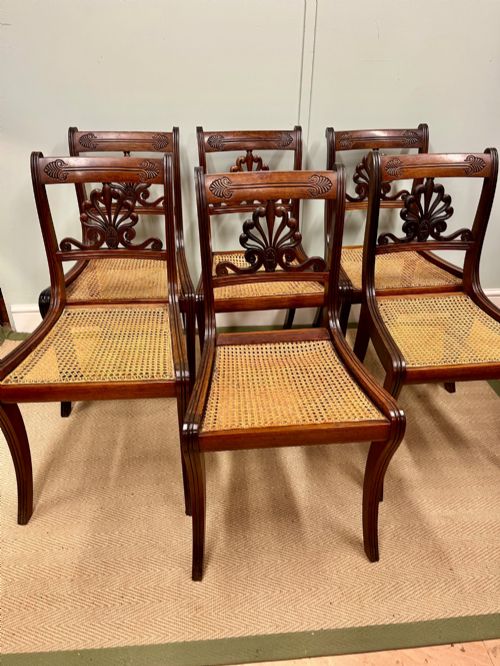
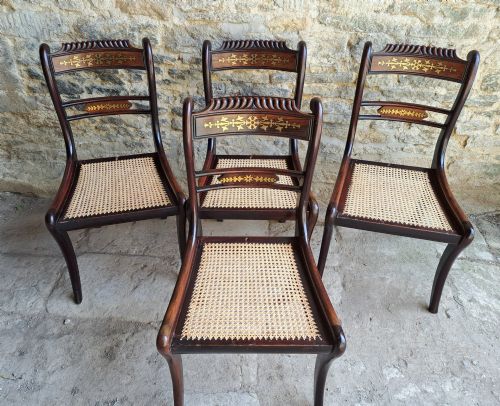
You are most likely to meet sets of dining chairs or smaller pairs originating from the Regency era, often displaying classic styles such as William IV, Grand Regency, and Anglo-Indian designs. The forms range from simple bobbin turned frames to elaborate carved and brass inlaid examples.
Materials and construction
Maker workshops utilised dense rosewood and Indian rosewood, alongside beech treated with paint finishes to create simulated rosewood surfaces. Brass inlay and carved wooden details frequently adorn the upper rails and crossbars of these frames.
Seats feature tightly woven cane panels fitted into rebates within the wooden framework, occasionally paired with secondary upholstery elements. Carpenters shaped the structural members using traditional joinery methods suited to slender dining chair proportions.
Rosewood Cane Side Chairs Retail Price Guide 2026
Typical asking prices for rosewood cane side chairs among the pieces listed under this phrase on Sellingantiques today, from the lower quarter to the upper quarter. They describe what is for sale here now, not the wider market.
Judging quality
The distinction between ordinary and superior examples lies in the crispness of the wood carving and the precision of any brass inlay work. Workshops known for high output achieved sharper lines and more harmonious timber selection across larger matched sets.
The integrity of the woven cane seating and the tightness of the frame joints govern the overall structural success of each piece. Superior pieces retain their original material combinations and show careful attention to turning and proportion.
Gillows
The Rosewood Cane Side Chairs Glossary
- Cane
- Woven material made from the outer skin of rattan palms, utilised for flexible and breathable chair seats. This technique provides a light, resilient surface.
- Rosewood
- A dense, heavily figured tropical hardwood prized for its dark grain and polished finish. Cabinet makers selected it for formal seating.
- Simulated rosewood
- Painted or stained timber, frequently beech, decorated to mimic the distinctive dark grain of true rosewood. This method offered a lower cost alternative during the Regency period.
- Regency
- An English design period spanning the early nineteenth century, characterised by classical revival motifs and refined proportions. Chairs from this era often feature sabre legs and scrolled top rails.
- Brass inlay
- Technique of embedding thin brass strips or motifs into channels cut within the wooden surface. It highlights the structural lines of dining chairs.
Rosewood Cane Side Chairs: Frequently Asked Questions
What periods do these chairs come from?
The listings span the Georgian and Regency periods, alongside general nineteenth-century production. Regency pieces represent a significant portion of the available designs.
Craftsmen working in these eras produced both formal dining chairs and occasional side seating using similar timber and weaving techniques.
How do simulated rosewood chairs differ?
Simulated rosewood chairs use alternative woods, such as beech, painted or stained to replicate the rich appearance of genuine rosewood timber. This practice allowed makers to achieve a costly aesthetic with more accessible materials.
These pieces maintain the exact same forms and structural styles as their solid timber counterparts.
Where were these chairs used?
These side chairs served primarily around dining tables in formal townhouses and country estates. Their slender proportions also suited placement against walls in parlours and reception rooms.
Because they lack heavy upholstery, they could be moved easily about the house as needed.
How do you identify Gillows chairs?
Attributions to Gillows rest on established construction traits, specific design patterns, and occasional stamped signatures on the wooden frame. This firm operated prominent workshops in Lancaster and London.
Their output is noted for precise craftsmanship and adherence to prevailing Regency fashions.