




Regency Rosewood Loo Table
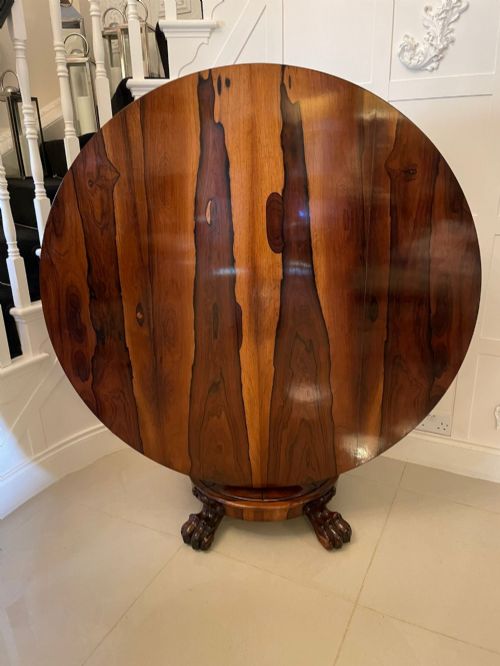
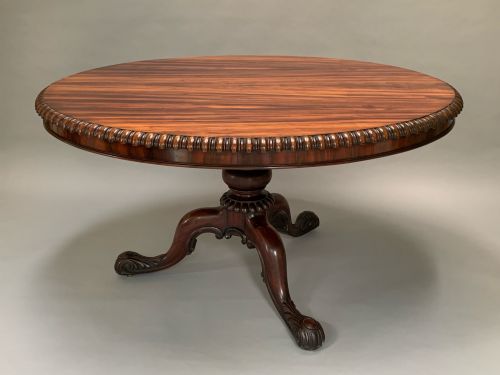
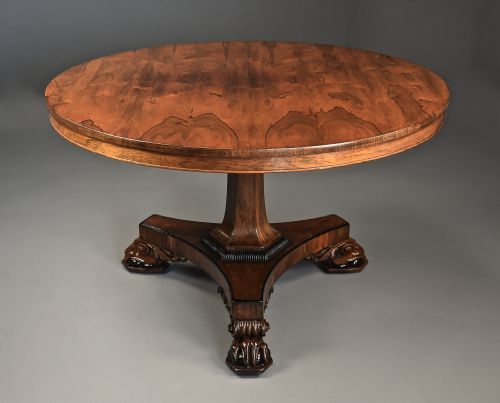
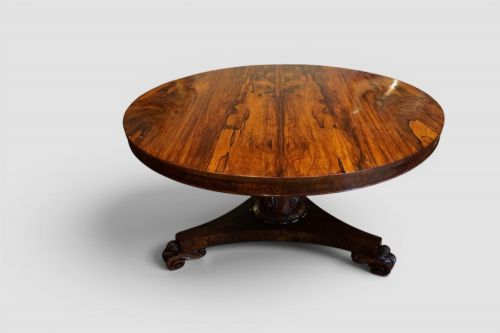
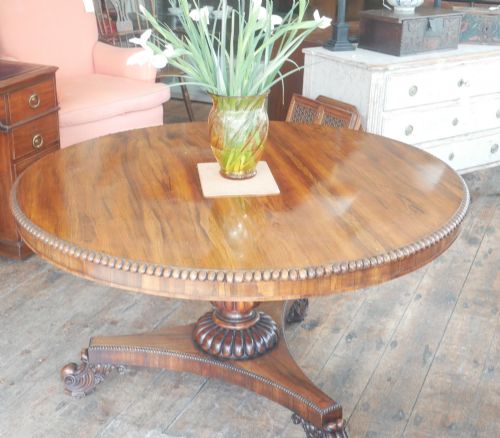
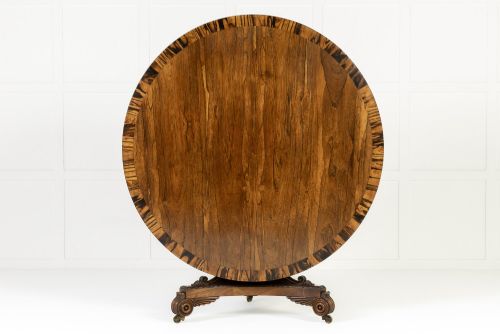
A Regency rosewood loo table brings the dark, richly figured timber and tilt-top mechanics of the early nineteenth century straight into a modern room.
Regency Rosewood Loo Table
A regency rosewood loo table is a round or oval pedestal table designed for the card game loo, functioning equally well as a central dining or breakfast piece. These tables appear across nineteenth century periods, including Regency, William IV, George IV and early Victorian eras.
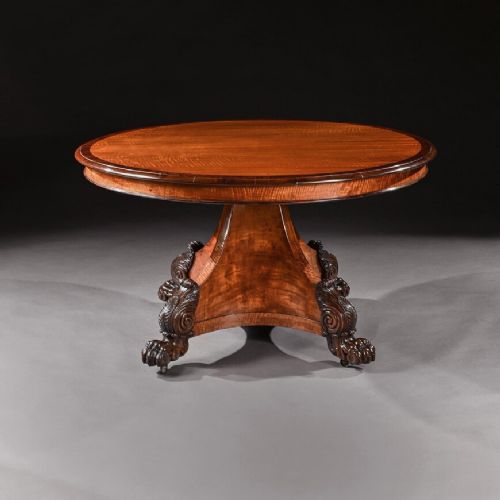
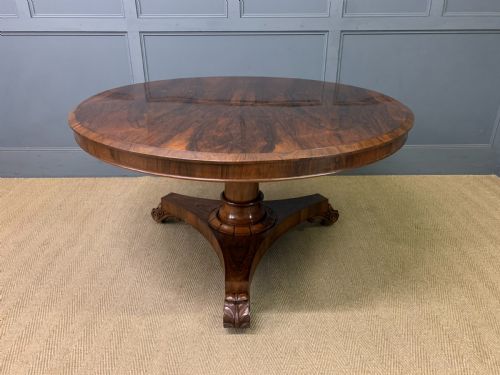
The format typically involves a heavily figured circular or ovular top mounted on a tilting mechanism, supported by a central pillar and a robust platform or carved pod base.
Originating in English, Scottish and Irish workshops, these pieces combine domestic utility with formal entertaining, showing the heavy architectural influence of George IV and William IV designs.
Construction and Materials
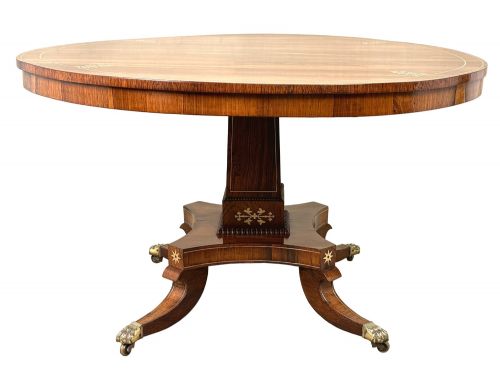
Cabinet makers utilised dense rosewood timbers, often applied as fine veneers over secondary woods like mahogany or deal, alongside contrasting brass inlay and satinwood or albuera wood crossbanding.
The tilting top relies on a sturdy brass or iron catch mechanism that allows the surface to lock flat for dining or pivot vertically to save floor space when not in use.
Regency Rosewood Loo Table Retail Price Guide 2026
Typical asking prices for regency rosewood loo table among the pieces listed under this phrase on Sellingantiques today, from the lower quarter to the upper quarter. They describe what is for sale here now, not the wider market.
Listings for this phrase frequently span the nineteenth century, encompassing Regency, George IV, William IV and early Victorian periods in rosewood, mahogany and satinwood.
Assessing Quality
The distinction between standard and superior pieces rests on the choice of timber figure, the precision of brass inlay work, and the sculptural weight of the central pedestal.
Master cabinet makers ensured that tilt-top mechanisms operated smoothly without play in the joint, while lesser examples show stiffness or replaced ironwork.
Gillows·Peters of Genoa·James Winter
The Regency Rosewood Loo Table Glossary
- Loo table
- A round or oval card table designed for the popular nineteenth century game of loo, featuring a tilting top to save space. These tables double easily as breakfast or centre tables.
- Tilt-top
- A mechanism allowing the table surface to pivot from horizontal to vertical. This design enabled the furniture to be stored flat against a wall when the room was needed for other purposes.
- Crossbanding
- A border of veneer laid around the perimeter of a tabletop with the grain running perpendicular to the centre. It provides a neat framing effect common in Regency cabinet work.
- Figured timber
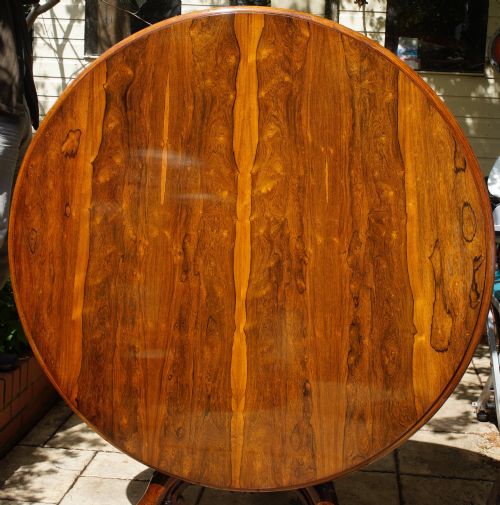
- Wood grain containing natural swirls, flames or contrasting marks that catch the light. Rosewood is particularly prized for this deep, variegated patterning.
Regency Rosewood Loo Table: Frequently Asked Questions
What is a loo table used for?
A loo table was originally built for playing the eighteenth and nineteenth century card game called loo, where players vied for a central pool of stakes.
The tilting mechanism allowed the heavy wooden top to pivot upright so the table could be pushed against the wall when the card game ended and the room was required for other activities.
How do I tell Regency from William IV?
Regency pieces tend to display lighter, more restrained classical proportions with delicate brass inlay and slender pedestals dating from around eighteen hundred to eighteen twenty.
William IV furniture, emerging toward eighteen thirty, leans heavier and more architectural with robust, carved pillar supports and densely figured rosewood veneers.
Can I use a breakfast table for dining?
Breakfast tables of the nineteenth century were built as sturdy, multi-purpose tables suited for morning meals and general parlour use.
Their solid pedestal construction provides adequate legroom for seating around the central pillar, though the tilt mechanism requires a secure catch when set flat.
Why does the top tilt up?
The tilting mechanism was a practical space-saving device used in nineteenth-century homes where rooms served multiple functions throughout the day.
By releasing the brass catch underneath, the heavy rosewood top swings ninety degrees to rest vertically, allowing servants or family members to clear the floor.