



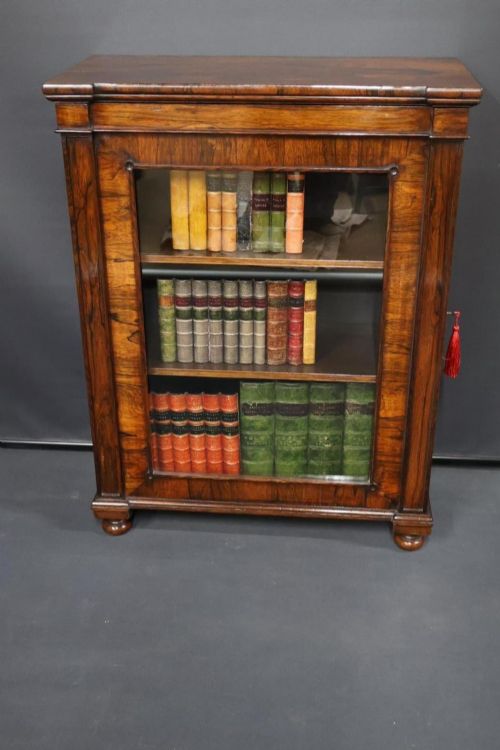


Regency Rosewood Display Cabinet
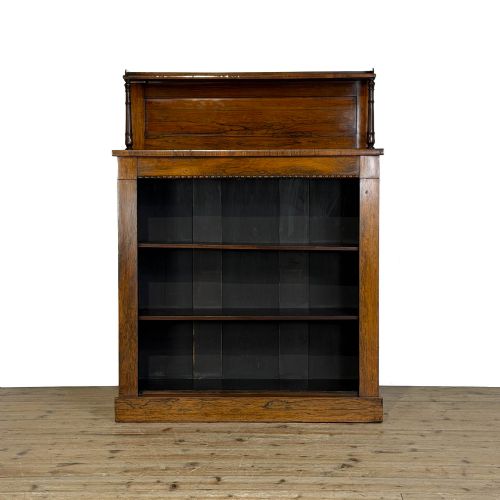
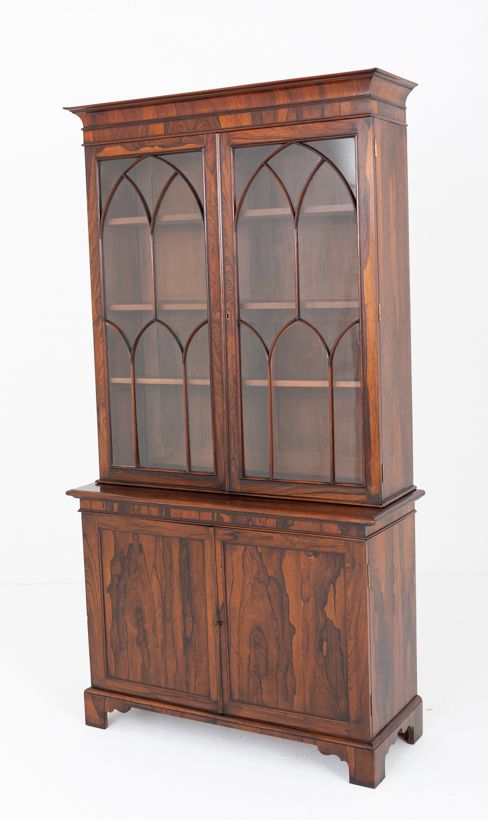
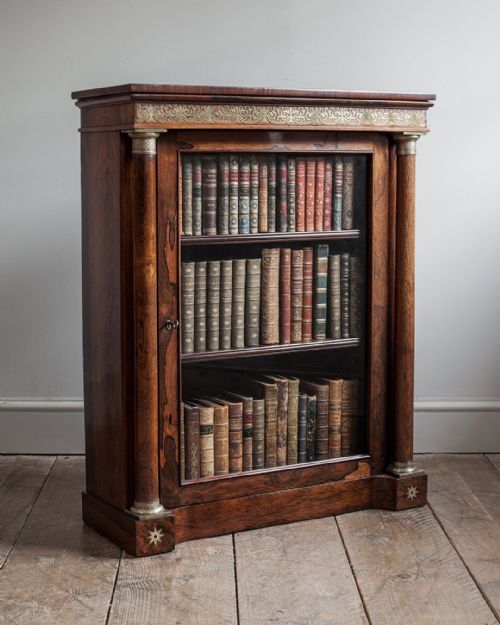
A regency rosewood display cabinet brings dark timber and polished brass into a room, holding books and porcelain behind glass.
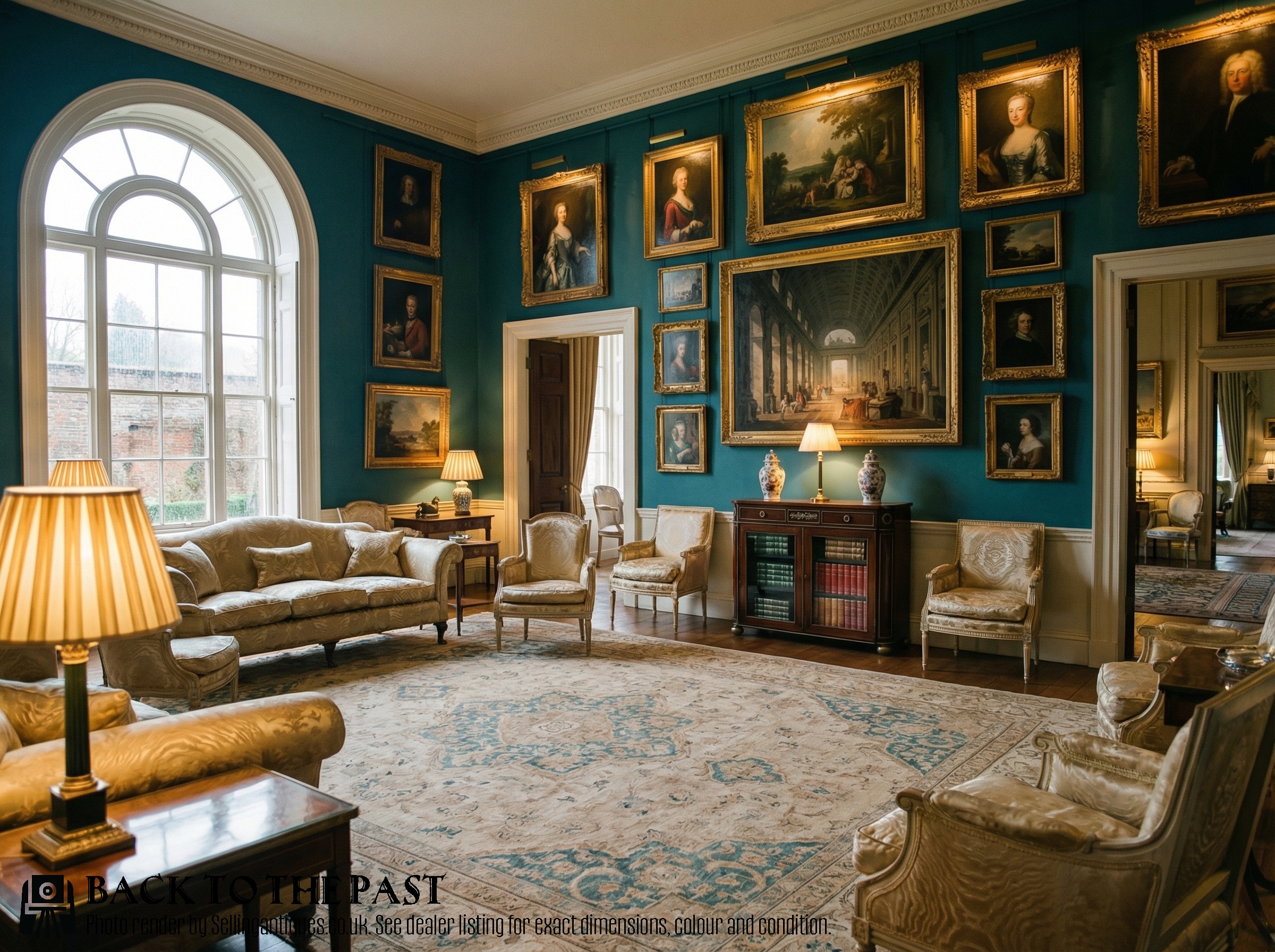
Regency Rosewood Display Cabinet
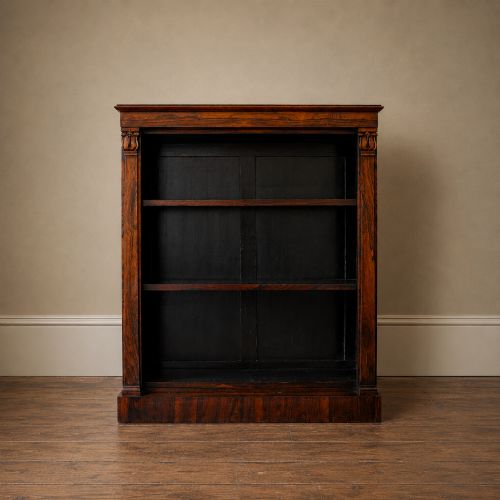
Buyers seeking a regency rosewood display cabinet encounter low bookcases, pier cabinets, chiffoniers, and tall breakfront forms originating predominantly from the Regency period alongside later Victorian and revival interpretations. These pieces combine shelves and glazed or open compartments designed to store books and display prized objects.
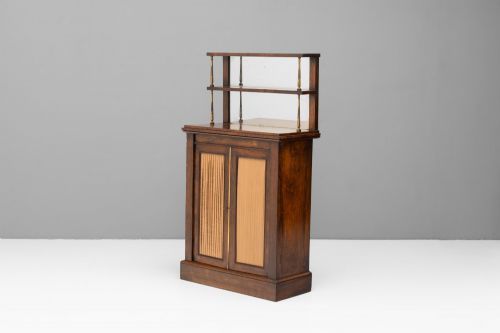
The evidence shows forms ranging from small wall-hanging and table-top display boxes to substantial breakfront side cabinets and bookcases fitted with adjustable shelves. Many examples date from the early nineteenth century, constructed with glass doors, fabric linings, or mirrored backs to showcase contents.
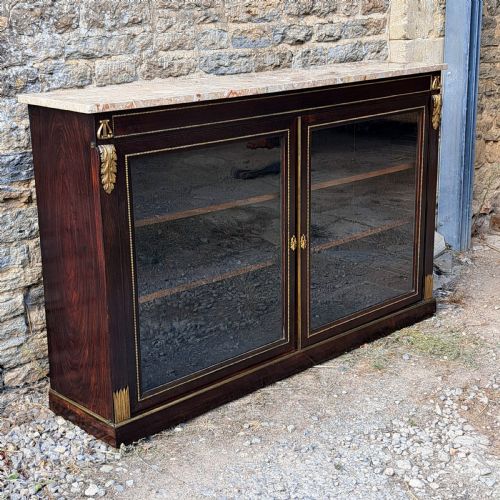
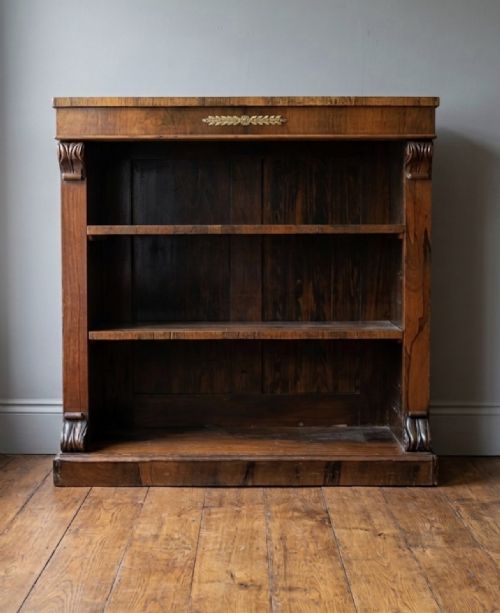
Among the variations met on this page, open bookcases and side cabinets with brass inlay appear frequently, alongside chiffoniers featuring marble tops. Pieces span periods from the Georgian era through to the 1920s Regency Revival style.
How they were made
Cabinet makers used rosewood veneers applied to a foundational timber carcase, frequently selecting Rio rosewood for its deep grain patterns. Structural elements and interior shelves often rely on secondary woods such as pine, whilst specialised finishes include painted wood and simulated grain effects.
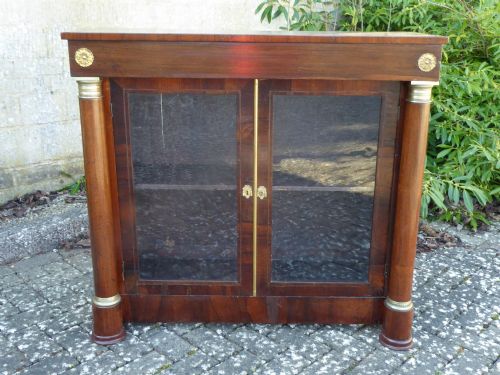
Decoration relied heavily on brass inlay and gilt brass mounts set directly into the dark wood surface. Glazed doors incorporated wooden framing to protect books and specimens, while select pieces utilised white marble tops and fabric or mirrored back panels inside the display areas.
Several pieces arrive wearing simulated paint, proving that even Regency cabinet makers enjoyed a clever disguise.
What varies in quality
The standard of a piece depends on the precision of the brass inlay and the richness of the rosewood grain selected by the cabinet maker. Finely executed brass work and crisp mouldings distinguish the upper tier of furniture from simpler utilitarian examples.
Proportions also dictate distinction, with neat, balanced dimensions and original surfaces holding greater regard than altered structures. The survival of original glass, marble tops, and internal fabric linings preserves the integrity of the design.
The Regency Rosewood Display Cabinet Glossary
- Breakfront
- A piece of furniture where the central section projects forward from the flanking sides. This architectural arrangement creates depth and visual rhythm across large cabinets.
- Chiffonier
- A low cabinet equipped with shelves or enclosed storage space beneath. These pieces often feature marble tops or a raised gallery at the rear.
- Pier cabinet
- A narrow cabinet designed specifically to stand against the wall space between windows. They frequently feature glazed doors to protect delicate collections.
- Rio rosewood
- A dense, heavily figured timber sourced from South America used extensively in high-end Regency furniture. Its dark contrasting grain distinguishes it from other tropical hardwoods.
- Waterfall bookcase
- A set of open shelves diminishing in depth from bottom to top in a stepped profile. This form gained popularity during the Regency period for holding small book collections.
Regency Rosewood Display Cabinet: Frequently Asked Questions
What is a regency rosewood display cabinet used for?
These cabinets served to store valuable books and exhibit porcelain, glassware, or small decorative specimens behind protective glass doors. The open shelves and enclosed compartments accommodated a gentleman's library or a collection of curiosities.
Today, they serve a similar function in domestic spaces, providing visible storage for books and collections while adding dark wood tones to a room.
How do I identify a Regency period piece?
Authentic Regency furniture dates roughly from the early nineteenth century, characterised by classical proportions, dark rosewood veneers, and precise brass inlay. Makers often utilised gilt brass mounts and architectural elements drawn from Greek and Roman design.
Later revival pieces from the twentieth century often replicate these forms, though timber selection and construction methods generally reflect their actual date of manufacture.
Where should I place a low bookcase?
Low bookcases and pier cabinets work best against solid wall spaces where their height does not interrupt window views or wall art. Because many feature finished backs or sides designed for prominent placement, they sit comfortably within living rooms and studies.
Keeping them away from direct sunlight and strong heat sources protects the rosewood veneer and prevents the timber from drying out.
What is the difference between a chiffonier and a bookcase?
A chiffonier typically combines enclosed cupboard storage beneath with open shelves or a marble top above. Bookcases focus primarily on shelving for book storage, sometimes featuring glazed doors rather than solid wood panels.
Both forms appear frequently in rosewood, reflecting the multifunctional storage needs of nineteenth-century interiors.