

Regency Rosewood Box
A regency rosewood box delivers portable elegance through dark timber and precise metal inlay.

Regency Rosewood Box
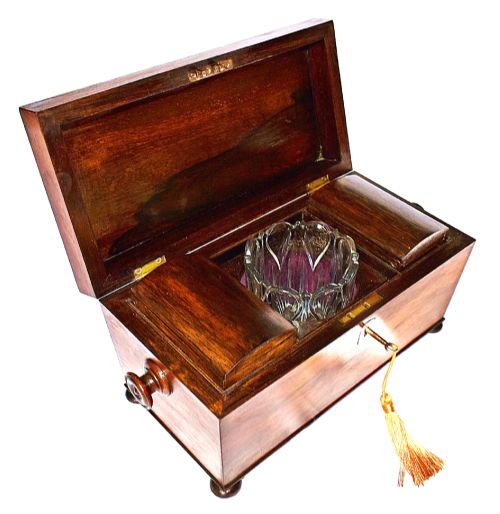
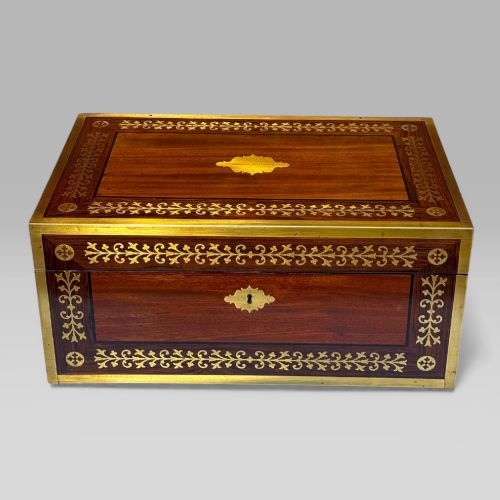
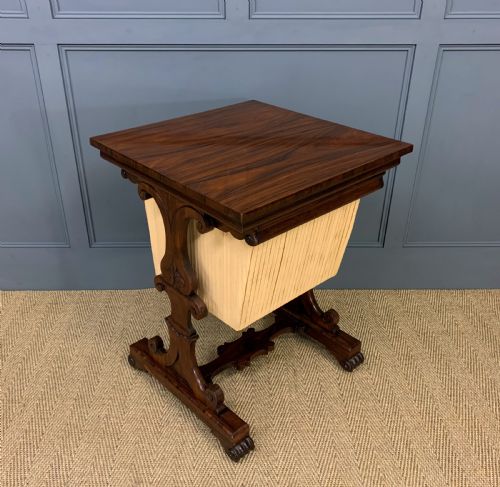
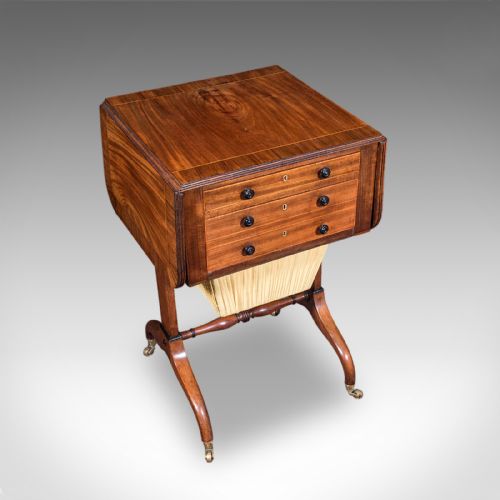
A regency rosewood box encompasses portable containers designed for correspondence, tea storage, sewing, and personal valuables. Most examples span the late Georgian, Regency, and William IV periods, reflecting the era's taste for exotic timbers.
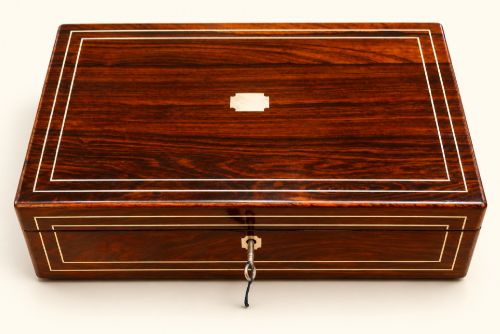
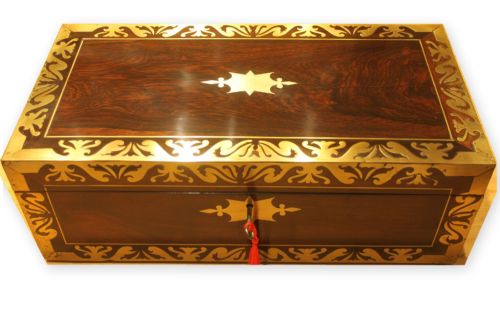
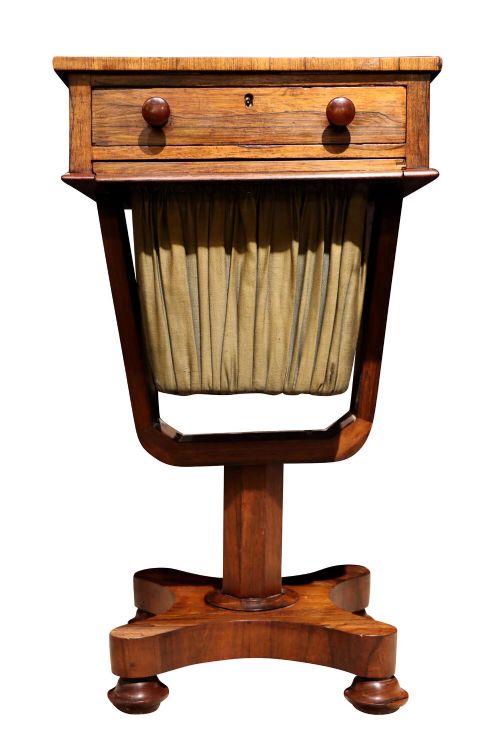
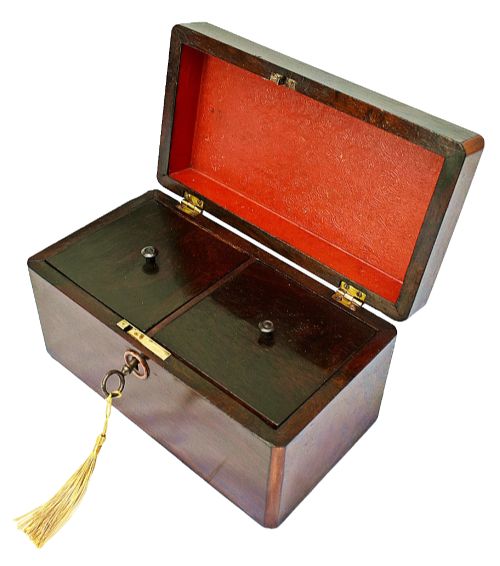
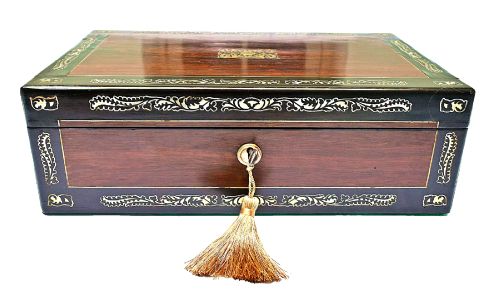
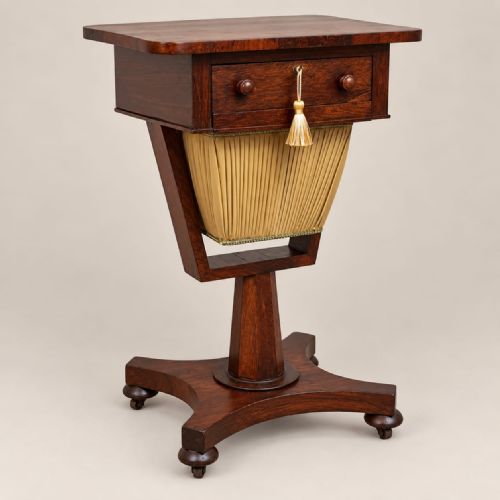
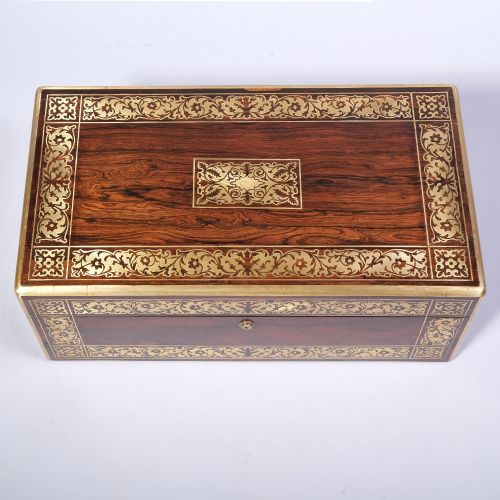
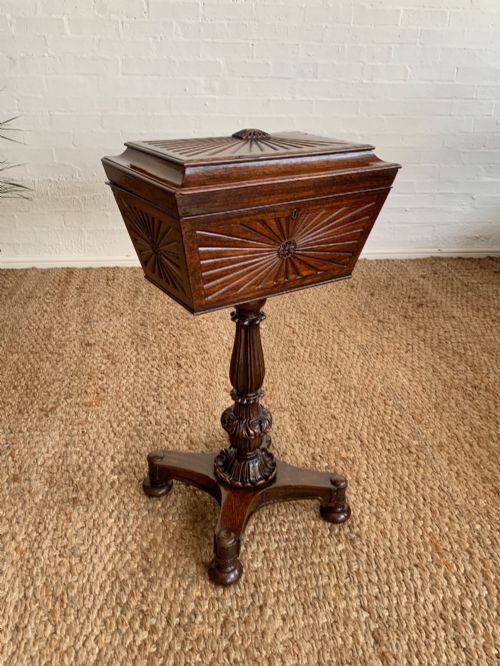
The selections on this page appear as writing slopes, tea caddies, sewing boxes, and document chests. Writing slopes feature folding desks with interior compartments, while tea caddies preserve loose leaf tea behind lockable lids.
Makers utilised dense, heavily figured rosewood imported from tropical regions, often enhanced by contrasting lighter woods and metal bands. These objects served elite households as functional items for writing, grooming, and household administration.
Materials and construction methods
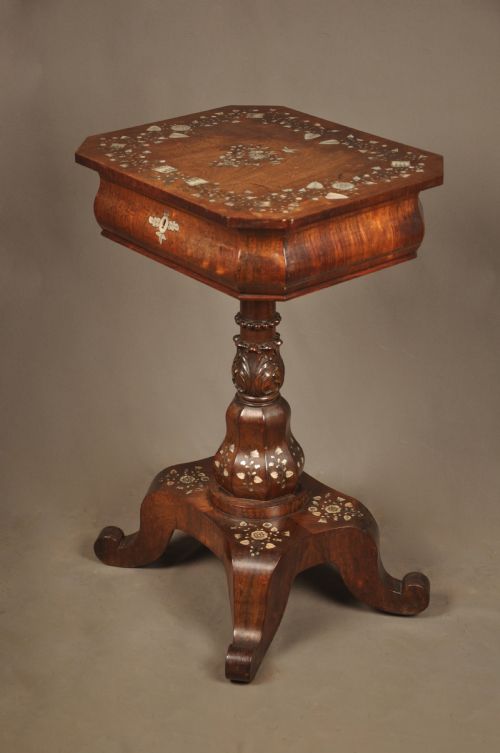
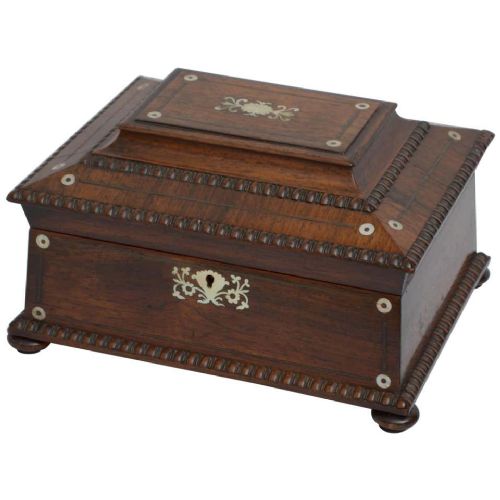
Cabinet makers built these pieces using solid or veneered rosewood over secondary softwoods, chosen for stability and deep grain patterns. Surface decoration relied heavily on brass inlay, brass stringing, and mother-of-pearl accents embedded flush into the timber.
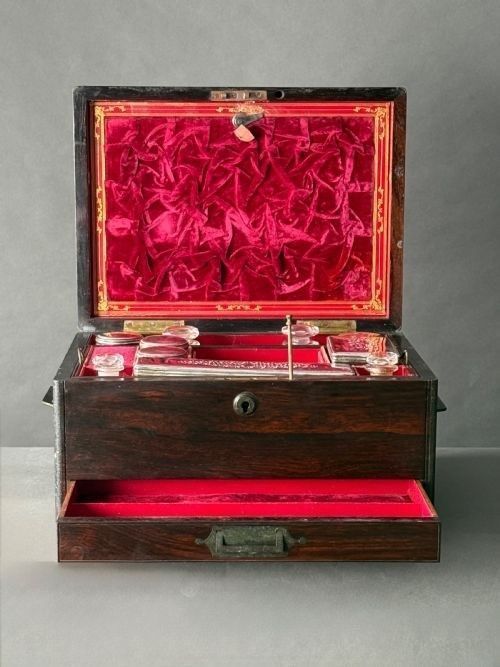
Interior fittings combined secondary woods like boxwood, satinwood, and mahogany with glass inkwells, velvet, leather, and fabric linings. Secret drawers and concealed compartments required intricate joinery to operate smoothly within tight physical tolerances.
Regency Rosewood Box Retail Price Guide 2026
Typical asking prices for regency rosewood box among the pieces listed under this phrase on Sellingantiques today, from the lower quarter to the upper quarter. They describe what is for sale here now, not the wider market.
Secret spring-loaded drawers hide inside writing slopes, waiting to stash love letters or forgotten fortunes.
Assessing quality and execution
Superior execution reveals itself in the continuity of the wood grain across the lid and sides, alongside the precision of brass stringing and inlay work. Inferior examples exhibit crude corner joints, mismatched veneers, and replacement hardware that disrupts the original design.
The complexity of internal fittings distinguishes high-end commissions from standard workshop production. Fitted interiors featuring multiple secret compartments, original glass components, and intact velvet or leather surfaces retain greater structural and historical integrity.
Litherland Davies Of Liverpool
The Regency Rosewood Box Glossary
- Writing slope
- A portable desk that folds open on a hinge to reveal a sloping writing surface, inkwell compartments, and secret drawers. These items were essential for travellers and literate households before fitted stationery cabinets became common.
- Tea caddy
- A lidded container built to hold and preserve loose tea leaves, often featuring internal foil lining or multiple compartments with individual covers. Tea was a valuable commodity requiring secure storage under lock and key.
- Sarcophagus form
- A container design featuring a stepped, domed lid and flared base reminiscent of ancient stone coffins. This architectural profile gained popularity during the Regency period for tea caddies and large document boxes.
- Stringing
- Thin strips of contrasting light wood, such as boxwood or satinwood, inlaid into channels cut into the darker rosewood surface. This technique created geometric borders and highlighted the structural lines of the box.
- Tunbridge Ware
- Small wooden objects decorated with mosaic patterns created by gluing together thousands of differently coloured wood prisms, then slicing them into veneers. This specialist craft originated in Kent during the nineteenth century.
Regency Rosewood Box: Frequently Asked Questions
What is a regency rosewood box used for?
These boxes served specific domestic functions such as storing correspondence, housing writing equipment, keeping jewellery, or preserving tea leaves. Their portable nature allowed owners to transport personal valuables between rooms or during travel.
Many incorporate specialised interiors with compartments for inkwells, loose tea, sewing needles, or secret drawers for sensitive documents. They combined practical daily utility with decorative display upon tables in formal rooms.
How do I date a regency rosewood box?
Dating relies on stylistic shifts in form, brasswork, and secondary timbers used inside the piece. Pieces from the Regency period often display sharp brass inlay and sarcophagus profiles, while later William IV and Victorian items introduce heavier carved details.
Examining construction methods, lock mechanisms, and interior fabrics helps narrow the manufacturing window. Surviving maker marks, paper labels, or documented provenance further clarify the production era.
How do I care for rosewood furniture?
Rosewood benefits from stable environmental conditions away from direct sunlight and sudden temperature shifts. Excessive heat or dry air can cause the underlying wood to shrink and the delicate brass inlay or veneer to lift.
Applying microcrystalline wax periodically protects the polished surface without building up residue. Dusting with a soft, dry cloth preserves the original finish and prevents scratching the dark timber grain.
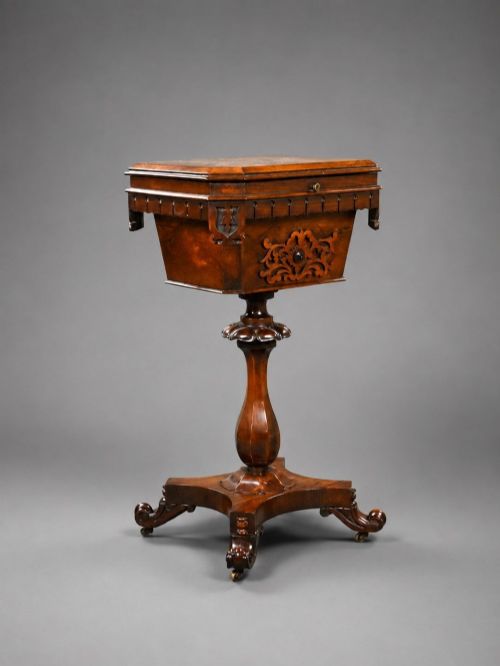
What is a tea poy?
A tea poy is a lidded container mounted on a central pedestal pillar or table base, designed for storing multiple varieties of tea. They often feature internal caddies and mixing bowls inside a secure, lockable compartment.
These pieces functioned as standalone furniture items in drawing rooms where hostesses prepared tea for guests. The elevated design kept expensive leaf tea away from damp floor levels.